Ditapis dengan

The Best intentions: Kofi Annan and the UN in the era of American world power
This book provides an in-depth portrait of Kofi Annan and his tenure as Secretary-General of the United Nations. James Traub explores Annan’s reform efforts, diplomatic challenges, and his struggle to redefine the UN’s role during a period dominated by American global power. Combining political analysis with biographical narrative, the book examines major international events, the UN’s in…
- Edisi
- -
- ISBN/ISSN
- 978-0-374-18220-5
- Deskripsi Fisik
- xviii, 442 pages ; 23,5 cm
- Judul Seri
- -
- No. Panggil
- 341.2309 TRA b

Southeast Asia in international politics, 1941-1956
This book provides a comprehensive analysis of Southeast Asia’s position in international politics from 1941 to 1956, a period marked by World War II, Japanese occupation, postwar reconstruction, and the emergence of nationalist movements throughout the region. Evelyn Colbert examines how global power rivalries—particularly between the United States, the United Kingdom, and emerging Asian s…
- Edisi
- -
- ISBN/ISSN
- 0-8014-0971-3
- Deskripsi Fisik
- 372 pages ; 23,5 cm
- Judul Seri
- -
- No. Panggil
- 327.0959 COL s
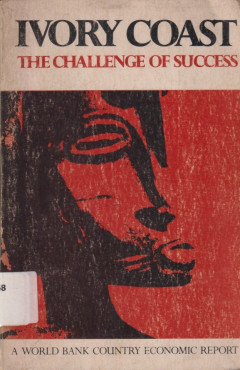
Ivory Coast: The Challenge of success
Ivory Coast: The Challenge of Success is an in-depth economic analysis authored by B. A. den Tuinder for the World Bank. The book examines the rapid economic growth of Côte d'Ivoire during the post-independence period and explores the structural factors that contributed to its development performance. It discusses the country's agricultural expansion, industrialization strategies, macroeconomi…
- Edisi
- -
- ISBN/ISSN
- -
- Deskripsi Fisik
- xxi, 445 pages ; 23 cm
- Judul Seri
- -
- No. Panggil
- 338.96668 TUI i

Southeast Asia in international politics, 1941-1956
This book explains about international relations of Southeast Asia during the critical period from World War II to the years immediatelly following the first Indochina settlement. Set against a global background, it explores the policies not only of the countries of the region (including Australia and New Zealand), but also of outside countries with interest in Southeast Asia-the European power…
- Edisi
- -
- ISBN/ISSN
- 0-8014-0971-3
- Deskripsi Fisik
- 372 pages : index ; 24 cm
- Judul Seri
- -
- No. Panggil
- 327.0959 COL s
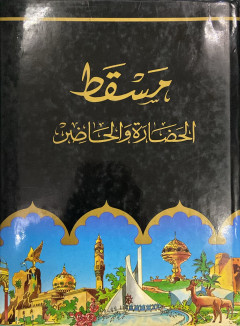
Muscat: Civilization and the present
Muscat: Civilization and the Present presents an in-depth study of the development of Muscat's civilization from ancient times to the modern era. Abu Bakar Abdul Rahman Ahmed traces the city's history as a maritime trade hub, a gateway to diplomacy, and a meeting place for diverse cultures that shaped Oman's unique identity. Through discussions of Muscat's architectural heritage, social develop…
- Edisi
- -
- ISBN/ISSN
- -
- Deskripsi Fisik
- 205 pages; illustration; 30 cm
- Judul Seri
- -
- No. Panggil
- 953.53 AHM m
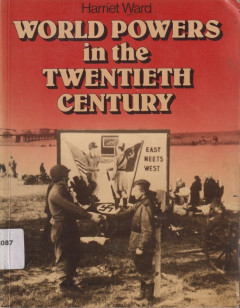
World powers in the twentieth century
World Powers in the Twentieth Century, written by Harriet Ward, provides an accessible and well-illustrated overview of the rise, decline, and interaction of major global powers during the twentieth century. The book examines the political, military, and economic forces that shaped the era, from the First World War and the emergence of superpowers to the Cold War and the changing balance of pow…
- Edisi
- -
- ISBN/ISSN
- ISBN 0 563 16225 2
- Deskripsi Fisik
- xv, 304 pages : illustration ; 24 cm
- Judul Seri
- -
- No. Panggil
- 320.9 WAR w
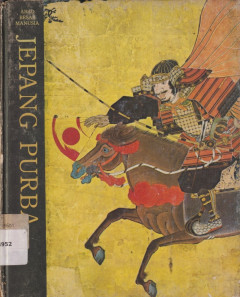
Jepang purba: Abad besar manusia sejarah kebudayaan dunia
Buku Jepang Purba menyajikan gambaran komprehensif mengenai perkembangan awal peradaban Jepang, mulai dari masa prasejarah hingga terbentuknya struktur budaya dan sosial yang menjadi fondasi masyarakat Jepang modern. Melalui pendekatan historis dan antropologis, Jonathan Norton Leonard bersama para editor Time-Life menguraikan berbagai aspek kehidupan masyarakat Jepang kuno, seperti seni, arsit…
- Edisi
- -
- ISBN/ISSN
- -
- Deskripsi Fisik
- 191 halaman : ilustrasi ; 27 cm
- Judul Seri
- -
- No. Panggil
- 952.01 LEO j

Abad pencerahan: Abad besar manusia sejarah kebudayaan dunia
menguraikan perkembangan intelektual, kebudayaan, dan pemikiran yang membentuk Eropa pada abad ke-18. Ditulis oleh Peter Gay bersama para editor Pustaka Time-Life, buku ini menelusuri munculnya gagasan-gagasan rasionalisme, ilmu pengetahuan, humanisme, dan kritik terhadap otoritas tradisional. Melalui penjelasan yang kaya dan visual yang menarik, buku ini memperkenalkan tokoh-tokoh utama Pence…
- Edisi
- -
- ISBN/ISSN
- -
- Deskripsi Fisik
- 191 halaman : ilustrasi ; 27 cm
- Judul Seri
- -
- No. Panggil
- 940.25 GAY a

Red cloud at dawn: Truman, stalin, and the end of the atomic monopoly
On August 29, 1949, the first Soviet test bomb, dubbed “First Lightning,” exploded in the deserts of Kazakhstan. This startling event was not simply a technical triumph that confirmed the ability of the Soviet Union to build nuclear bombs during a period when the United States held a broadcast monopoly. It was also an international event that marked the beginning of an arms race that would …
- Edisi
- -
- ISBN/ISSN
- 978-0-374-25682-1
- Deskripsi Fisik
- xii, 402 pages ; 23 cm
- Judul Seri
- -
- No. Panggil
- 355.825 GOR r
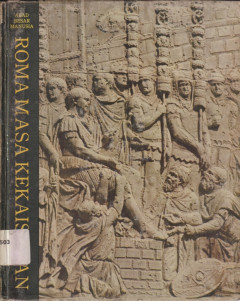
Roma masa kekaisaran: Abad besar manusia sejarah kebudayaan dunia
Roma Masa Kekaisaran menyajikan gambaran lengkap tentang perkembangan politik, sosial, dan budaya Kekaisaran Romawi pada puncak kejayaannya. Ditulis oleh Moses Hadas bersama para editor Pustaka Time-Life, buku ini membahas transformasi Roma dari republik menjadi kekaisaran, munculnya para kaisar besar, serta kehidupan masyarakat yang beragam di wilayah kekuasaan Romawi. Buku ini juga menggamba…
- Edisi
- -
- ISBN/ISSN
- -
- Deskripsi Fisik
- 190 halaman : ilustrasi ; 27 cm
- Judul Seri
- -
- No. Panggil
- 937.06 HAD r
 Karya Umum
  Filsafat
  Agama
Agama  Ilmu-ilmu Sosial
  Bahasa
  Ilmu-ilmu Murni
  Ilmu-ilmu Terapan
  Kesenian, Hiburan, dan Olahraga
  Kesusastraan
  Geografi dan Sejarah