Ditapis dengan
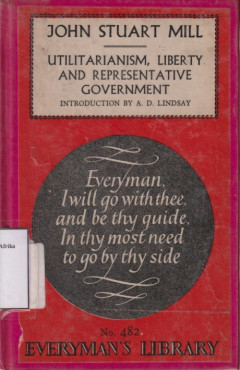
Utilitarianism; Liberty; Representative government
This book contains three major works by John Stuart Mill that form the foundation of modern ethical and political thought. Utilitarianism discusses the greatest good and the basis of universal morality. On Liberty explores the limits of state power over individuals and the importance of freedom of thought and expression. Representative Government outlines Mill's theory of the ideal form of gove…
- Edisi
- -
- ISBN/ISSN
- -
- Deskripsi Fisik
- xxviii, 397 pages ; 18 cm
- Judul Seri
- -
- No. Panggil
- 171.5 MIL u

Soviet foreign policy in a changing world
This book is a collection of essays and academic studies on the changes and dynamics of the Soviet Union's foreign policy after 1975. Editors Robbin F. Laird and Erik P. Hoffmann present in-depth analyses of Soviet international political strategy, including relations with developing countries, reactions to global changes, and the role of ideology and internal power structures in shaping Soviet…
- Edisi
- -
- ISBN/ISSN
- 0-202-24167-X
- Deskripsi Fisik
- xxiv, 969 pages ; 23,5 cm
- Judul Seri
- -
- No. Panggil
- 327.47 LAI s

Leaders, leadership, & U. S. policy in Latin America
In this book Michael Kryzanek examines the ways in which the critical interaction between individual leaders and the U.S. policy community affects the substance and direction of hemispheric relations. Throughout, the author uses case studies to illustrate how individual heads of state respond to the issues of drugs, debt, trade, and regional security. Such leaders as Salinas of Mexico, Gaviria …
- Edisi
- -
- ISBN/ISSN
- 0-8133-7950-4
- Deskripsi Fisik
- xii, 249 pages : index ; 23 cm
- Judul Seri
- -
- No. Panggil
- 327.7308 KRY l

The Soviet Union and the strategy of Non-Alignment in the Third World
This book discusses the Soviet Union's foreign policy strategy towards Third World countries, with a focus on the non-aligned approach. Roy Allison analyzes how the Soviet Union utilized its relations with developing countries as a geopolitical instrument, as well as how international political dynamics influenced Soviet policy. Through theoretical analysis and historical study, this book expla…
- Edisi
- -
- ISBN/ISSN
- 0-521-35511-7
- Deskripsi Fisik
- vi, 298 pages ; 24 cm
- Judul Seri
- -
- No. Panggil
- 327.47 ALL s

The Cultural dynamics of democratization in Spain
This book analyzes the cultural dynamics that influenced the democratization process in Spain after the end of the Franco regime in 1975. Peter McDonough and his colleagues examine the relationship between public opinion, political participation, and cultural change in modern Spanish society. Using a multidisciplinary approach, this work evaluates how political values, citizen perceptions, and …
- Edisi
- -
- ISBN/ISSN
- 0-8014-3516-1
- Deskripsi Fisik
- xii, 241 pages ; 23,5 cm
- Judul Seri
- -
- No. Panggil
- 306.2 MCD c
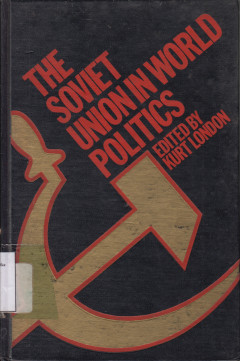
The Soviet Union in world politics
The Soviet Union in World Politics is a collection of scholarly articles edited by Kurt London, discussing the role of the Soviet Union in international political dynamics during the 20th century. This book highlights Soviet foreign policy, global strategy, diplomatic relations, and its ideological influence on other countries during the Cold War. Written by experts, this work provides an in-de…
- Edisi
- -
- ISBN/ISSN
- 0-89158-263-0
- Deskripsi Fisik
- xiii, 380 pages ; 23,5 cm
- Judul Seri
- -
- No. Panggil
- 327.47 LON s

The Conscience of the revolution: Communist opposition in Soviet Russia
The Conscience of the Revolution by Robert Vincent Daniels is an in-depth study of opposition groups within the Communist Party of the Soviet Union during the early years of Bolshevik rule. Daniels traces the internal dynamics of the party from the 1917 Revolution to Stalin's consolidation of power, focusing on figures such as Trotsky, Bukharin, Zinoviev, and other opposition figures. Through a…
- Edisi
- -
- ISBN/ISSN
- -
- Deskripsi Fisik
- 524 pages ; 24 cm
- Judul Seri
- -
- No. Panggil
- 947.084 DAN c
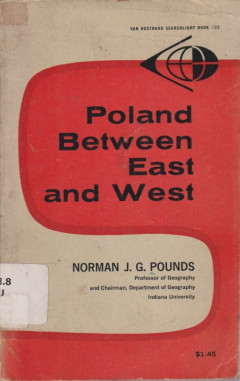
Poland between east and west
This book presents a comprehensive overview of Poland's geographic and geopolitical position as a country situated between the great powers of Eastern and Western Europe. Norman J. G. Pounds examines the history, socio-economic conditions, cultural influences, and political dynamics that shaped modern Polish identity. Part of the Searchlight Books series, this work aims to provide a concise yet…
- Edisi
- -
- ISBN/ISSN
- -
- Deskripsi Fisik
- 132 pages : illustration ; 20,5 cm
- Judul Seri
- -
- No. Panggil
- 943.8 POU p
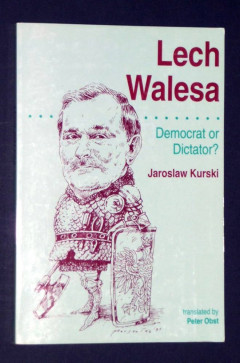
Lech Walesa: Democrat or dictator?
Drawing on his unique insider's perspective as press spokesman for Lech Walesa from October 1989 to July 1990, Jaroslaw Kurski has written the first critical, clear-eyed account of the Polish leader's personal and political style. During his time in Walesa's office, Kurski became acquainted with the many forces and ambitions which were unknown to the general. public that drove the Solidarity he…
- Edisi
- Cet. 1
- ISBN/ISSN
- 0-8133-1789-4
- Deskripsi Fisik
- xx, 178 pages : illustrations (black and white) ; 23 cm
- Judul Seri
- -
- No. Panggil
- 943.8 KUR l

Ronde Tafel Conferentie te ’s-Gravenhage: Feiten en Documenten
This book contains a collection of facts and official documents related to the Round Table Conference (Ronde Tafel Conferentie) held in The Hague in 1949. The conference was a crucial negotiation between Indonesia and the Netherlands that resulted in the recognition of the sovereignty of the Republic of the United States of Indonesia. This book presents various official statements, reports, pro…
- Edisi
- -
- ISBN/ISSN
- -
- Deskripsi Fisik
- 174 pages : illustration ; 20 cm
- Judul Seri
- -
- No. Panggil
- 327.5982 SEC r
 Karya Umum
  Filsafat
  Agama
Agama  Ilmu-ilmu Sosial
  Bahasa
  Ilmu-ilmu Murni
  Ilmu-ilmu Terapan
  Kesenian, Hiburan, dan Olahraga
  Kesusastraan
  Geografi dan Sejarah