Ditapis dengan
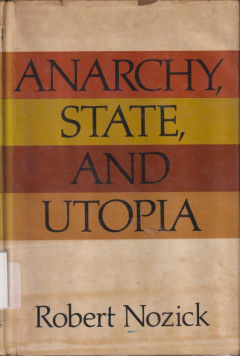
Anarchy, state, and utopia
Anarchy, State, and Utopia is a landmark work of political philosophy in which Robert Nozick presents a rigorous defense of libertarianism. Challenging the dominant theories of distributive justice, Nozick argues for a minimal state limited to the protection of individuals against force, theft, and fraud. He rejects redistributive taxation and egalitarian principles, offering instead an entitle…
- Edisi
- -
- ISBN/ISSN
- 465-00270-6
- Deskripsi Fisik
- xvi, 367 pages ; 24 cm
- Judul Seri
- -
- No. Panggil
- 320.51 NOZ a

Political culture and political change in communist states
This edited volume explores the dynamics of political culture and the processes of political change within communist states during the mid-20th century. Featuring contributions from leading scholars, the book examines ideology, state structures, leadership patterns, social mobilization, and internal transformations across various communist regimes. Through comparative analysis, it highlights bo…
- Edisi
- -
- ISBN/ISSN
- 0-8419-0289-5
- Deskripsi Fisik
- xiii, 286 pages ; 22 cm
- Judul Seri
- -
- No. Panggil
- 320.532 BRO p
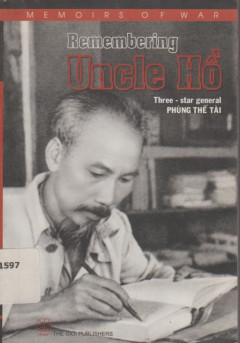
Remembering Uncle Ho: Three-star general Phung The Tai
Remembering Uncle Ho: Memories in War Years is a memoir written by Three-Star General Phùng Thế Tài, recounting his personal experiences working alongside Hồ Chí Minh during the years of the Vietnamese revolutionary struggle. The book offers intimate stories, reflections, and eyewitness accounts of the daily life, leadership, and character of Hồ Chí Minh, as seen through the eyes of o…
- Edisi
- -
- ISBN/ISSN
- -
- Deskripsi Fisik
- vii, 225 pages : illustration ; 20,5 cm
- Judul Seri
- -
- No. Panggil
- 959.704 TAI r
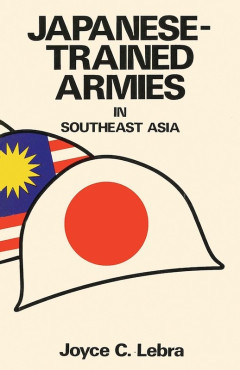
Japanese-trained Armies in Southeast Asia
At the time, the Japanese did not see that their military imprinting would affect a whole generation of political/ Imilitary leadership of nations of post-Second World War Southeast Asia. Leaders like Suharto, Ne Win and Park are all products of Japanese military training.
- Edisi
- -
- ISBN/ISSN
- 9789814279444
- Deskripsi Fisik
- ix, 226 pages : ilustrations (black and white) ; 22 cm
- Judul Seri
- -
- No. Panggil
- 355.309 LEB j

Soekarno Tabeh
Buku Peringatan 100 Tahun Prof. Mr. Sunario: Semangat Kebangsaan dan Politik Luar Negeri Indonesia disusun untuk mengenang seratus tahun kelahiran Prof. Mr. Sunario, Menteri Luar Negeri Republik Indonesia dan tokoh perintis kemerdekaan. Buku ini memuat beragam tulisan mengenai kontribusi Sunario dalam membentuk arah diplomasi Indonesia pada masa awal kemerdekaan, pandangan-pandangannya tentang …
- Edisi
- -
- ISBN/ISSN
- -
- Deskripsi Fisik
- 189 pages: illustrations ; 21 cm
- Judul Seri
- -
- No. Panggil
- 327.598 VEE s

Semangat kebangsaan dan politik luar negeri Indonesia: Mengenang 100 tahun Pr…
Buku “Semangat Kebangsaan dan Politik Luar Negeri Indonesia” diterbitkan sebagai bagian dari peringatan 100 tahun Prof. Mr. Sunario, salah satu tokoh penting dalam sejarah diplomasi dan politik luar negeri Indonesia. Buku ini memuat refleksi mengenai sikap kenegarawanan, nasionalisme, serta kontribusi Sunario sebagai Menteri Luar Negeri dan perintis kemerdekaan. Selain mengenang perjalanan …
- Edisi
- -
- ISBN/ISSN
- 979-665-193-9
- Deskripsi Fisik
- xxvi, 774 pages : illustrations ; 24 cm
- Judul Seri
- -
- No. Panggil
- 959.803 HAR s

Les Villes impériales du Maroc: Fès, marrakech, meknès, rabat-salé
Les Villes Imperiales du Maroc offers an in-depth look at four of Morocco's major historic cities: Fès, Marrakech, Meknès, and the twinned Rabat-Salé region. Through text by Samuel Pickens and photographic documentation by Philippe Saharoff, the book explores the cultural heritage, architecture, and historical developments that shaped the identities of these imperial cities. Richly illustrat…
- Edisi
- -
- ISBN/ISSN
- -
- Deskripsi Fisik
- 239 pages : illustration ; 28,5 cm
- Judul Seri
- -
- No. Panggil
- 964.5 PIC l
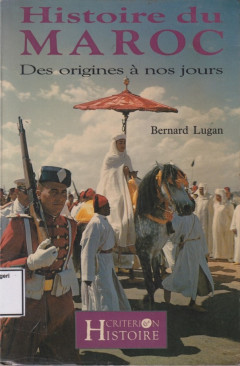
Histoire du maroc
This book presents a comprehensive history of Morocco from ancient times to the modern period. Bernard Lugan, a North African historian, outlines Morocco's political, social, economic, and cultural evolution, including the influence of Berber tribes, the heyday of Islamic dynasties, Morocco's relations with Europe, the French and Spanish colonial eras, and the path to independence. Using a hist…
- Edisi
- -
- ISBN/ISSN
- -
- Deskripsi Fisik
- 390 pages : illustration ; 23,5 cm
- Judul Seri
- -
- No. Panggil
- 964.5 LUG h
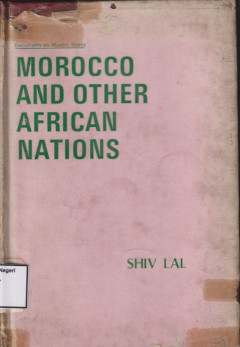
Morocco and other African nations
This book is a collection of documents on Morocco and various other African countries, compiled as part of the "Documents on Muslim States" series. Edited by Shiv Lal, this book presents a compilation of reports, political data, diplomatic notes, and government documents related to political developments in the African region, particularly countries with Muslim populations and governments. The …
- Edisi
- -
- ISBN/ISSN
- -
- Deskripsi Fisik
- 23 cm
- Judul Seri
- -
- No. Panggil
- 964 LAL m

Le Maroc à i’heure de i’Indépendance : Tome I, 1955–1957
This book is the official documentation of Morocco's struggle and transition to independence from 1955 to 1957. Written by King Mohammed V and translated from Arabic, this work contains speeches, political statements, early state policies, and reflections by Moroccan leaders on the critical period leading up to and following the proclamation of independence. This book provides a comprehensive o…
- Edisi
- -
- ISBN/ISSN
- -
- Deskripsi Fisik
- 333 pages : illustration ; 21,5 cm
- Judul Seri
- -
- No. Panggil
- 964.5 MOH l
 Karya Umum
  Filsafat
  Agama
Agama  Ilmu-ilmu Sosial
  Bahasa
  Ilmu-ilmu Murni
  Ilmu-ilmu Terapan
  Kesenian, Hiburan, dan Olahraga
  Kesusastraan
  Geografi dan Sejarah