Ditapis dengan

A Government as good as its people
This book presents a collection of speeches, essays, and reflections by Jimmy Carter, written during his rise from governor of Georgia to President of the United States. Carter discusses themes of democracy, social justice, moral leadership, and the responsibilities of government to its citizens. Through personal insights and political commentary, he outlines his vision of a government defined …
- Edisi
- -
- ISBN/ISSN
- 0-671-22852-9
- Deskripsi Fisik
- 262 pages ; 22,5 cm
- Judul Seri
- -
- No. Panggil
- 973.925 CAR g
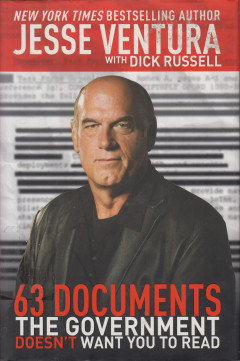
63 Documents the government doesn’t want you to read
This book reveals sixty-three government documents that expose controversial actions, hidden programs, and secret decisions made by the United States government. Compiled and commented on by Jesse Ventura with Dick Russell, the collection presents declassified reports and leaked files related to national security, surveillance, war, foreign policy, and government misconduct. The authors argue t…
- Edisi
- -
- ISBN/ISSN
- 978-1-61608-226-0
- Deskripsi Fisik
- viii, 302 pages : illustrations ; 23 cm
- Judul Seri
- -
- No. Panggil
- 320.973 VEN s

American conspiracies: Lies, lies, and more dirty lies that the government te…
American Conspiracies explores a wide range of alleged government cover-ups and hidden political agendas throughout United States history. Jesse Ventura and co-author Dick Russell examine topics such as political assassinations, surveillance, corporate influence, and secret government operations. Through investigative narratives and provocative arguments, the authors challenge official explanat…
- Edisi
- -
- ISBN/ISSN
- 978-1-61608-214-7
- Deskripsi Fisik
- xx, 246 pages ; 23 cm
- Judul Seri
- -
- No. Panggil
- 364.10973 VEN a
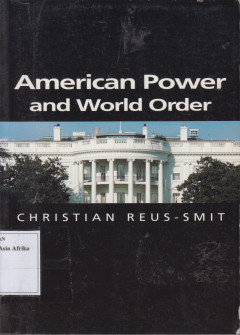
American power and world order
American Power and World Order examines how the United States exercised global leadership after the end of the Cold War and especially following the attacks of September 11, 2001. Christian Reus-Smit analyzes the rise of American unilateralism, the structural and institutional foundations of U.S. power, and the challenges to American dominance in the emerging international system. The book expl…
- Edisi
- -
- ISBN/ISSN
- 0-7456-3167-3
- Deskripsi Fisik
- xii, 184 pages ; 19 cm
- Judul Seri
- -
- No. Panggil
- 327.73 SMI a

The American ascendancy: How the United States gained and wielded global domi…
The American Ascendancy examines how the United States rose to global dominance and developed its international influence from the 19th century through the modern era. Michael H. Hunt analyzes the political, economic, and ideological forces that shaped America’s expanding role in world affairs, highlighting pivotal moments in foreign relations, the evolution of U.S. hegemony, and the geopolit…
- Edisi
- -
- ISBN/ISSN
- 978-0-8078-3090-1
- Deskripsi Fisik
- 404 pages : illustrations ; 24 cm
- Judul Seri
- -
- No. Panggil
- 327.7300904 HUN a

American dreams: The United States since 1945
For a brief, bright moment in 1945, America stood at its apex, looking back on victory not only against the Axis powers but against the Great Depression, and looking ahead to seemingly limitless power and promise. What we've done with that power and promise over the past six decades is a vitally important and fascinating topic that has rarely been tackled in one volume, and never by a historian…
- Edisi
- -
- ISBN/ISSN
- 978-1-59420-262-9
- Deskripsi Fisik
- x, 420 pages ; 24 cm
- Judul Seri
- -
- No. Panggil
- 973. 9 BRA a

The right nation: Conservative power in America
Evaluates the conservative movement that has swept across America in recent years, contending that conservatives have waged deliberate and effective campaigns against liberal advances, in an analysis that offers insight into right-wing politics and its organizers, representatives, and supporters.
- Edisi
- -
- ISBN/ISSN
- 1-59420-020-3
- Deskripsi Fisik
- 450 pages : Illustrations (blck and white) : index ; 24 cm
- Judul Seri
- -
- No. Panggil
- 320.52 MIC r
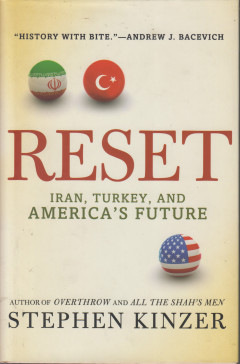
Reset: Iran, Turkey, and America’s future
“Reset: Iran, Turkey, and America’s Future” explores the complex geopolitical relationships between the United States and two pivotal Middle Eastern nations: Iran and Turkey. Stephen Kinzer argues that U.S. foreign policy has long relied on outdated assumptions and alliances, and proposes a strategic realignment that prioritizes diplomatic engagement with Iran and cooperation with Turkey.…
- Edisi
- -
- ISBN/ISSN
- 978-0-8050-9127-4
- Deskripsi Fisik
- 274 pages : illustrations ; 24,5 cm
- Judul Seri
- -
- No. Panggil
- 327.73055 KIN r
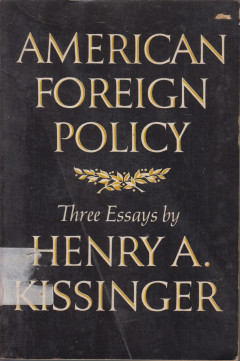
American foreign policy: Three essays
American Foreign Policy: Three Essays presents Henry A. Kissinger’s influential analyses of the strategic challenges confronting the United States during the Cold War era. In these essays, Kissinger examines the central issues of American foreign policy, the ideological and geopolitical forces shaping global power, and the need for a coherent national strategy. His reflections provide insight…
- Edisi
- -
- ISBN/ISSN
- 393-09853-2
- Deskripsi Fisik
- 143 pages ; 20,5 cm
- Judul Seri
- -
- No. Panggil
- 327.73 KIS a
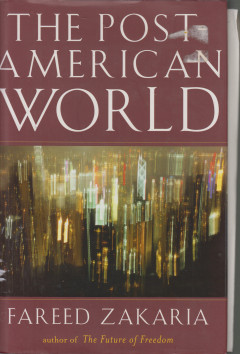
The Post-American world
The Post-American World by Fareed Zakaria explores the shifting global landscape in which the dominance of the United States is challenged by the rapid rise of other nations, particularly China and India. Rather than describing the decline of America, Zakaria argues that the world is entering a “post-American” phase characterized by the rise of the rest. He examines historical patterns of g…
- Edisi
- -
- ISBN/ISSN
- 978-0-393-06235-9
- Deskripsi Fisik
- 292 pages ; 24 cm
- Judul Seri
- -
- No. Panggil
- 303.49 ZAK p
 Karya Umum
  Filsafat
  Agama
Agama  Ilmu-ilmu Sosial
  Bahasa
  Ilmu-ilmu Murni
  Ilmu-ilmu Terapan
  Kesenian, Hiburan, dan Olahraga
  Kesusastraan
  Geografi dan Sejarah