Ditapis dengan
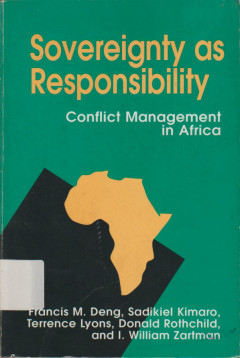
Sovereignty as responsibility: Conflict management in Africa
This book explains the concept of "sovereignty as responsibility," the view that state sovereignty is not only a right but also an obligation to protect its people. The authors analyze various conflicts in post-1960 Africa, explain state failures to prevent internal violence, and offer a framework for regional and international engagement in conflict resolution. This book is an important refere…
- Edisi
- -
- ISBN/ISSN
- 0-8157-1828-4
- Deskripsi Fisik
- xxiii, 265 pages ; 23 cm
- Judul Seri
- -
- No. Panggil
- 327.1 DEN s
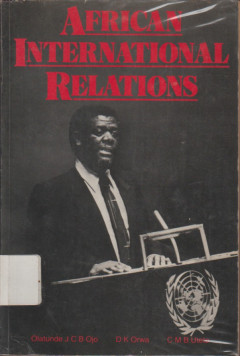
African international relations
African International Relations is a comprehensive study of the international relations of African countries since independence in the 1960s. This book examines political dynamics, economic conditions, diplomatic relations, and development challenges in African countries within the context of the international system. The authors highlight the role of great powers, economic interdependence, dev…
- Edisi
- -
- ISBN/ISSN
- 0-582-64393-7
- Deskripsi Fisik
- v, 186 pages : illustration ; 23 cm
- Judul Seri
- -
- No. Panggil
- 327.096 OJO a
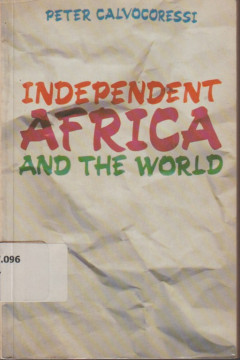
Independent Africa and the world
Peter Calvocoressi's "Independent Africa and the World" examines the political dynamics, international relations, and economic challenges of African countries after gaining independence in the 1960s. The book outlines how independent African states interacted with major world powers, the issue of economic dependency, internal political developments, and Africa's position in the modern internati…
- Edisi
- -
- ISBN/ISSN
- 0-582-29654-4
- Deskripsi Fisik
- 151 pages : illustration ; 20 cm
- Judul Seri
- -
- No. Panggil
- 327.096 CAL i
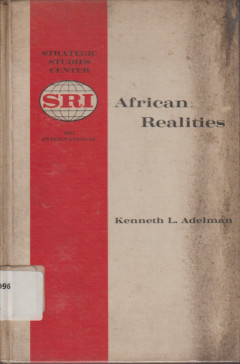
African realities
Kenneth L. Adelman's African Realities examines the dynamics of African politics and international relations in the post-independence period, particularly after 1960. The book highlights political changes in various African countries, development challenges, internal conflicts, and how African countries constructed new political identities in the context of the Cold War. Adelman also examines A…
- Edisi
- -
- ISBN/ISSN
- 0-8448-1376-1
- Deskripsi Fisik
- 170 pages ; 23,5 cm
- Judul Seri
- -
- No. Panggil
- 327.096 ADE a

Africa on the move: Proceedings of the international ideological conference, …
Africa on the Move is a collection of materials, speeches, and discussion results from the International Ideological Conference held by the Party–State of Guinea in Conakry from November 13–18, 1978. The conference discussed African political developments, revolutionary movements, the ideology of African socialism, and strategies for political and social development in post-independence Afr…
- Edisi
- -
- ISBN/ISSN
- -
- Deskripsi Fisik
- 271 pages ; 24 cm
- Judul Seri
- -
- No. Panggil
- 320.96 STA a
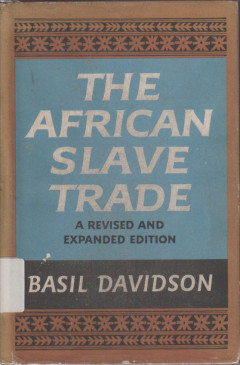
The African slave trade: A Revised and expanded edition
Basil Davidson's The African Slave Trade presents a comprehensive overview of the history of the African slave trade, its origins, the development of the transatlantic slave system, and its impact on African societies. This revised and expanded edition explores the role of European powers, the economic mechanisms of the slave trade, the sociocultural transformations that occurred in various Afr…
- Edisi
- -
- ISBN/ISSN
- -
- Deskripsi Fisik
- 304 pages ; 21,5 cm
- Judul Seri
- -
- No. Panggil
- 306.362 DAV a
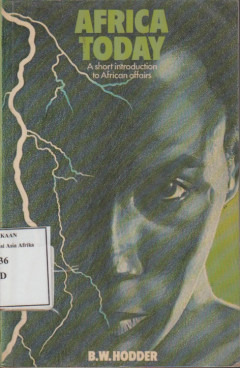
Africa today: A Short introduction to African affairs
B. W. Hodder's book, Africa Today, is a concise introduction to the political, social, and economic affairs of modern Africa. Hodder explains the major changes that have occurred in various African countries since the colonial era, including political dynamics, economic development, societal structures, and the challenges facing the continent. This book is intended for both general readers and …
- Edisi
- -
- ISBN/ISSN
- 0-416-71010-7
- Deskripsi Fisik
- ix, 166 pages : illustration ; 18,5 cm
- Judul Seri
- -
- No. Panggil
- 960.3 HOD a
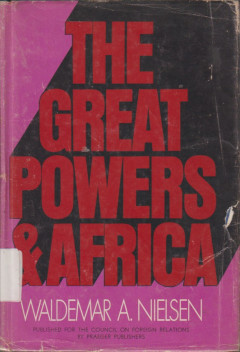
The Great powers and Africa
The book "The Great Powers and Africa" examines the involvement of major powers—such as the United States, the Soviet Union, the United Kingdom, France, and China—in the political, economic, and strategic dynamics of the African continent in the post-independence era. Waldemar A. Nielsen illustrates how global geopolitical interests shaped the development of African states, including …
- Edisi
- -
- ISBN/ISSN
- -
- Deskripsi Fisik
- xiii, 431 pages ; 22 cm
- Judul Seri
- -
- No. Panggil
- 327.6 NIE g
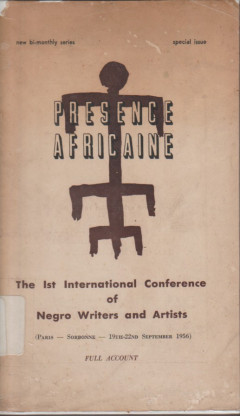
Présence Africaine
This special issue of Présence Africaine presents a comprehensive account of the 1st International Conference of Negro Writers and Artists, held at the Sorbonne in Paris, September 19–22, 1956. The conference brought together writers, artists, and intellectuals from Africa and the diaspora, including figures such as Léopold Sédar Senghor, Aimé Césaire, Richard Wright, and Alioune Diop. I…
- Edisi
- -
- ISBN/ISSN
- -
- Deskripsi Fisik
- 414 pages : illustration ; 23 cm
- Judul Seri
- -
- No. Panggil
- 305.896 SOC p
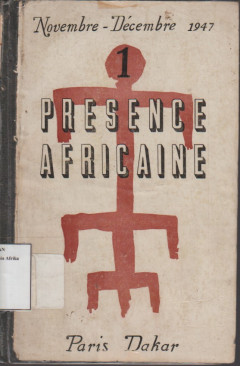
Présence Africaine
Présence Africaine is a leading intellectual journal first published in November–December 1947 in Paris and Dakar. This inaugural issue became an important platform for African and diaspora scholars, writers, and artists to voice their ideas on African identity, culture, colonialism, and socio-political development. The journal featured essays, literary criticism, cultural studies, and writi…
- Edisi
- -
- ISBN/ISSN
- -
- Deskripsi Fisik
- 192 pages : illustration ; 21,5 cm
- Judul Seri
- -
- No. Panggil
- 305.896 SOC p
 Karya Umum
  Filsafat
  Agama
Agama  Ilmu-ilmu Sosial
  Bahasa
  Ilmu-ilmu Murni
  Ilmu-ilmu Terapan
  Kesenian, Hiburan, dan Olahraga
  Kesusastraan
  Geografi dan Sejarah