Ditapis dengan
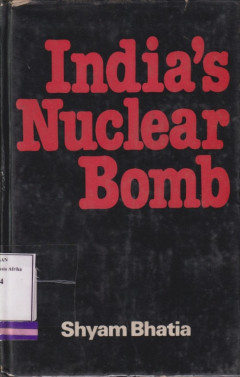
India's nuclear bomb
An in-depth investigation into India’s pursuit of nuclear capability during the Cold War era. The book examines political motivations, scientific developments, and strategic calculations behind India’s nuclear programme. Bhatia discusses key events leading to the first nuclear test in 1974 (“Smiling Buddha”), responses from global powers, and the domestic debates surrounding nuclear pol…
- Edisi
- -
- ISBN/ISSN
- 0-7069-0770-5
- Deskripsi Fisik
- 169 pages ; 22 cm
- Judul Seri
- -
- No. Panggil
- 355.8251 BHA i
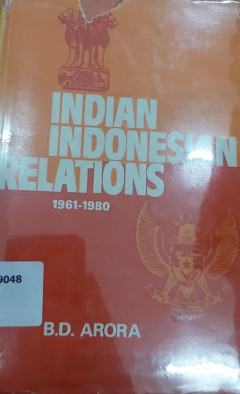
Indian Indonesia relations: 1961-1980
Inspired by centuries of mutual political, commercial, and cultural relations, and against the background of India’s spontaneous support during the Dutch–Indonesian struggle, this study examines the interaction of India and Indonesia from 1961 to 1980. While the early years reflected mutual goodwill and cooperation, later decades showed limitations, differing priorities, and ideological div…
- Edisi
- -
- ISBN/ISSN
- -
- Deskripsi Fisik
- xx, 371 pages ; 22 cm
- Judul Seri
- -
- No. Panggil
- 327.5405 ARO i

Nuclear India: Volume II
This first volume of Nuclear India by J. P. Jain provides an in-depth introduction to the origins, development, and strategic foundations of India’s nuclear program. The book examines India’s political motivations, scientific progress, and security concerns within the regional and global context. Jain discusses historical milestones, policy debates, technological challenges, and India’s p…
- Edisi
- -
- ISBN/ISSN
- -
- Deskripsi Fisik
- vxvii, 440 pages ; 22 cm
- Judul Seri
- -
- No. Panggil
- 355.0217 JAI n
Nuclear India: Volume II
This volume of Nuclear India by J. P. Jain explores India’s evolving nuclear policy, strategic motivations, and defense considerations. The author examines the historical development of India’s nuclear program, technological capabilities, and the geopolitical pressures influencing national security decisions. The book analyzes regional tensions in South Asia, global nuclear diplomacy, and I…
- Edisi
- -
- ISBN/ISSN
- -
- Deskripsi Fisik
- vxvii, 440 pages ; 22 cm
- Judul Seri
- -
- No. Panggil
- 355.0217 JAI n

Bangabandhu corners around the world
Bangabandhu Corners Around the World documents the global initiative taken by the Government of Bangladesh to honor the legacy of Bangabandhu Sheikh Mujibur Rahman, the Father of the Nation. Compiled by A.K. Abdul Momen, the book presents a comprehensive overview of the establishment of "Bangabandhu Corners" in various foreign missions, libraries, cultural centers, and institutions across the c…
- Edisi
- -
- ISBN/ISSN
- 978-984-96068-1-9
- Deskripsi Fisik
- 185 pages : illustrations ; 23,5 cm
- Judul Seri
- -
- No. Panggil
- 327.595492 MOM b

Pax Indica: India and the world of the 21st century
"Indian diplomacy," a veteran diplomat told Shashi Tharoor many years ago, "is like the love-making of an elephant; it is conducted at a very high level, accompanied by much bellowing, and the results are not known for two years."
- Edisi
- -
- ISBN/ISSN
- 9780670085743
- Deskripsi Fisik
- 449 pages ; 23,5 cm
- Judul Seri
- -
- No. Panggil
- 327.540905 THA p
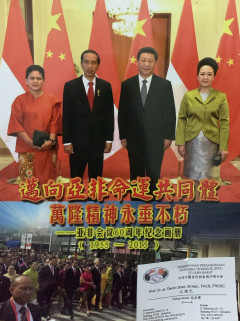
Mài xiàng yà fēi mìngyùn gòngtóngtǐ wàn lóng jīngshén yǒngchuí…
This illustrated commemorative album is dedicated to the 60th anniversary of the Asian-African Conference (1955-2015). It visually and narratively documents the development of Asian-African nations, the significance of the Ten Principles of Bandung (Dasa Sila Bandung), and the ongoing efforts to build a community of shared destiny (Mìngyùn Gòngtóngtǐ). The album highlights the spirit of so…
- Edisi
- -
- ISBN/ISSN
- 978-602-74781-2-1
- Deskripsi Fisik
- iv, 378 pages : illustrations ; 28 cm
- Judul Seri
- -
- No. Panggil
- 950.42 ZHU m
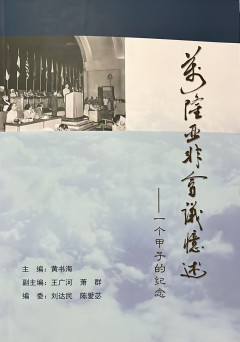
Dāng yuàn Yà–Fēi yánshuō yìshù
This book presents a collection of essays and personal recollections on the Asian-African Conference and the enduring legacy of Zhou Enlai in shaping China’s diplomacy during the mid-20th century. Through contributions from diplomats, scholars, journalists, and eyewitnesses, the book highlights the historical significance of the Bandung Conference, the challenges and achievements of China’s…
- Edisi
- -
- ISBN/ISSN
- -
- Deskripsi Fisik
- 192 pages : illustrations ; 24 cm
- Judul Seri
- -
- No. Panggil
- 327.5106 SHU d

On Building a human community with a shared future
On Building a Human Community with a Shared Future is a collection of translations of 85 articles and speeches by Xi Jinping since 2012, designed to offer a deep understanding of his vision and thoughts on the future of humanity. The book emphasizes the concept of humanity as a single community with a common home—the Earth—and emphasizes universal values such as peace, development, ju…
- Edisi
- -
- ISBN/ISSN
- -
- Deskripsi Fisik
- xii, 571 pages ; 23,5 cm
- Judul Seri
- -
- No. Panggil
- 327.730 JIN b

The Chinese dream: What it means for China and the rest of the world
This book explores the idea of the “Chinese Dream” and its significance for China and the wider world. The author (editor) examines how the Chinese Dream is understood as an ideal of national renaissance, prosperity, socio-political development, and China's global position. It also analyzes questions such as: is the Chinese Dream a vision of national renaissance or global domination? …
- Edisi
- -
- ISBN/ISSN
- 978-7-5104-4480-7
- Deskripsi Fisik
- 205 pages : illustrations ; 22,5 cm
- Judul Seri
- -
- No. Panggil
- 305.8 XIA c
 Karya Umum
  Filsafat
  Agama
Agama  Ilmu-ilmu Sosial
  Bahasa
  Ilmu-ilmu Murni
  Ilmu-ilmu Terapan
  Kesenian, Hiburan, dan Olahraga
  Kesusastraan
  Geografi dan Sejarah