Ditapis dengan

Pour un dialogue Nord–Sud : S’associer en libertés
This book presents Michel Guillou's analysis of the importance of dialogue between the North (developed) and South (developing) in building equal cooperation based on freedom. Through an international political and socio-economic perspective, the author highlights the structural barriers that cause global inequality and offers a collaborative approach to creating more equitable relations. With …
- Edisi
- -
- ISBN/ISSN
- -
- Deskripsi Fisik
- 252 pages ; 24 cm
- Judul Seri
- -
- No. Panggil
- 303.482 GOU p

French foreign policy under de Gaulle
Alfred Grosser's French Foreign Policy Under de Gaulle is a comprehensive study of the direction and character of French foreign policy during the reign of Charles de Gaulle during the Fifth Republic. It analyzes French diplomatic moves, efforts to strengthen national independence, and relations with the United States, NATO, the Soviet Union, and developing countries. Packed with academic persp…
- Edisi
- -
- ISBN/ISSN
- -
- Deskripsi Fisik
- xiv, 175 pages ; 22 cm
- Judul Seri
- -
- No. Panggil
- 327.44 GRO f

The Irony of manifest destiny: The Tragedy of America’s foreign policy
This book offers a critical examination of the evolution of American foreign policy in the modern era. William Pfaff analyzes how the longstanding ideology of “Manifest Destiny” has shaped the United States’ international actions and contributed to strategic failures and global tensions. Through historical insight and contemporary evaluation, Pfaff argues that America's pursuit of moral a…
- Edisi
- -
- ISBN/ISSN
- 978-0-8027-1699-6
- Deskripsi Fisik
- xiv, 222 pages ; 21,5 cm
- Judul Seri
- -
- No. Panggil
- 327.73 PFA i

The Frugal superpower: America’s global leadership in a cash-strapped era
The Frugal Superpower examines how the financial constraints of the early 21st century reshape the global role of the United States. Michael Mandelbaum argues that the era of expansive American international engagement—supported by ample economic resources—is ending, giving rise to a more restrained foreign policy. By analyzing geopolitical shifts, budget limitations, and global expectation…
- Edisi
- -
- ISBN/ISSN
- 978-1-58648-916-8
- Deskripsi Fisik
- ix, 213 pages : illustrations ; 22 cm
- Judul Seri
- -
- No. Panggil
- 327.73 MAN f
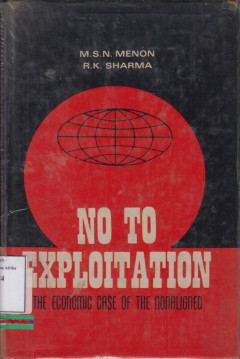
No to exploitation: The Economic sase of the non-aligned
This book examines the economic arguments underlying the Non-Aligned Movement's stance against global economic exploitation. Menon and Sharma outline the structural inequalities between developed and developing countries and offer an analysis of the need for a more equitable international economic order. Through historical, economic, and political analysis, the book explains how non-aligned cou…
- Edisi
- -
- ISBN/ISSN
- -
- Deskripsi Fisik
- xxxii, 163 pages ; 25 cm
- Judul Seri
- -
- No. Panggil
- 327.172 MEN n

Official documents: Ministerial meeting of the coordinating bureau of the non…
This volume presents the official documents of the Ministerial Meeting of the Coordinating Bureau of the Non-Aligned Countries held in Bandung, Indonesia, from 25 to 27 April 1995. The publication compiles resolutions, statements, policy frameworks, and reports adopted during the meeting, reflecting the collective positions of member states on global political, economic, and security issues. Is…
- Edisi
- -
- ISBN/ISSN
- -
- Deskripsi Fisik
- 126 pages ; 24 cm
- Judul Seri
- -
- No. Panggil
- 327.172 NON o
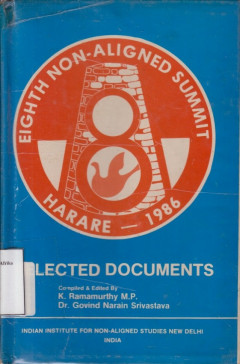
Eighth NAM summit: Selected documents
This volume compiles key official documents from the Eighth Summit of the Non-Aligned Movement (NAM), presenting resolutions, declarations, and policy statements adopted by member states. Edited by K. Ramamurthy and Dr. Srivastava, the book provides an essential reference on the political, economic, and international security concerns discussed during the summit. It highlights the collective po…
- Edisi
- -
- ISBN/ISSN
- -
- Deskripsi Fisik
- 267 pages : illustrations ; 21,5 cm
- Judul Seri
- -
- No. Panggil
- 327.172 RAM e

Peranan Indonesia sebagai pendiri Gerakan Non Blok dalam usaha memurnikan tuj…
The book "Indonesia's Role as the Founder of the Non-Aligned Movement in Efforts to Purify Its Goals and Principles" was published by the Research and Development Agency of the Ministry of Foreign Affairs of the Republic of Indonesia in 1986. This book discusses Indonesia's contribution to the birth of the Non-Aligned Movement (NAM) from the 1955 Asian-African Conference to the 1961 Belgrade Su…
- Edisi
- -
- ISBN/ISSN
- -
- Deskripsi Fisik
- iv, 145 pages : illustrations ; 23,5 cm
- Judul Seri
- -
- No. Panggil
- 327.172 BAD p

India and the Nonaligned Summits : Belgrade to Jakarta
Renu Srivastava's book India and the Nonaligned Summits: Belgrade to Jakarta comprehensively examines India's role in various Non-Aligned Movement (NAM) summits, from the first summit in Belgrade to the Jakarta summit. As one of the founders of NAM, India played a key role in formulating the principles of non-alignment, political independence, and cooperation among developing countries. The boo…
- Edisi
- -
- ISBN/ISSN
- 81-7211-063-4
- Deskripsi Fisik
- ix, 195 pages ; 22 cm
- Judul Seri
- -
- No. Panggil
- 327.172 SRI i

The Crucial years of non-alignment: USA Korean war India
This book provides an analytical study of the formative period of the Non-Aligned Movement, focusing particularly on India’s diplomatic stance during the Korean War and its interactions with the United States. R. P. Kaushik examines major political developments, decision-making processes, and the broader implications of non-alignment in the early Cold War era. The work highlights how India na…
- Edisi
- -
- ISBN/ISSN
- -
- Deskripsi Fisik
- 264 pages ; 22 cm
- Judul Seri
- -
- No. Panggil
- 327.17 KAU c
 Karya Umum
  Filsafat
  Agama
Agama  Ilmu-ilmu Sosial
  Bahasa
  Ilmu-ilmu Murni
  Ilmu-ilmu Terapan
  Kesenian, Hiburan, dan Olahraga
  Kesusastraan
  Geografi dan Sejarah