Ditapis dengan
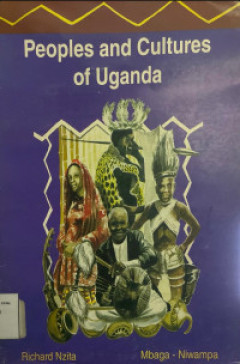
Peoples and cultures of Uganda
Peoples and Cultures of Uganda offers a comprehensive survey of the country’s rich ethnic diversity and cultural heritage. The book explores the histories, social structures, belief systems, languages, and traditional practices of Uganda’s major ethnic groups. Through anthropological analysis and descriptive accounts, the author highlights the ways in which communities maintain cultural ide…
- Edisi
- Ketiga
- ISBN/ISSN
- 9970 02 031 5
- Deskripsi Fisik
- v, 166 pages : illustrations ; 30 cm
- Judul Seri
- -
- No. Panggil
- 711.5 NZI p

To the stars and beyond: Exploring the role of MOFA in enhancing the Indonesi…
This paper examines the Ministry of Foreign Affairs’ role in strengthening Indonesia’s position in global space governance. As an archipelagic state spanning 13 percent of the geostationary orbit, Indonesia has strategic interests in orbital slots, satellite communications, defense, and everyday space applications. However, Indonesia remains vulnerable due to high dependence on foreign sate…
- Edisi
- -
- ISBN/ISSN
- -
- Deskripsi Fisik
- -
- Judul Seri
- -
- No. Panggil
- Sesparlu 77-2025

Embedding Tech Diplomacy: Strengthening Indonesia’s Diplomatic Capacity in …
This paper proposes embedding tech diplomacy as a foundational element of Indonesia’s foreign policy amid digital geopolitics. As Southeast Asia’s largest digital economy and a G20 member, Indonesia faces both opportunities and risks from AI, digital trade, and cyber threats, including dependence on foreign providers and limited influence in global norm-setting. U.S.–China competition ove…
- Edisi
- -
- ISBN/ISSN
- -
- Deskripsi Fisik
- -
- Judul Seri
- -
- No. Panggil
- Sesparlu 77-2025

Strengthening Indonesia-Maldives cooperation through labor diplomacy in the t…
This paper highlights labor diplomacy as a tool to expand Indonesia’s labor market in the Maldives, particularly in tourism, hospitality, and wellness. The Maldives’ structural dependence on migrant labor presents significant opportunities, yet Indonesians account for less than 2% of the workforce, far behind Bangladesh, India, and Sri Lanka. Three institutional gaps explain this underrepre…
- Edisi
- -
- ISBN/ISSN
- -
- Deskripsi Fisik
- -
- Judul Seri
- -
- No. Panggil
- Sesparlu 77-2025

Improving Indonesia's grant/aid mechanism : Policy recommendation for Ministr…
This paper proposes improvements to Indonesia’s grant/aid mechanism, including stronger roles for the Ministry of Foreign Affairs and Indo-AID. Having transitioned from an aid recipient to an emerging donor, Indonesia has institutionalised this change through the establishment of the Indonesian Development Cooperation Fund (Indo-AID) in 2019. However, despite this progress, challenges remain,…
- Edisi
- -
- ISBN/ISSN
- -
- Deskripsi Fisik
- -
- Judul Seri
- -
- No. Panggil
- Sesparlu 77-2025

Towards a prosperous future together: an analysis of the economic cooperation…
This paper analyzes the economic cooperation areas of the Indonesia–Thailand Strategic Partnership signed on 19 May 2025. For Indonesia, Thailand is the second Southeast Asian country whose bilateral relationship has been elevated to a Strategic Partnership, after Vietnam in 2003. The new status opens cooperation corridors in mutually beneficial economic, political, and socio-cultural areas. …
- Edisi
- -
- ISBN/ISSN
- -
- Deskripsi Fisik
- -
- Judul Seri
- -
- No. Panggil
- Sesparlu 77-2025

Establishing safe and secure environment in The Ministry of Foreign Affairs a…
This paper examines the need for Indonesia’s Ministry of Foreign Affairs to establish a safe and secure working environment for staff at headquarters and diplomatic missions abroad. With more than 3,000 staff serving worldwide, the Ministry faces threats from both external and internal sources, including mental health issues, terrorist attacks and criminal syndicates, war situations, and enco…
- Edisi
- -
- ISBN/ISSN
- -
- Deskripsi Fisik
- -
- Judul Seri
- -
- No. Panggil
- Sesparlu 77-2025

Navigating the implementation of IORA outlook on The Indo-Pacifik amidst IORA…
This paper examines Indonesia’s strategic role in implementing the Indian Ocean Rim Association’s Outlook on the Indo-Pacific (IOIP) amid IORA’s leadership transition. The Indo-Pacific has become a central hub of global geopolitics and economics, generating over 60 percent of global GDP and nearly half of global trade. IORA adopted the IOIP in 2022 as a framework emphasizing inclusivity, …
- Edisi
- -
- ISBN/ISSN
- -
- Deskripsi Fisik
- -
- Judul Seri
- -
- No. Panggil
- Sesparlu-77
Dissent channel
This paper proposes establishing a Dissent Channel (DC) within Indonesia’s Ministry of Foreign Affairs as an internal mechanism to capture critical and constructive insights and strengthen diplomatic resilience. A foreign ministry’s resilience depends not only on strong alliances or negotiating power, but also on its ability to capture and consider dissenting views and turn overlooked insig…
- Edisi
- -
- ISBN/ISSN
- -
- Deskripsi Fisik
- -
- Judul Seri
- -
- No. Panggil
- Sesparlu 77-2025

Cultural diplomacy: Indonesia's foreign policy and the repatriation on herita…
This paper proposes strengthening cultural diplomacy as an instrument of Indonesia’s foreign policy to advance the repatriation of cultural heritage objects. Much of Indonesia’s diverse cultural heritage was displaced abroad during colonialism and through illicit trade and now resides in foreign collections and museums. Indonesia has achieved important milestones, including the return of hu…
- Edisi
- -
- ISBN/ISSN
- -
- Deskripsi Fisik
- -
- Judul Seri
- -
- No. Panggil
- Sesparlu 77-2025
 Karya Umum
 Filsafat
 Agama
 Ilmu-ilmu Sosial
 Bahasa
 Ilmu-ilmu Murni
 Ilmu-ilmu Terapan
 Kesenian, Hiburan, dan Olahraga
 Kesusastraan
 Geografi dan Sejarah