Ditapis dengan

England in the nineteenth century (1815–1914)
This book is a comprehensive study of British history in the 19th century, a period that saw major transformations in politics, society, economics, and culture. David Thomson traces the development of the Industrial Revolution, changes in social structure, parliamentary reform, imperial expansion, and the dynamics of everyday life in British society between 1815 and the eve of World War I. As p…
- Edisi
- -
- ISBN/ISSN
- -
- Deskripsi Fisik
- 250 pages ; 18 cm
- Judul Seri
- -
- No. Panggil
- 941.081 THO e
The East European revolution
The East European Revolution by Hugh Seton-Watson provides an authoritative analysis of the political and social transformations that reshaped Eastern Europe after World War II. The book examines the rise of communist governments, the role of the Soviet Union in restructuring regional politics, the collapse of prewar institutions, and the emergence of new revolutionary elites. Seton-Watson offe…
- Edisi
- -
- ISBN/ISSN
- -
- Deskripsi Fisik
- xix, 435 pages : illustration ; 22 cm
- Judul Seri
- -
- No. Panggil
- 947 WAT e

The Evolution of an international actor: Western Europe’s new assertiveness
The Evolution of an International Actor: Western Europe’s New Assertiveness examines how Western Europe emerged as a significant actor in international politics after 1945. Edited by Reinhardt Rummel, the volume explores Europe’s evolving political identity, its economic transformation, defense policies, and its increasing role in global affairs. Through contributions from various scholars,…
- Edisi
- -
- ISBN/ISSN
- 0-8133-7534-7
- Deskripsi Fisik
- vi, 354 pages ; 22 cm
- Judul Seri
- -
- No. Panggil
- 320.94 RUM e

The Unfinished revolution: Making sense of the communist past in Central-East…
The Unfinished Revolution by James Mark examines how Central and Eastern European societies have understood, negotiated, and remembered their communist past since the revolutions of 1989. Through comparative case studies, the book explores the social, political, and cultural transformations that shaped post-communist identity. Mark analyzes themes such as collective memory, political justice, d…
- Edisi
- -
- ISBN/ISSN
- 978-0-300-16716-0
- Deskripsi Fisik
- xxviii, 312 pages : illustration ; 24 cm
- Judul Seri
- -
- No. Panggil
- 943.705 MAR u
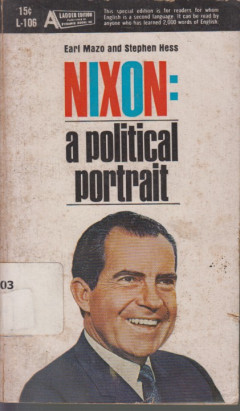
Nixon: A Political portrait
“Nixon: A Political Portrait” provides an accessible and concise account of the political rise of Richard Nixon. Written by journalists Earl Mazo and Stephen Hess, this abridged edition traces Nixon’s early career, his development as a national political figure, and the strategies that shaped his public image. Adapted for readers at a 2,000-word level, the book offers insights into Nixonâ…
- Edisi
- -
- ISBN/ISSN
- -
- Deskripsi Fisik
- 126 pages : illustrations ; 18 cm
- Judul Seri
- -
- No. Panggil
- 973.92 MAZ n
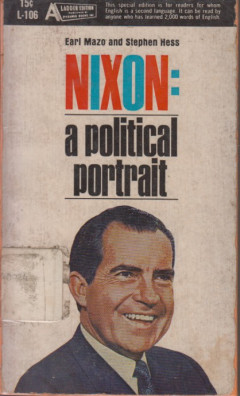
The Challenges we face
This book presents a collection of political speeches delivered by Richard M. Nixon, offering insights into the major domestic and international challenges faced by the United States during the early stages of the Cold War. Nixon discusses issues of national security, foreign policy, economic stability, and American leadership in global affairs. The volume reflects his perspectives on the respo…
- Edisi
- -
- ISBN/ISSN
- -
- Deskripsi Fisik
- 222 pages ; 17,5 cm
- Judul Seri
- -
- No. Panggil
- 973.92092 NIX c
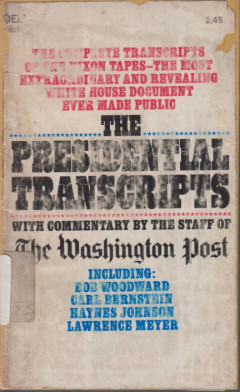
The Presidential transcripts
“The Presidential Transcripts” presents the complete published transcripts of conversations recorded in the White House during the Watergate scandal. Compiled and annotated by the staff of The Washington Post, the book provides essential insight into the political crisis that led to President Richard Nixon’s resignation. The transcripts reveal discussions on political strategy, attempts t…
- Edisi
- -
- ISBN/ISSN
- -
- Deskripsi Fisik
- xl, 693 pages ; 18 cm
- Judul Seri
- -
- No. Panggil
- 973.924 THE p

Yugoslavia in international relations and in the Non-Aligned movement
Edvard Kardelj's book Yugoslavia in International Relations and in the Non-Aligned Movement examines Yugoslavia's role in international relations and its contribution to the formation and development of the Non-Aligned Movement (NAM). As one of the main ideologues and architects of Yugoslavia's foreign policy, Kardelj explains how the country adopted a position independent of both the Western a…
- Edisi
- -
- ISBN/ISSN
- -
- Deskripsi Fisik
- 234 pages ; 20 cm
- Judul Seri
- -
- No. Panggil
- 327.172 KAR y
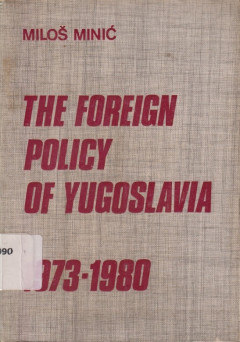
The Foreign policy of Yugoslavia 1973–1980
This book examines Yugoslavia's foreign policy during the period 1973–1980, when the country faced complex international dynamics amidst the Cold War. Miloš Minić, a prominent figure in Yugoslav diplomacy, outlines the principles of non-aligned foreign policy, relations with major powers, and Yugoslavia's role in multilateral diplomacy. This book serves as an important reference for underst…
- Edisi
- -
- ISBN/ISSN
- -
- Deskripsi Fisik
- 340 pages ; 20 cm
- Judul Seri
- -
- No. Panggil
- 327.495 MIN f
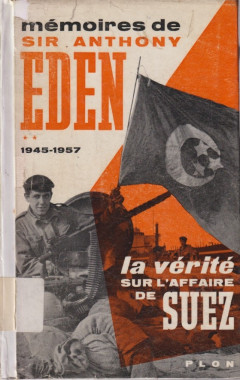
Mémoires; 1945–1957
The book Mémoires: 1945–1957 is the second volume of the memoirs of Sir Anthony Eden, one of the most important British political figures of the 20th century and Prime Minister of the United Kingdom (1955–1957). In this French translation, Eden describes his role in British foreign policy after World War II, including international relations, the development of the Commonwealth, and major …
- Edisi
- -
- ISBN/ISSN
- -
- Deskripsi Fisik
- ii, 654 pages ; 22,5 cm
- Judul Seri
- -
- No. Panggil
- 923.1 EDE m
 Karya Umum
  Filsafat
  Agama
Agama  Ilmu-ilmu Sosial
  Bahasa
  Ilmu-ilmu Murni
  Ilmu-ilmu Terapan
  Kesenian, Hiburan, dan Olahraga
  Kesusastraan
  Geografi dan Sejarah