Ditapis dengan

Many voices: Multilateral negotiations in the world arena
This volume examines the dynamics, challenges, and strategies of multilateral negotiations in the modern international arena. Edited by Abiodun Williams, the book compiles key case studies—including negotiations on NATO nuclear forces, ozone layer protection, Antarctic resource management, and UNCTAD diplomacy. Through these examples, the book highlights how states and international organizat…
- Edisi
- -
- ISBN/ISSN
- 0-8133-1284-1
- Deskripsi Fisik
- xvii, 133 pages ; 23,5 cm
- Judul Seri
- -
- No. Panggil
- 341.3 WIL m

We now know: Rethinking cold war history
We Now Know: Rethinking Cold War History offers a groundbreaking reinterpretation of the Cold War using newly available archival evidence from the former Soviet Union, China, and Eastern Europe. John Lewis Gaddis analyzes the ideological, political, and strategic forces shaping the global conflict between the United States and the Soviet Union. The book re-examines major events—including the …
- Edisi
- -
- ISBN/ISSN
- 0-19-878071-0
- Deskripsi Fisik
- x, 425 pages ; 23,5 cm
- Judul Seri
- -
- No. Panggil
- 327.12 GAD w

International war: An Anthology and study guide
International War: An Anthology and Study Guide is a comprehensive collection of scholarly writings examining the origins, dynamics, and consequences of war in the international system. Edited by Melvin Small and J. David Singer, the volume brings together influential essays from leading researchers in political science, history, and international relations. The anthology explores major themes …
- Edisi
- -
- ISBN/ISSN
- 0-256-03646-2
- Deskripsi Fisik
- 393 pages : illustration ; 23,5 cm
- Judul Seri
- -
- No. Panggil
- 355.02 SMA i

The Geopolitics of information: How western culture dominates the world
This book examines how Western culture, driven by its advanced communication industries, has come to dominate global information flows. Anthony Smith analyzes the geopolitical implications of information control, arguing that cultural and media power have become essential tools of influence in the modern world. Through an exploration of technological communication systems, cultural exchange, an…
- Edisi
- -
- ISBN/ISSN
- 0-19-520208-2
- Deskripsi Fisik
- 192 pages ; 22 cm
- Judul Seri
- -
- No. Panggil
- 327.1 SMI g
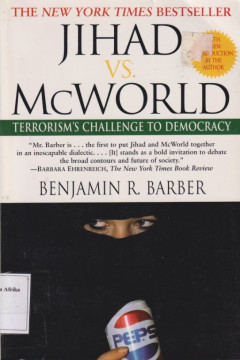
Jihad vs. mcworld
This book examines the major tensions shaping the modern world: the struggle between "Jihad," which is local tribalism and fundamentalism, and "McWorld," which is the forces of globalization, capitalism, and consumer culture. Benjamin Barber explains how these two forces—though seemingly opposed—both undermine democracy. "Jihad" divides society into narrow identities and ethnic conflicts, w…
- Edisi
- -
- ISBN/ISSN
- 978-0-345-38304-4
- Deskripsi Fisik
- xxxi, 389 pages : illustration ; 21 cm
- Judul Seri
- -
- No. Panggil
- 303.482 BAR j
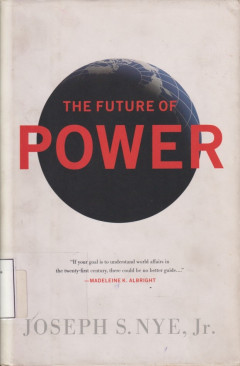
The Future of power
This book examines the changing dynamics of power in the era of globalization and information technology. Joseph S. Nye Jr., the figure who introduced the concept of "soft power," describes how traditional forms of power are shifting due to economic power, information flows, and global networks. Nye believes that the future of international relations will no longer be determined solely by milit…
- Edisi
- -
- ISBN/ISSN
- 978-1-58648-891-8
- Deskripsi Fisik
- xviii, 300 pages : illustration ; 24 cm
- Judul Seri
- -
- No. Panggil
- 303.33 NYE f
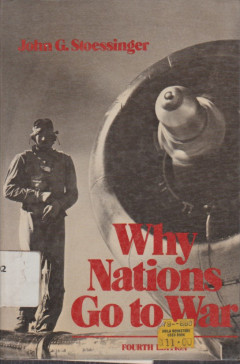
Why nations go to war
John G. Stoessinger's Why Nations Go to War is a classic analysis of the factors that drive states to war. Using a case study approach, this fourth edition examines major conflicts of the 20th century and highlights the role of political leaders, misperceptions, miscalculations, and international dynamics as crucial factors underlying the outbreak of war. Stoessinger emphasizes that the decisio…
- Edisi
- -
- ISBN/ISSN
- 0-312-87856-7
- Deskripsi Fisik
- xiii, 221 pages ; 21 cm
- Judul Seri
- -
- No. Panggil
- 355.02 STO w

Political realism and international morality: Ethics in the nuclear age
This book is a collection of papers presented at the Tenth Plenary Conference of the American Section of the International Association for Philosophy of Law and Social Philosophy, held in 1984 at the University of Notre Dame. It provides an in-depth discussion of the relationship between political realism and international morality, particularly in the context of the nuclear age. The contributo…
- Edisi
- -
- ISBN/ISSN
- 0-8133-0456-3
- Deskripsi Fisik
- x, 271 pages ; 23 cm
- Judul Seri
- -
- No. Panggil
- 172.4 KIP p

Le Duc Tho – Kissinger negotiations in Paris
Le Duc Tho – Kissinger Negotiations in Paris documents the detailed diplomatic process surrounding the Paris Peace Talks between North Vietnam and the United States. Written by Luu Van Loi and Nguyen Anh Vu, the book provides insider perspectives on the strategies, political tensions, and negotiation dynamics between Le Duc Tho, the chief Vietnamese negotiator, and Henry Kissinger, the U.S. N…
- Edisi
- -
- ISBN/ISSN
- -
- Deskripsi Fisik
- 571 pages ; 21,5 cm
- Judul Seri
- -
- No. Panggil
- 327.730597 LUU l
The West bank and the rule of law
This book is a legal study prepared by Raja Shehadeh with the assistance of Jonathan Kuttab for the International Commission of Jurists (ICJ). It analyzes the legal situation in the West Bank following the Israeli military occupation, including the application of laws and regulations, the legal status of the Palestinian population, the treatment of detainees, and various administrative policies…
- Edisi
- -
- ISBN/ISSN
- 92 9037 005 X
- Deskripsi Fisik
- 128 pages : illustration ; 21 cm
- Judul Seri
- -
- No. Panggil
- 346.078 SHE w
 Karya Umum
 Filsafat
 Agama
 Ilmu-ilmu Sosial
 Bahasa
 Ilmu-ilmu Murni
 Ilmu-ilmu Terapan
 Kesenian, Hiburan, dan Olahraga
 Kesusastraan
 Geografi dan Sejarah