Ditapis dengan
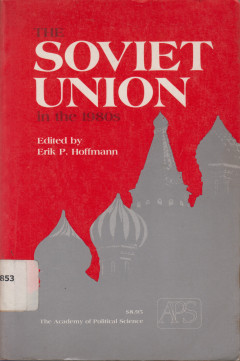
The Soviet Union in the 1980s
The Soviet Union in the 1980s is a scholarly volume featuring articles presented in the Proceedings of the Academy of Political Science. This issue analyzes the political, economic, and social dynamics of the USSR during a transformative decade marked by stagnation, leadership transitions, and the early stages of reform. Contributors examine Soviet domestic and foreign policy, ideological devel…
- Edisi
- -
- ISBN/ISSN
- 0065-0684
- Deskripsi Fisik
- xii, 244 pages ; 23 cm
- Judul Seri
- -
- No. Panggil
- 947.085 HOF s
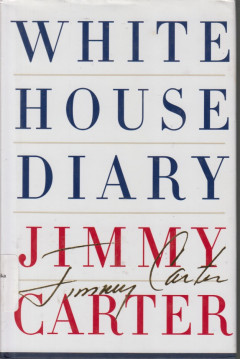
White house diary
White House Diary presents President Jimmy Carter’s detailed, day-to-day reflections during his years in the White House from 1977 to 1981. Drawn from his personal diary entries, the book provides an intimate look at major political decisions, diplomatic challenges, and domestic issues faced during his presidency. Carter offers insights into global events, key policy debates, and his interact…
- Edisi
- -
- ISBN/ISSN
- 978-0-374-28099-4
- Deskripsi Fisik
- xv, 370 pages : illustrations ; 23,5 cm
- Judul Seri
- -
- No. Panggil
- 973.926092 CAR w
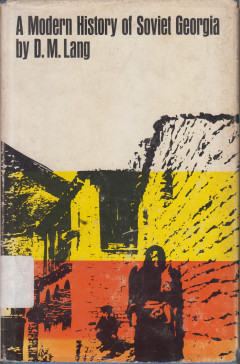
A Modern history of Soviet Georgia
A Modern History of Soviet Georgia by David Marshall Lang provides a comprehensive examination of Georgia’s political, social, and cultural development under Soviet rule. Drawing upon historical records, archival materials, and scholarly analysis, Lang traces the transformation of Georgia from its incorporation into the Soviet Union to its emergence as a distinct republic within the Soviet sy…
- Edisi
- -
- ISBN/ISSN
- -
- Deskripsi Fisik
- xiv, 298 pages : illustrations ; 22 cm
- Judul Seri
- -
- No. Panggil
- 947.5809 MAR m
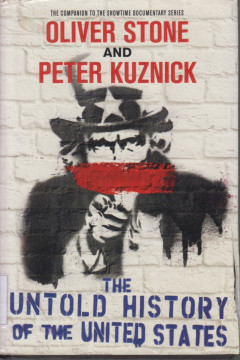
The Untold history of the United States
This book offers a revisionist account of United States history as presented by filmmaker Oliver Stone and historian Peter Kuznick. Serving as a companion to the acclaimed documentary series, it reexamines key political, military, and ideological developments of the 20th and early 21st centuries. The authors challenge conventional narratives by highlighting overlooked events, suppressed documen…
- Edisi
- -
- ISBN/ISSN
- 978-1-4516-1351-3
- Deskripsi Fisik
- xxxiii, 750 pages : illustrations ; 24 cm
- Judul Seri
- -
- No. Panggil
- 973.91 STO u
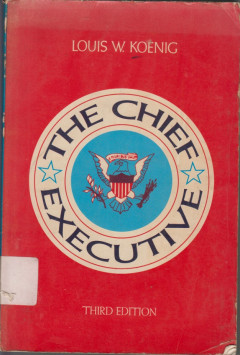
The Chief executive
This third edition of Louis W. Koenig’s influential work offers a comprehensive examination of the American presidency as the central institution of executive power in the United States. The book analyzes the constitutional foundations, political dynamics, administrative responsibilities, and leadership roles of the president. Koenig explores the evolution of presidential power, the relations…
- Edisi
- 3
- ISBN/ISSN
- 0-15-506672-2
- Deskripsi Fisik
- x, 452 pages ; 23,5 cm
- Judul Seri
- -
- No. Panggil
- 352.23 KOE c
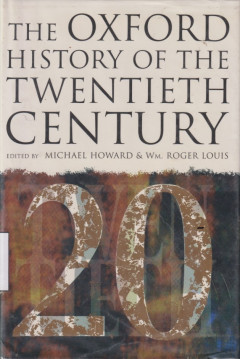
The Oxford history of the twentieth century
This book presents a comprehensive overview of 20th-century world history through contributions from leading international historians. Edited by Michael Howard and William Roger Louis, this work examines the political, economic, social, cultural, and technological developments that shaped the modern world. Major themes such as the world wars, colonialism and decolonization, global economic chan…
- Edisi
- -
- ISBN/ISSN
- 0–19–820428–0
- Deskripsi Fisik
- xxii, 458 pages : illustration ; 24 cm
- Judul Seri
- -
- No. Panggil
- 909.82 HOW o

The Reagan record: An Assessment of America’s changing domestic priorities
This Urban Institute study provides a comprehensive assessment of the domestic policies implemented during the Reagan administration. Edited by John L. Palmer and Isabel V. Sawhill, the volume examines major shifts in economic policy, social welfare programs, federal–state fiscal relations, taxation, and public spending priorities. The contributors analyze the intended and actual impacts of R…
- Edisi
- -
- ISBN/ISSN
- 0-88730-001-4
- Deskripsi Fisik
- xvii, 415 pages : illustrations ; 22,5 cm
- Judul Seri
- -
- No. Panggil
- 338.973 PAL r

Hostage in Peking
This book is a firsthand account of Anthony Grey, a Reuters correspondent who was held as a political hostage by the People's Republic of China government for two years (1967–1969) during the Cultural Revolution. Through personal narrative, Grey describes his experiences of detention, the psychological pressures, his interactions with local authorities, and the political and social situation …
- Edisi
- -
- ISBN/ISSN
- 0–297–79503–1
- Deskripsi Fisik
- 343 pages : illustration ; 21,5 cm
- Judul Seri
- -
- No. Panggil
- 365.450924 GRE h
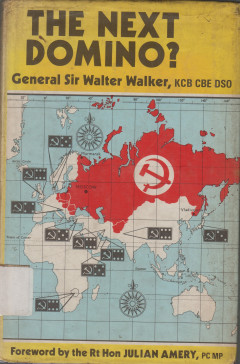
The Next domino?
The Next Domino? examines the geopolitical tensions of the late Cold War through the perspective of General Sir Walter Walker, former NATO Commander-in-Chief of Allied Forces Northern Europe. The book analyzes the perceived threat of Soviet expansion and the possibility of a "domino effect" in global political instability. Walker discusses military strategy, ideological confrontation, and Weste…
- Edisi
- -
- ISBN/ISSN
- 0-85205-005-4
- Deskripsi Fisik
- xvi, 371 pages : illustrations ; 24 cm
- Judul Seri
- -
- No. Panggil
- 327.41047 WAL n
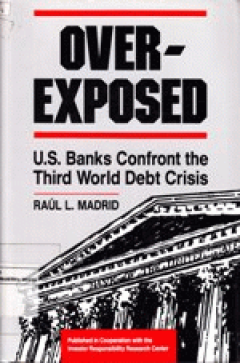
Over-exposed: U.S. Banks confront Third World debt crisis
Raul Madrid's Over-exposed represents the first in-depth study of the involvement of U.S. banks in the Third World debt crisis. Based on extensive interviews with commercial bankers, the book examines the decision-making process at U.S. banks that led to the lending boom of the 1970s and early 1980s as well as the role the banks played in the management of the debt crisis. Madrid argues that ba…
- Edisi
- -
- ISBN/ISSN
- 0-931-035-50-3
- Deskripsi Fisik
- xvi, 260 pages ; 24 cm
- Judul Seri
- -
- No. Panggil
- 336.343 MAD o
 Karya Umum
  Filsafat
  Agama
Agama  Ilmu-ilmu Sosial
  Bahasa
  Ilmu-ilmu Murni
  Ilmu-ilmu Terapan
  Kesenian, Hiburan, dan Olahraga
  Kesusastraan
  Geografi dan Sejarah