Ditapis dengan
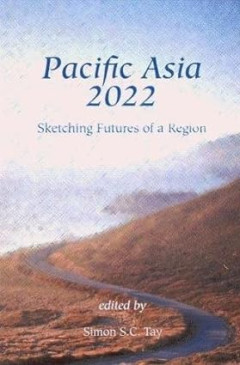
Pacific Asia 2022: Sketching futures of a region
The profound effects of the 1997-98 Asian financial crisis encompass more than economic concerns. Throughout Asia Pacific the crisis prompted a reassessment of governance, values, social safety structures, the commitment of the United States to the region, and the value of such institutions as the Asia Pacific Economic Cooperation forum. In this book, six authors from the region present a polic…
- Edisi
- -
- ISBN/ISSN
- 4-88907-064-8
- Deskripsi Fisik
- vii, 241 pages : bibliography ; 23 cm
- Judul Seri
- -
- No. Panggil
- 320.959 Tay p

Coping with the Asian financial crisis: The Singapore experience
Singapore has weathered the Asian financial crisis better than most Asian economies. This paper examines the roots of Singapore's resilience and assesses Singapore's policy responses to the crisis. It argues that Singapore has used the exchange rate and wage instruments effectively during the crisis. Singapore's managed exchange rate system allowed it to quickly depreciate the Singapore dollar …
- Edisi
- -
- ISBN/ISSN
- 0219-3582
- Deskripsi Fisik
- 35 pages: illustrations ; 29 cm
- Judul Seri
- -
- No. Panggil
- 330.95957 Jin c

Economy Roadmap: The creation of three million good jobs per year APINDO'S c…
explain about first 100 day programs and program discussion
- Edisi
- -
- ISBN/ISSN
- -
- Deskripsi Fisik
- 69 halaman ; 25 cm
- Judul Seri
- -
- No. Panggil
- 330.959 Sim e

Dreams and dilemmas in the Asia-Pacific: Economic friction and dispute resolu…
The volume consists of two parts. Part 1 discusses economic friction in the Asia-Pacific region from three aspects: macroeconomic and microeconomic friction, and that between the state and the market mechanism. Included in the discussion are the recent financial crisis and the economic friction it entailed, the trend of regional integration and its impact on internal and external trade and fore…
- Edisi
- -
- ISBN/ISSN
- 981-230-068-6
- Deskripsi Fisik
- xxi, 494 pages : illustrations (black and white) : index ; 23 cm
- Judul Seri
- -
- No. Panggil
- 330.959 Ham d

Southeast Asia's economic crisis : Origins, lessons, and the way forward
In the early 1990s, the World Bank labelled seven East Asian economies -- among them, four in Southeast Asia -- as "miracle economies", which had achieved extraordinarily high rates of economic growth for several decades. In 1996, on the eve of ASEAN's thirtieth birthday, Southeast Asia was experiencing unprecedented harmony and prosperity. For the first time ever, the region's six main, intern…
- Edisi
- -
- ISBN/ISSN
- 981-3055-89-8
- Deskripsi Fisik
- 182 halaman : index ; 23 cm
- Judul Seri
- -
- No. Panggil
- 330.959 Arn s
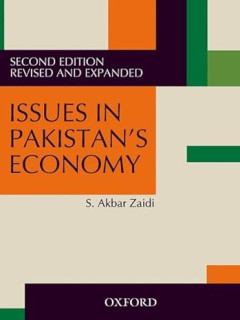
Issues in Pakistan's economy
“Issues in Pakistan’s Economy” by S. Akbar Zaidi was first published in 1999. The book provided comprehensive information on different aspects of the economy in Pakistan since independence. The idea of writing this book originated from Oxford University Press as there was no book on the economy of Pakistan to benefit the graduate students, researchers, scholars, academicians, and the gene…
- Edisi
- Ed. 2
- ISBN/ISSN
- 0-19-597914-1
- Deskripsi Fisik
- xii, 530 pages : illustrations (black and white) : index ; 28 cm
- Judul Seri
- -
- No. Panggil
- 330.95491 Zai i

The rise of India: Its transformation from poverty to prosperity
he book speaks not only to the mind and intellect but also to the heart as it clearly demonstrates that economic development is above all a question of people. It also shows that the Indian society, and particularly its youth, is much more open to changes than its political and bureaucratic class, and would welcome a third wave of reforms that would help the poor to benefit from economic progress.
- Edisi
- -
- ISBN/ISSN
- 978-0-470-82201-2
- Deskripsi Fisik
- ix, 176 pages : index ; 24 cm
- Judul Seri
- -
- No. Panggil
- 330.954 Raj r

Understanding India's economic reforms: The past, the present and the future …
This book contains: 1. Productivity and growth in Indian manufacturing 2. New industrial policy 3. New small enterprise policy 4. Maximizing foreign investment 5. Public versus private sector 6. Trade policy & industrialization in India
- Edisi
- -
- ISBN/ISSN
- 81-7188-105-X
- Deskripsi Fisik
- 248 pages ; 23 cm
- Judul Seri
- -
- No. Panggil
- 330.954 Kap u

Asia hemisfer baru dunia : Pergeseran kekuatan global ke timur yang tak terlu…
Dalam buku Asia Hemisfer Baru Dunia: Pergeseran Kekuatan Global ke Timur yang Tak Terelakkan, Kishore Mahbubani mengulas dengan bukti-bukti keberhasilan negara di Asia yang berkembang menjadi kekuatan utama dunia, terutama China dan India. Namun, yang menjadi ironi adalah ketika kekuatan-kekuatan baru dari Asia itu tumbuh dengan mengadopsi nilai-nilai Barat, kini justru Barat mulai merasa teran…
- Edisi
- -
- ISBN/ISSN
- 978-979-709-608-3
- Deskripsi Fisik
- xx, 362 halaman : illustrations (black and white) : index ; 23 cm
- Judul Seri
- -
- No. Panggil
- 330.95 Mah a
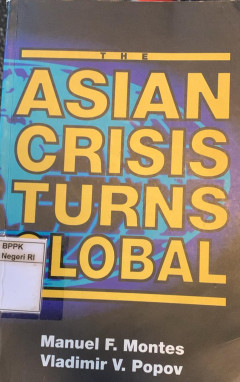
The Asian crisis turns global
In August 1998, the Asian currency crisis that had started in mid-1997 metastasized into a global financial crisis with the devaluation of the rouble and a declaration of a Russian Government default on its internal debt. Is this the first wave of such crises the world will see in the future? One common feature among the countries that have fallen victim to the crisis is that they were all…
- Edisi
- -
- ISBN/ISSN
- 981-230-050-3
- Deskripsi Fisik
- vi, 123 pages : illustrations (black and white) : index ; 22 cm.
- Judul Seri
- -
- No. Panggil
- 330.95 Mon a
 Karya Umum
  Filsafat
  Agama
Agama  Ilmu-ilmu Sosial
  Bahasa
  Ilmu-ilmu Murni
  Ilmu-ilmu Terapan
  Kesenian, Hiburan, dan Olahraga
  Kesusastraan
  Geografi dan Sejarah