Ditapis dengan

Responsible global governance: A programme for world stability and institutio…
The unbalanced developments of the global society are pinpointed in this book, which argues that without counter-balance, problems might result in further decline of human security and even into social and economic stagnation.
- Edisi
- -
- ISBN/ISSN
- 8171883524
- Deskripsi Fisik
- 179 pages ; 23 cm.
- Judul Seri
- -
- No. Panggil
- 338.9 Rah r
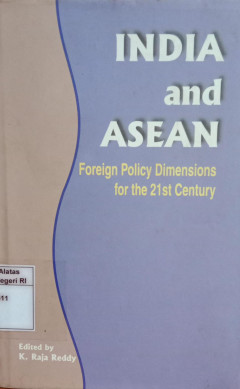
India and ASEAN: Foreign policy dimensions for the 21st Century
Papers presented at a three day international seminar held at Tirupati in October 2003
- Edisi
- Frist Published
- ISBN/ISSN
- 81-7708-081-4
- Deskripsi Fisik
- xiv, 296 pages ; 23 cm
- Judul Seri
- -
- No. Panggil
- 327.540 590 9051 1 Red i

The Malaysian currency crisis: How and why it happened
This book containing hope that in detailing the country's experience in handling the economic and financial turmoil, Malaysians will understand the very serious difficulty the country was in and appreciate the measures taken by the government to overcome the turmoil. It is also hoped that Malaysia's experience will provide invaluable lessons to other countries which might face similar situations.
- Edisi
- cet. 4
- ISBN/ISSN
- 967-978-756-7
- Deskripsi Fisik
- 61 pages ; 22 cm.
- Judul Seri
- -
- No. Panggil
- 332.4509595 Moh m

Ethnic politics in Southeast Asia and quest for identity
Ethnic Politics in Southeast Asia and Quest for Identity, is a case study of five important minority ethnic groups in the region, i.e. Timorese, Patani, Rohingyas, Moro and Hoas and it is an attempt towards objective understanding of ethnic disputes. Thus this study has analysed ethnic policies of Indonesia, Thailand, Myanmar, Vietnam and the Philippines and their interaction with minority comm…
- Edisi
- First Edition
- ISBN/ISSN
- 81-85135-88-6
- Deskripsi Fisik
- viii, 237 pages : bibl.; 225-232 : index ; 22 cm
- Judul Seri
- -
- No. Panggil
- 320.959 Jha e
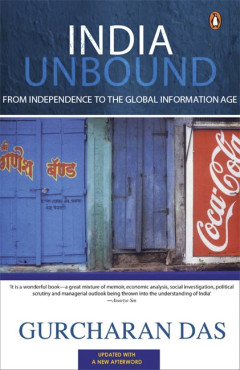
India unbound
India Unbound is the riveting story of a nation’s rise from poverty to prosperity and the clash of ideas that occurred along the way. Gurcharan Das examines the highs and lows of independent India through the prism of history, his own experiences and those of numerous others he has met-from young people in sleepy UP villages to chiefs of software companies in Bangalore. Defining and exploring…
- Edisi
- -
- ISBN/ISSN
- 978-0-143-06301-8
- Deskripsi Fisik
- xix, 419 pages : index ; 22 cm
- Judul Seri
- -
- No. Panggil
- 330.954 Das i
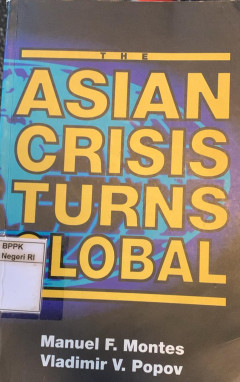
The Asian crisis turns global
In August 1998, the Asian currency crisis that had started in mid-1997 metastasized into a global financial crisis with the devaluation of the rouble and a declaration of a Russian Government default on its internal debt. Is this the first wave of such crises the world will see in the future? One common feature among the countries that have fallen victim to the crisis is that they were all…
- Edisi
- -
- ISBN/ISSN
- 981-230-050-3
- Deskripsi Fisik
- vi, 123 pages : illustrations (black and white) : index ; 22 cm.
- Judul Seri
- -
- No. Panggil
- 330.95 Mon a
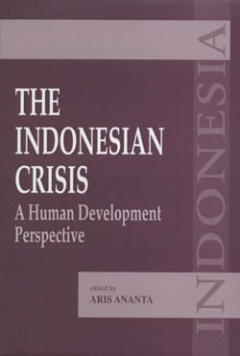
The Indonesian crisis: A human development perspective
Focusing on the impact of the 1997-99 economic crisis in Indonesia, the first part of this book discusses the economic situation in Indonesia, whilst the second elaborates on what happened to human capital during the crisis and the third examines its effect on purchasing power.
- Edisi
- -
- ISBN/ISSN
- 981-230-171-2
- Deskripsi Fisik
- xii, 448 pages : illustrations (black and white) : index ; 23 cm
- Judul Seri
- -
- No. Panggil
- 330.9598 Ana i
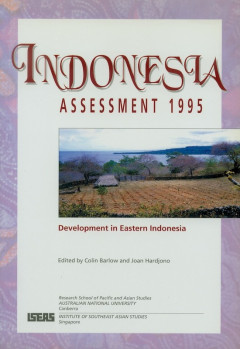
Indonesia assessment 1995: Development in Eastern Indonesia
Indonesia Assessment 1995 contains two main sections: one overviewing current Indonesian economic and political conditions, and one examining economic and social developments in Eastern Indonesia. This is the vast region of 25 million people, lying between Java, Malaysia, the Philippines and Australia. The book provides not only an up-do-date overview of Indonesia in 1995, but also one of the f…
- Edisi
- -
- ISBN/ISSN
- 981-3055-18-9
- Deskripsi Fisik
- xxviii, 287 pages : illustrations (black and white) : index ; 22 cm
- Judul Seri
- -
- No. Panggil
- 330.9598 Bar i

The crisis of global capitalism
The global economy, on which the world now depends more than ever, is in crisis. The Russian economy has collapsed, leading to punishing inflation and economic hardship. Scores of Japanese banks are in ruin while the Japanese government muddles along, the nation falling deeper and deeper into recession. The once-booming economies of Thailand, Malaysia, and Indonesia have imploded. Brazil and th…
- Edisi
- First Edition
- ISBN/ISSN
- 979-81-7649-799-1
- Deskripsi Fisik
- xxx, 245 pages : index ; 24 cm
- Judul Seri
- -
- No. Panggil
- 330. 122 Sor c

Why nations fail: The origins of power, prosperity, and poverty
Daron Acemoglu and James Robinson conclusively show that it is man-made political and economic institutions that underlie economic success (or lack of it). Korea, to take just one of their fascinating examples, is a remarkably homogeneous nation, yet the people of North Korea are among the poorest on earth while their brothers and sisters in South Korea are among the richest. The south forged a…
- Edisi
- First Edition
- ISBN/ISSN
- 978-0-307-71922-5
- Deskripsi Fisik
- 529 pages : illustration : bibl: hlm 465-482 : index ; 25 cm
- Judul Seri
- -
- No. Panggil
- 330 Ace w
 Karya Umum
  Filsafat
  Agama
Agama  Ilmu-ilmu Sosial
  Bahasa
  Ilmu-ilmu Murni
  Ilmu-ilmu Terapan
  Kesenian, Hiburan, dan Olahraga
  Kesusastraan
  Geografi dan Sejarah