Ditapis dengan
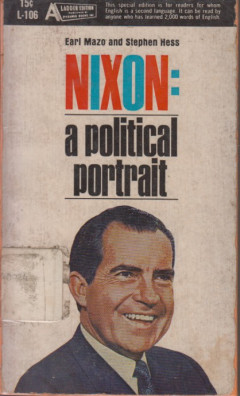
The Challenges we face
This book presents a collection of political speeches delivered by Richard M. Nixon, offering insights into the major domestic and international challenges faced by the United States during the early stages of the Cold War. Nixon discusses issues of national security, foreign policy, economic stability, and American leadership in global affairs. The volume reflects his perspectives on the respo…
- Edisi
- -
- ISBN/ISSN
- -
- Deskripsi Fisik
- 222 pages ; 17,5 cm
- Judul Seri
- -
- No. Panggil
- 973.92092 NIX c
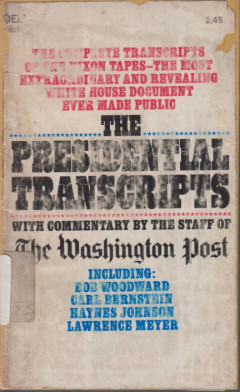
The Presidential transcripts
“The Presidential Transcripts” presents the complete published transcripts of conversations recorded in the White House during the Watergate scandal. Compiled and annotated by the staff of The Washington Post, the book provides essential insight into the political crisis that led to President Richard Nixon’s resignation. The transcripts reveal discussions on political strategy, attempts t…
- Edisi
- -
- ISBN/ISSN
- -
- Deskripsi Fisik
- xl, 693 pages ; 18 cm
- Judul Seri
- -
- No. Panggil
- 973.924 THE p

Yugoslavia in international relations and in the Non-Aligned movement
Edvard Kardelj's book Yugoslavia in International Relations and in the Non-Aligned Movement examines Yugoslavia's role in international relations and its contribution to the formation and development of the Non-Aligned Movement (NAM). As one of the main ideologues and architects of Yugoslavia's foreign policy, Kardelj explains how the country adopted a position independent of both the Western a…
- Edisi
- -
- ISBN/ISSN
- -
- Deskripsi Fisik
- 234 pages ; 20 cm
- Judul Seri
- -
- No. Panggil
- 327.172 KAR y
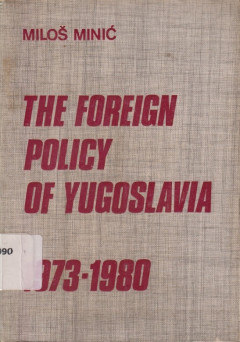
The Foreign policy of Yugoslavia 1973–1980
This book examines Yugoslavia's foreign policy during the period 1973–1980, when the country faced complex international dynamics amidst the Cold War. Miloš Minić, a prominent figure in Yugoslav diplomacy, outlines the principles of non-aligned foreign policy, relations with major powers, and Yugoslavia's role in multilateral diplomacy. This book serves as an important reference for underst…
- Edisi
- -
- ISBN/ISSN
- -
- Deskripsi Fisik
- 340 pages ; 20 cm
- Judul Seri
- -
- No. Panggil
- 327.495 MIN f
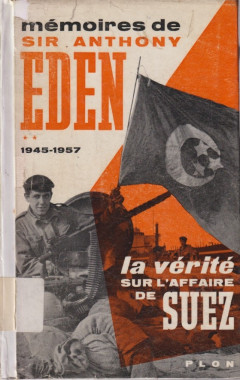
Mémoires; 1945–1957
The book Mémoires: 1945–1957 is the second volume of the memoirs of Sir Anthony Eden, one of the most important British political figures of the 20th century and Prime Minister of the United Kingdom (1955–1957). In this French translation, Eden describes his role in British foreign policy after World War II, including international relations, the development of the Commonwealth, and major …
- Edisi
- -
- ISBN/ISSN
- -
- Deskripsi Fisik
- ii, 654 pages ; 22,5 cm
- Judul Seri
- -
- No. Panggil
- 923.1 EDE m
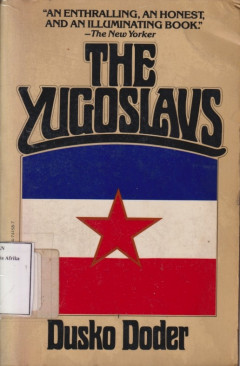
The Yugoslavs
This book provides an in-depth analysis of the society, politics, and social conditions of Yugoslavia after World War II. Journalist and Balkan observer Dusko Doder describes the internal dynamics of the federation, including the ethnic tensions, political structures, and social transformations that shaped the modern Yugoslav identity. With a comprehensive bibliography and index, this book is a…
- Edisi
- -
- ISBN/ISSN
- 0–394–74158–7
- Deskripsi Fisik
- xiv, 256 pages ; 20,5 cm
- Judul Seri
- -
- No. Panggil
- 949.703 DOD y
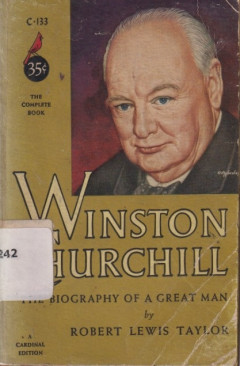
Winston Churchill; The Biography of a great man
This book is a popular biography of Winston Churchill written by Robert Lewis Taylor, a Pulitzer Prize-winning author. Through a lively narrative style, Taylor describes Churchill's life journey from his youth, military career, political career, to his role as the leader of Britain during World War II. This book presents a balanced portrait of Churchill's personal and professional life, highlig…
- Edisi
- -
- ISBN/ISSN
- -
- Deskripsi Fisik
- 405 pages ; 16 cm
- Judul Seri
- -
- No. Panggil
- 923.1 TAY w
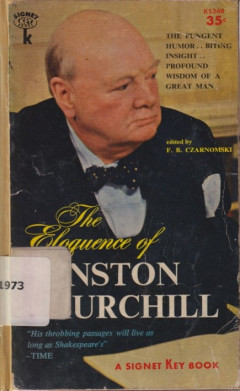
The Eloquence of Winston Churchill
This book is a collection of selected speeches by Winston Churchill, compiled and edited by F. B. Czarnomski. Through this compilation, readers can explore Churchill's rhetorical power and leadership in various political situations, especially during World War II and the period that followed. This collection showcases the language style, political vision, and decisiveness of a statesman known a…
- Edisi
- -
- ISBN/ISSN
- -
- Deskripsi Fisik
- xii, 200 pages ; 18 cm
- Judul Seri
- -
- No. Panggil
- 352.23092 CZA e
Talleyrand
This book is a comprehensive biography of Charles Maurice de Talleyrand-Périgord, one of the most influential diplomats in French and European history. Duff Cooper describes Talleyrand's life journey from the French Revolution, through the Napoleonic era, to the Restoration of the monarchy. With a strong narrative style, this book highlights Talleyrand's political acumen, diplomatic strategy, …
- Edisi
- -
- ISBN/ISSN
- -
- Deskripsi Fisik
- 399 pages : illustration ; 22,5 cm
- Judul Seri
- -
- No. Panggil
- 920.71 COO t

The USSR in 1989: A Record of events
This volume provides a detailed chronological record of political, social, and economic developments in the Soviet Union during the pivotal year of 1989. Compiled from a wide range of official documents, news reports, and archival materials, the book traces major reforms, internal conflicts, institutional changes, and public movements that accelerated the disintegration of the Soviet system. It…
- Edisi
- -
- ISBN/ISSN
- 0-8133-8016-2
- Deskripsi Fisik
- x, 740 pages ; 23,5 cm
- Judul Seri
- -
- No. Panggil
- 947.085 TOL u
 Karya Umum
  Filsafat
  Agama
Agama  Ilmu-ilmu Sosial
  Bahasa
  Ilmu-ilmu Murni
  Ilmu-ilmu Terapan
  Kesenian, Hiburan, dan Olahraga
  Kesusastraan
  Geografi dan Sejarah