Ditapis dengan

The Nehrus and the Gandhis an Indian dynasty
Ali examines how this family came to dominate Indian politics, shaping the nation’s post-independence identity, ideologies, and electoral culture. He also analyzes the interplay of personal relationships, power, and ideology — including the conflicts, ambition, and charismatic leadership that defined this political lineage. The book is both historical and analytical, offering insight into t…
- Edisi
- -
- ISBN/ISSN
- 0 330 28985 3
- Deskripsi Fisik
- 301 pages : illustrations ; 19,5 cm
- Judul Seri
- -
- No. Panggil
- 954.042 ALI n
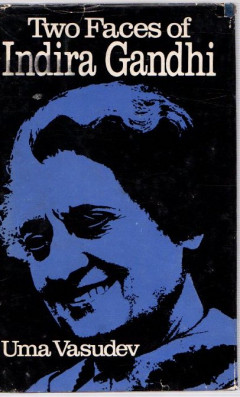
Two faces of Indira Gandhi
Dua Wajah Indira Gandhi karya Uma Vasudev merupakan catatan kritis dan tajam tentang gaya kepemimpinan, manuver politik, dan dualitas persona publik Indira Gandhi. Vasudev mengkaji bagaimana Indira bergerak antara menjadi pemimpin demokratis yang menghargai partisipasi massa dan sosok yang semakin otoriter yang ingin memusatkan kekuasaan. Melalui analisis politik yang detail dan observasi dari …
- Edisi
- -
- ISBN/ISSN
- 0 7069 0576 0
- Deskripsi Fisik
- vi, 208 pages ; 22 cm
- Judul Seri
- -
- No. Panggil
- 954.0450924 VAS t
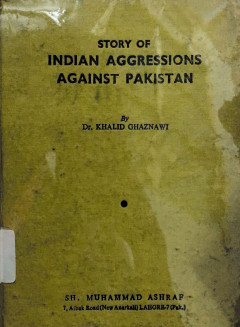
Story of Indian aggressions against Pakistan
Story of Indian Aggressions Against Pakistan by Khalid Ghaznawi presents an account of the political and military tensions between India and Pakistan, with particular emphasis on the events leading to and surrounding the 1965 Indo-Pak war. The book documents Pakistan’s perspective on the conflict, outlining the alleged acts of aggression carried out by India and the regional implications of t…
- Edisi
- -
- ISBN/ISSN
- -
- Deskripsi Fisik
- 328 pages : illustrations ; 20,5 cm
- Judul Seri
- -
- No. Panggil
- 954.045 GHA s
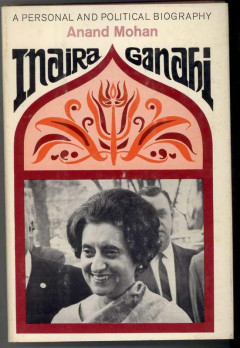
Indira Gandhi: A Personal and political biography
Indira Gandhi: A Personal and Political Biography by Anand Mohan offers an in-depth portrait of one of India’s most influential leaders. The book traces Indira Gandhi’s early life, her upbringing in the Nehru political dynasty, and the personal experiences that shaped her character. It examines her rise to political prominence, her role within the Indian National Congress, and the challenge…
- Edisi
- -
- ISBN/ISSN
- -
- Deskripsi Fisik
- ix, 303 pages : illustrations ; 21,5 cm
- Judul Seri
- -
- No. Panggil
- 954.045 MOH i
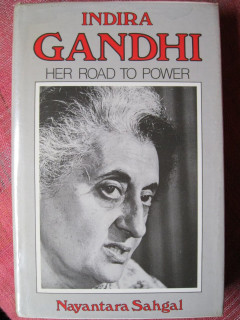
Indira Gandhi: Her road to power
Indira Gandhi: Her Road to Power by Nayantara Sahgal provides a critical and insightful biography of Indira Gandhi, focusing on her political emergence and ascent to power. Drawing on her personal knowledge (she is a cousin of Gandhi) and political observation, Sahgal analyzes how Indira navigated the Nehru-era political structures, asserting her leadership during turbulent times. The book incl…
- Edisi
- -
- ISBN/ISSN
- 0 356 09166 X
- Deskripsi Fisik
- xv, 260 pages : illustrations ; 23,5 cm
- Judul Seri
- -
- No. Panggil
- 954.0450924 SAH i
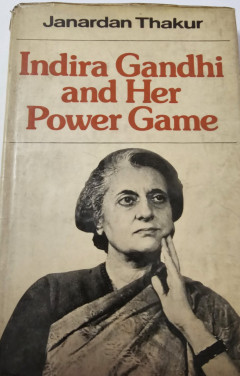
Indira Gandhi and her power game
Indira Gandhi and Her Power Game by Janardan Thakur offers a critical analysis of Indira Gandhi’s political career, focusing on her style of governance, power maneuvers, and the strategies she employed to consolidate strength within the Indian National Congress and the Indian government. Thakur examines her rise to power, her methods of political control, her relationships with party insiders…
- Edisi
- -
- ISBN/ISSN
- 0-7069-0985-2
- Deskripsi Fisik
- 165 pages : illustrations ; 22 cm
- Judul Seri
- -
- No. Panggil
- 954.045 THA i
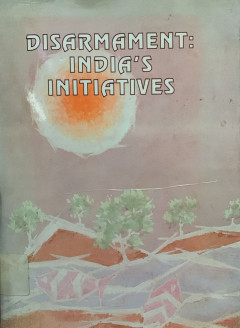
Disarmament: India's initiatives
Disarmament: India’s Initiatives is a government-published document by the External Publicity Division of India’s Ministry of External Affairs, outlining India’s long-standing commitment and concrete actions on global disarmament. The publication presents India’s historical proposals, including its call for a nuclear-weapon-free world, the 1988 Action Plan for phased disarmament, and ef…
- Edisi
- -
- ISBN/ISSN
- -
- Deskripsi Fisik
- 135 pages; 24,5 cm
- Judul Seri
- -
- No. Panggil
- 954 EXT d

Jawaharlal Nehru: The Discovery of India
The Discovery of India by Jawaharlal Nehru is a profound and reflective work written during his imprisonment at Ahmadnagar Fort (1942–1945). Nehru writes about India’s vast cultural, historical, and philosophical journey — from the ancient Indus Valley civilization, through the Vedic period, all the way to the British colonial era and the rise of nationalism. He draws on texts like the Ve…
- Edisi
- -
- ISBN/ISSN
- -
- Deskripsi Fisik
- 582 pages ; 21 cm
- Judul Seri
- -
- No. Panggil
- 954.042 GAN j
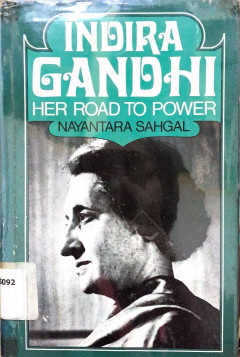
Indira Gandhi: Her road to power
Indira Gandhi: Her Road to Power by Nayantara Sahgal is an analytical biography that explores Indira Gandhi's transformation from an ordinary political figure to a dominant leader in India. Sahgal, also Indira's cousin, combines personal insight and historical analysis to explain how Indira consolidated power, manipulated the Congress party structure, and made decisions that strengthened her po…
- Edisi
- -
- ISBN/ISSN
- 0-8044-1827-6
- Deskripsi Fisik
- xv, 260 pages : illustrations ; 23,5 cm
- Judul Seri
- -
- No. Panggil
- 954.045092 SAH i

Jawaharlal Nehru: The Discovery of India
This book contains a collection of 196 letters written by Jawaharlal Nehru to his daughter, Indira Gandhi, during his imprisonment from 1930–1933. Through these letters, Nehru explains world history in a broad sense, from ancient civilizations and cultural developments to political struggles and major changes in global society. Presented in a narrative and reflective style, this book provides…
- Edisi
- -
- ISBN/ISSN
- -
- Deskripsi Fisik
- 582 pages ; 21 cm
- Judul Seri
- -
- No. Panggil
- 954.042 GAN j
 Karya Umum
  Filsafat
  Agama
Agama  Ilmu-ilmu Sosial
  Bahasa
  Ilmu-ilmu Murni
  Ilmu-ilmu Terapan
  Kesenian, Hiburan, dan Olahraga
  Kesusastraan
  Geografi dan Sejarah