Ditapis dengan

Leadership and national development in North Africa: A Comparative study
Leadership and National Development in North Africa: A Comparative Study by Elbaki Hermassi explores the political structures, leadership styles, and national development strategies of three North African states—Algeria, Morocco, and Tunisia. Hermassi analyzes the role of political elites, the evolution of nationalist movements, and the challenges of modernization in the post-colonial period…
- Edisi
- -
- ISBN/ISSN
- 0-520-02170-3
- Deskripsi Fisik
- xi, 241 pages : illustration ; 20 cm
- Judul Seri
- -
- No. Panggil
- 320.961 HER l
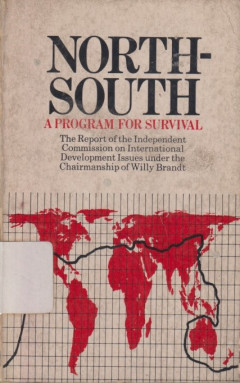
North–South: A Programme for survival
This seminal report prepared by the Independent Commission on International Development Issues, chaired by Willy Brandt, examines the deepening economic divide between the industrialized North and the developing South. The book outlines urgent strategies for global cooperation, highlighting issues of trade imbalance, poverty, development financing, and the need for new international economic st…
- Edisi
- -
- ISBN/ISSN
- 0-262-52004-6
- Deskripsi Fisik
- 304 pages ; 17,5 cm
- Judul Seri
- -
- No. Panggil
- 382.1 IND n

Disposable people: New slavery in the global economy
Disposable People exposes the disturbing reality of modern-day slavery within the global economy. Kevin Bales documents how millions of people worldwide are trapped in forced labor, debt bondage, sex trafficking, and other forms of exploitation. Through case studies and investigative research, Bales demonstrates how contemporary slavery persists through economic pressures, corruption, and globa…
- Edisi
- -
- ISBN/ISSN
- 978-0-520-24384-2
- Deskripsi Fisik
- xiv, 298 pages : illustration ; 23 cm
- Judul Seri
- -
- No. Panggil
- 306.362 BAL d

L’Afrique étranglée : Zambie, Tanzanie, Sénégal, Côte-d’Ivoire, Guin…
René Dumont and Marie-France Mottin's book, "L'Afrique Étranglée," examines the economic, political, and social crises that plagued various African countries after independence. Through case studies of Zambia, Tanzania, Senegal, Côte-d'Ivoire, Guinea-Bissau, and Cap-Vert, the authors outline how colonialism, mismanagement, economic dependency, and flawed development policies led to stagnant…
- Edisi
- -
- ISBN/ISSN
- -
- Deskripsi Fisik
- 264 pages ; 20,5 cm
- Judul Seri
- -
- No. Panggil
- 960 DUM I

The Economic impact on under-developed societies: Essays on international inv…
This book contains a collection of essays by S. Herbert Frankel that examine the relationship between international investment, social change, and economic development in underdeveloped countries. Frankel examines how foreign capital influences social structure, economic growth, and modernization in Asia, Africa, and Latin America. Through economic and social analysis, this book provides a deep…
- Edisi
- -
- ISBN/ISSN
- -
- Deskripsi Fisik
- 179 pages : illustrations ; 23 cm
- Judul Seri
- -
- No. Panggil
- 338.91 FRA e
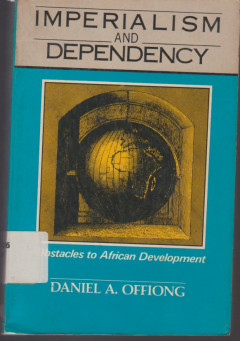
Imperialism and dependency: Obstacles to African development
Daniel A. Offiong's book, Imperialism and Dependency, examines how imperialism and structures of international dependency have become major obstacles to Africa's economic development. Offiong examines the unequal global economic relations between developed and developing countries, explaining how colonialism and modern economic practices have created patterns of dependency that hinder Africa's …
- Edisi
- -
- ISBN/ISSN
- 0-88258-127-9
- Deskripsi Fisik
- xxvi, 483 pages ; 21,5 cm
- Judul Seri
- -
- No. Panggil
- 338.96 OFF i
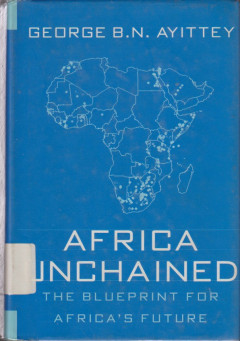
Africa unchained: The Blueprint for Africa’s future
George B. N. Ayittey's Africa Unchained examines the underlying causes of economic and political stagnation in Africa and offers a blueprint for a brighter future. Ayittey highlights the failure of postcolonial governance, corruption, and ineffective economic policies as key obstacles to development. The book advocates a return to traditional African values, the strengthening of institutions, f…
- Edisi
- -
- ISBN/ISSN
- 1–4039–6359–2
- Deskripsi Fisik
- xxvi, 483 pages ; 21,5 cm
- Judul Seri
- -
- No. Panggil
- 338.96 AYI a
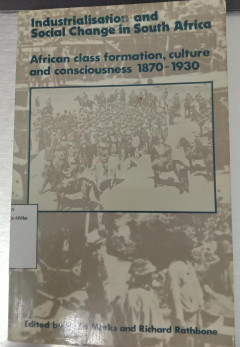
Industrialisation and social change in South Africa: African class formation,…
This book is a collection of essays examining the impact of industrialization on social change in South Africa between 1870 and 1930. Edited by Shula Marks and Richard Rathbone, it examines the formation of African social classes, cultural developments, and changes in social consciousness resulting from modernization and capitalism. It highlights how economic and political dynamics shaped socia…
- Edisi
- -
- ISBN/ISSN
- 0-582-64337-6
- Deskripsi Fisik
- 383 pages; 21 cm
- Judul Seri
- -
- No. Panggil
- 968 MAR i

Slaves, spices & ivory in Zanzibar: Integration of an East African commercial…
This book is an in-depth study of Zanzibar's development as an international trading center in East Africa between 1770 and 1873. Abdul Sheriff analyzes how the slave, spice, and ivory trades shaped Zanzibar's economic structure and integrated it into the world economy. Using an economic history approach, the author traces the role of Arab, Swahili, and Indian traders, as well as colonial power…
- Edisi
- -
- ISBN/ISSN
- 0-85255-015-4
- Deskripsi Fisik
- xx, 297 pages : illustration ; 21,5 cm
- Judul Seri
- -
- No. Panggil
- 330.9678 SHE e

Unions and leaders in Ghana: A Model of labor and development
This study by Paul S. Gray examines the structure, leadership, and development of trade unions in Ghana, focusing on their role in the country’s economic and social transformation. Drawing on interviews, archival materials, and field research, the book analyzes how union leadership shapes labor relations, worker participation, and national development policies. It highlights the evolution of …
- Edisi
- -
- ISBN/ISSN
- 0-914970-58-5
- Deskripsi Fisik
- x, 230 pages : illustration ; 21,5 cm
- Judul Seri
- -
- No. Panggil
- 331.8809667 GRA u
 Karya Umum
 Filsafat
 Agama
 Ilmu-ilmu Sosial
 Bahasa
 Ilmu-ilmu Murni
 Ilmu-ilmu Terapan
 Kesenian, Hiburan, dan Olahraga
 Kesusastraan
 Geografi dan Sejarah