Ditapis dengan

History of revolutionary activities of the great leader comrade Kim Il Sung
This volume presents a historical account of the revolutionary activities of the Great Leader Comrade Kim Il Sung. Published in 1983 by the Foreign Languages Publishing House in Pyongyang, the book documents key events, ideological development, and leadership achievements that shaped the foundation of the Democratic People’s Republic of Korea. Through narrative descriptions and historical ref…
- Edisi
- -
- ISBN/ISSN
- -
- Deskripsi Fisik
- 682 pages ; 23 cm
- Judul Seri
- -
- No. Panggil
- 923.1591 FOR h

The Benevolent sun: 1. mt. paekdu-san tells
This volume, The Benevolent Sun: 1. Mt. Paekdu-san Tells, published in 1980 by the Foreign Languages Publishing House in Pyongyang, presents ideological narratives centered around Mt. Paektu, a symbolic site in the revolutionary history of the Democratic People’s Republic of Korea. The book offers accounts intended to highlight the historical, political, and cultural significance of the mount…
- Edisi
- -
- ISBN/ISSN
- -
- Deskripsi Fisik
- 470 pages : illustrations ; 23 cm
- Judul Seri
- -
- No. Panggil
- 320.95193 FOR t
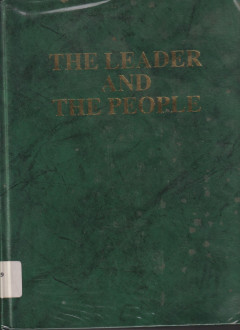
The Leader and the People
This pictorial volume presents scenes depicting the relationship between the leader and the people of the Democratic People’s Republic of Korea. Published by Korea Pictorial in Juche 91 (2002), the book contains photographs of mass events, social gatherings, and public demonstrations that reflect the political culture and social atmosphere of the DPRK. Through images and short captions, it po…
- Edisi
- -
- ISBN/ISSN
- -
- Deskripsi Fisik
- 336 pages : illustrations ; 29,5 cm
- Judul Seri
- -
- No. Panggil
- 923.1519 KOR t
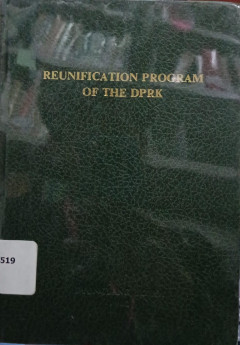
Reunification program of the DPRK
Buku ini berisi pernyataan resmi dan proposal pemerintah Korea Utara mengenai penyatuan semenanjung Korea. Di dalamnya dipaparkan garis besar kebijakan politik, usulan sistem pemerintahan bersama, dan kritik terhadap kebijakan reunifikasi Korea Selatan. Dokumen ini menegaskan posisi DPRK bahwa penyatuan harus dilakukan tanpa campur tangan asing dan berdasarkan asas independensi nasional.
- Edisi
- -
- ISBN/ISSN
- -
- Deskripsi Fisik
- 186 pages : 21 cm
- Judul Seri
- -
- No. Panggil
- 320.95193 FOR r
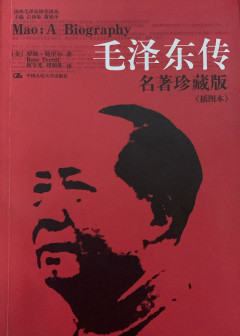
Mao: A Biography Maozedong chuan
This book presents a comprehensive biography of Mao Zedong, from his childhood and education to his encounter with Marxism, his involvement in the revolution, to the peak of his power and the period of his rule in the People's Republic of China. The author analyzes Mao's character, ideology, political and military decisions, and the historical impact of his leadership, both achievements and con…
- Edisi
- -
- ISBN/ISSN
- 978-7-300-12621-0
- Deskripsi Fisik
- 545 pages : illustrations ; 24 cm
- Judul Seri
- -
- No. Panggil
- 923.1 TER m
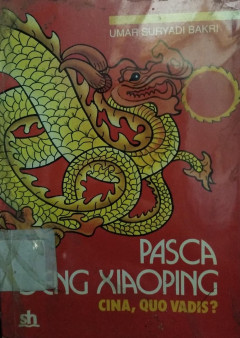
Cina, quo vadis? After Deng Xiaoping
This book analyzes the political direction and transformation of China following the leadership of Deng Xiaoping. Edited by Umar Suryadi Bakry, the volume examines China’s economic reforms, political restructuring, and social changes during the transitional period after Deng’s era. It provides insights into China’s domestic and foreign policies, the challenges of modernization, and the na…
- Edisi
- -
- ISBN/ISSN
- 979-416-357-0
- Deskripsi Fisik
- xiv, 173 pages ; 20,5 cm
- Judul Seri
- -
- No. Panggil
- 951 BAK c

Malay politics in Malaysia: A Study of the UMNO and PAS
This study examines the two major Malay political parties in Malaysia, the United Malays National Organization (UMNO) and Partai Islam (PAS), focusing on the years 1945 - 1969 to coincide with the emergence of broadly based political parties and the ending of an era in Malaysian politics with the tragic racial riots in May 1969. There is an introductory chapter giving an overview of the pre-196…
- Edisi
- -
- ISBN/ISSN
- -
- Deskripsi Fisik
- xii, 326 pages : ilustrations ; 24 cm
- Judul Seri
- -
- No. Panggil
- 324.25951 FUN m

Arafat: From defender to dictator
In this meticulously researched and iconoclastic work, the internationally respected Palestinian analyst and writer Said K. Aburish turns the current Western perception of Arafat upside-down and presents a re-examination of the leader's life. Judged by how the West now views him, Arafat has undergone one of the fastest transformations of any public figure in recorded history. In a mere four yea…
- Edisi
- -
- ISBN/ISSN
- 1-58234-049-8
- Deskripsi Fisik
- 360 pages; 21 cm
- Judul Seri
- -
- No. Panggil
- 920 ABU a

From third world to first: The Singapore story 1965-2000
"Few gave tiny Singapore much chance of survival when it was granted independence in 1965. How is it, then, that today the former British colonial trading post is a thriving Asian metropolis?" "The story of that transformation is told here by Lee Kuan Yew. Rising from a legacy of divisive colonialism, the devastation of the Second World War, and general poverty and disorder following the withdr…
- Edisi
- -
- ISBN/ISSN
- 981-204-984-3
- Deskripsi Fisik
- 778 pages : index ; 24 cm
- Judul Seri
- -
- No. Panggil
- 923.1 ANN f
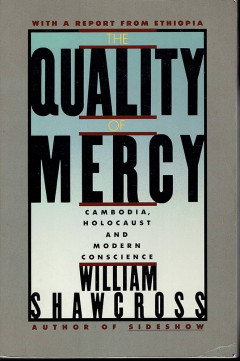
The quality of mercy: Cambodia, Holocaust and modern conscience
Study of the role of developed countries, the role of UN (UN and specialized agencies) and of nongovernmental organizations in providing emergency relief and food aid to alleviate hunger in Cambodia in 1979 - examines the functioning of responsible agencies in response to a disaster, the economic implications and political problems involved; discusses the conflict between politics and humanitar…
- Edisi
- -
- ISBN/ISSN
- 0-671-44022-5
- Deskripsi Fisik
- 464 pages : bibliography, index ; 25 cm
- Judul Seri
- -
- No. Panggil
- 959.604 SHA q
 Karya Umum
  Filsafat
  Agama
Agama  Ilmu-ilmu Sosial
  Bahasa
  Ilmu-ilmu Murni
  Ilmu-ilmu Terapan
  Kesenian, Hiburan, dan Olahraga
  Kesusastraan
  Geografi dan Sejarah