Ditapis dengan
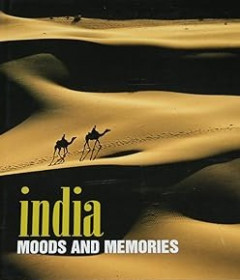
India: Moods and memories
India: Moods and Memories is a pictorial and narrative anthology edited by Vandana Malhotra, produced for the Public Diplomacy Division of India’s Ministry of External Affairs. This volume captures the essence of India through diverse essays, photographic essays, and reflections that explore the emotional landscapes and historical memories of the country. It includes richly illustrated sectio…
- Edisi
- -
- ISBN/ISSN
- -
- Deskripsi Fisik
- 381 pages : illustrations ; 28 cm
- Judul Seri
- -
- No. Panggil
- 954 VAN i
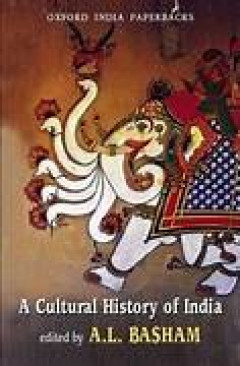
A Cultural History of India
The book covers important aspects such as religion, philosophy, social organization, literature, art, architecture, music, and scientific developments. It also includes a special section on the influence of Indian civilization on the world, as well as on Indian political history, which provides a chronological framework for non-specialist readers. Contributors include renowned figures such as S…
- Edisi
- -
- ISBN/ISSN
- 0-19-563921-9
- Deskripsi Fisik
- xx, 585 pages : illustrations ; 23,7 cm
- Judul Seri
- -
- No. Panggil
- 954 BAS c
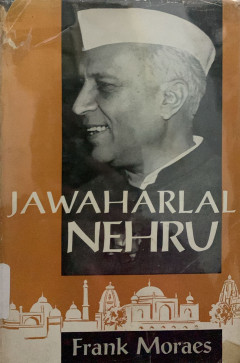
Jawaharlal Nehru
This biography by Frank Moraes offers a detailed and balanced portrait of Jawaharlal Nehru, India’s first Prime Minister. Drawing from a wide range of sources, Moraes explores Nehru’s early life, his intellectual formation, his role in the Indian independence movement, and his political career after independence. The biography provides insights into Nehru’s personality — his humanism, h…
- Edisi
- -
- ISBN/ISSN
- -
- Deskripsi Fisik
- x, 511 pages : illustrations ; 21,5 cm
- Judul Seri
- -
- No. Panggil
- 954.042 MOR j

Nehru
Nehru by B. N. Pandey is a comprehensive political biography of Jawaharlal Nehru, India's first Prime Minister. Through 499 pages, Pandey explores Nehru’s intellectual development, his nationalist aspirations, and his role in shaping modern India. The book examines Nehru’s upbringing, his friendship with Mahatma Gandhi, his leadership during the struggle for independence, and his years as h…
- Edisi
- -
- ISBN/ISSN
- 0-8128-1931-4
- Deskripsi Fisik
- 499 pages ; 24 cm
- Judul Seri
- -
- No. Panggil
- 954.042 PAN n

Jawaharlal Nehru: Glimpses of world history
Glimpses of World History by Jawaharlal Nehru is a collection of nearly 200 letters written to his daughter Indira during his imprisonment between 1930 and 1933. In these letters, Nehru masterfully weaves together a panoramic narrative of world history — from ancient civilizations in Greece and Rome to empires in Asia, from the rise and fall of major dynasties to modern political movements. W…
- Edisi
- -
- ISBN/ISSN
- -
- Deskripsi Fisik
- xxii, 992 pages ; 21 cm
- Judul Seri
- -
- No. Panggil
- 954.042 GAN j
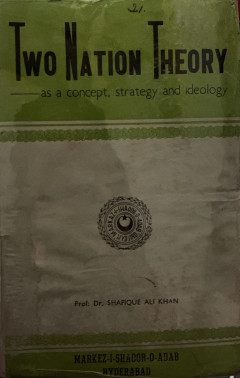
Two nation theory: As a concept, strategy and ideology
Shafique Ali Khan's Two-Nation Theory: As Concept, Strategy, and Ideology is a comprehensive and scholarly study of one of the most influential ideas behind the partition of India in 1947. Khan examines the "Two-Nation Theory" not as a mere historical accident, but as a well-developed ideological construct, a political strategy, and a concept rooted in religion and nationalism. He traces its or…
- Edisi
- -
- ISBN/ISSN
- -
- Deskripsi Fisik
- xi, 976 pages ; 22 cm
- Judul Seri
- -
- No. Panggil
- 954.0296 KHA t
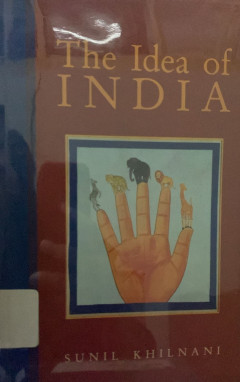
The idea of India
Sunil Khilnani's The Idea of India is a profound historical-political study of the post-independence Indian state project. Khilnani explores the paradoxes and ironies of modern India's identity: a major multi-ethnic, secular, and pluralistic democracy, yet also facing poverty, religious tensions, and doubts about its national identity. He explores the role of figures like Gandhi and Nehru…
- Edisi
- -
- ISBN/ISSN
- 0-241-13573-7
- Deskripsi Fisik
- xi, 263 pages : illustrations ; 22 cm
- Judul Seri
- -
- No. Panggil
- 954.04 KHI i
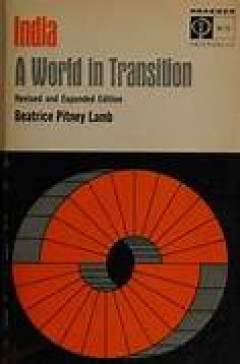
India: A World in transition
India: A World in Transition by Beatrice Pitney Lamb is a comprehensive analysis of contemporary India (at the time of publication), examining how India's traditions, politics, and social structures are undergoing profound change. Lamb presents a comprehensive overview of India's long history while highlighting post-independence challenges such as social reform, education, language, and economi…
- Edisi
- 3
- ISBN/ISSN
- -
- Deskripsi Fisik
- xii, 428 pages : illustrations ; 20,2 cm
- Judul Seri
- -
- No. Panggil
- 954 LAM i
Changing pattern of Indian villages
G. R. Madan's Changing Patterns of Indian Villages is a profound sociological and demographic study of the transformation of rural society in India during the post-independence period through the mid-20th century. Madan explores how old social structures—such as caste, rural family structure, and agrarian relations—evolved and adapted under the pressures of modernization, land reform, and l…
- Edisi
- -
- ISBN/ISSN
- -
- Deskripsi Fisik
- vii, 508 pages ; 18,5 cm
- Judul Seri
- -
- No. Panggil
- 954.3 MAD c
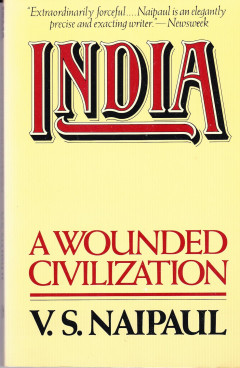
India: A Wounded civilization
V. S. Naipaul's India: A Wounded Civilization is both a personal reflection and a trenchant analysis of India, written after his visit to the country in 1975 during the Emergency. Naipaul examines India's complex history, religion, and social structure, arguing that centuries of foreign rule have left deep psychological and cultural scars. He depicts a nation grappling with poverty, disillusion…
- Edisi
- -
- ISBN/ISSN
- 0-394-72463-1
- Deskripsi Fisik
- xi, 191 pages ; 20 cm
- Judul Seri
- -
- No. Panggil
- 954 NAI i
 Karya Umum
  Filsafat
  Agama
Agama  Ilmu-ilmu Sosial
  Bahasa
  Ilmu-ilmu Murni
  Ilmu-ilmu Terapan
  Kesenian, Hiburan, dan Olahraga
  Kesusastraan
  Geografi dan Sejarah