Ditapis dengan
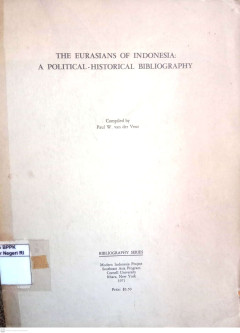
The Eurasians of Indonesia: A political-historical bibliography
The bulky Volksraad material contains a wealth of information on political, social and economic matters, including speeches by Eurasians representatives and the Dutch and/or Indonesian reactions to them.
- Edisi
- -
- ISBN/ISSN
- -
- Deskripsi Fisik
- viii, 115 pages ; 28 cm
- Judul Seri
- -
- No. Panggil
- 010 Veu e

Vulnerability: Small states in the global society: Report of a commonwealth c…
This study is the result of a decision by Commonwealth Heads of Government at their 1983 Meeting in New Delhi. It was conceived in the framework of the Commonwealth's long-standing concern with the economic problems of its very many small member states. The 'vulnerability' of small states is the essential concept informing the enquiry and it is considered in Previous page.
- Edisi
- -
- ISBN/ISSN
- 0-85092-280-1
- Deskripsi Fisik
- xii, 126 pages ; 22 cm
- Judul Seri
- -
- No. Panggil
- 337.3 Sec v

Voluntary peer review of competition law and policy: Armenia
This report was prepared for UNCTAD by William Kovacic, Commissioner, United States Federal Trade Commission, and David Lewis, Gordon Institute of Business Science, former Chairman of the South African Competition Tribunal. The substantive backstopping and review of the report was the responsibility of Ulla Schwager. Carl Buik provided valuable feedback. UNCTAD would like to acknowledge the val…
- Edisi
- Overview
- ISBN/ISSN
- -
- Deskripsi Fisik
- v, 38 pages : 21 cm
- Judul Seri
- -
- No. Panggil
- 340.95479 Unc v

Rice of the Vulcans: The history of bush's war cabinet
When George W. Bush campaigned for the White House, he was such a novice in foreign policy that he couldn't name the president of Pakistan and momentarily suggested he thought the Taliban was a rock-and-roll band. But he relied upon a group called the Vulcans—an inner circle of advisers with a long, shared experience in government, dating back to the Nixon, Ford, Reagan and first Bush adminis…
- Edisi
- First Edition
- ISBN/ISSN
- 9780143034896
- Deskripsi Fisik
- 426 pages ; 21 cm
- Judul Seri
- -
- No. Panggil
- 973. 928092 Man r

The Post-American World
For Fareed Zakaria, the great story of our times is ‘the rise of the rest’–the growth of countries like China, India, Brazil, Russia, South Africa and Kenya, which is generating a New global landscape. Global power is shifting, and wealth and innovation are bubbling up in unexpected places: the tallest buildings, biggest dams, top-selling movies and most advanced mobile phones are all bei…
- Edisi
- First Edition
- ISBN/ISSN
- 9781846141539
- Deskripsi Fisik
- -
- Judul Seri
- -
- No. Panggil
- 303. 49 Zak p

Toward a stronger US-indonesia security relationship
- Edisi
- -
- ISBN/ISSN
- -
- Deskripsi Fisik
- 113 pages ; 25 cm
- Judul Seri
- -
- No. Panggil
- 363. 97598 Has t
- Edisi
- -
- ISBN/ISSN
- -
- Deskripsi Fisik
- 113 pages ; 25 cm
- Judul Seri
- -
- No. Panggil
- 363. 97598 Has t

Political Islam in Southeast Asia: Moderates, radicals and terrorists
Events since 11 September 2001 have dramatically altered the security environment in the Muslim world and in Southeast Asia in particular. With the uncovering of an extensive terrorist network in Southeast Asia, the region has emerged as a major battleground in the global war on terrorism. Yet the issues raised by political Islam in Southeast Asia are much broader than the problem of terrorism.…
- Edisi
- First Edition
- ISBN/ISSN
- 0198529112
- Deskripsi Fisik
- 82 pages : illustration ; 23 cm
- Judul Seri
- -
- No. Panggil
- 297. 0959 Rab p
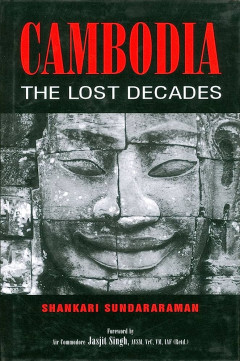
Cambodia: The lost decade
The cold war period is one that has been unique in the development of international relations and the main feature that dominated the politics at this time was the polarisation of groups on the basis of ideology. When one looks at the various kinds of conflicts which emerged during this period it is evident that the ideological factors were deeply grounded and there was a clear divide between t…
- Edisi
- -
- ISBN/ISSN
- 8186019316
- Deskripsi Fisik
- xvii, 201 pages ; illustration ; 24 cm
- Judul Seri
- -
- No. Panggil
- 320. 9596 Sun c
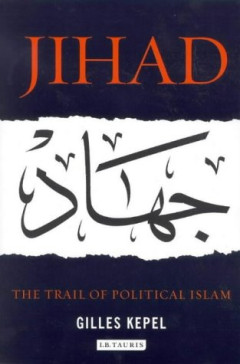
Jihad : The trail of political Islam
In recent years, the world order has been rocked by an explosive, unexpected and extraordinary phenomenon: political Islam. Beginning in the early 1970s, militants revolted against the regimes in power across the Muslim world and exacerbated political conflicts internationally. Their jihad-or 'Holy Struggle - aimed to establish a global Islamic state based solely on a strict interpretation of t…
- Edisi
- -
- ISBN/ISSN
- 1860646840
- Deskripsi Fisik
- x, 454 pages : illustration ; 24 cm
- Judul Seri
- -
- No. Panggil
- 320. 297953 Kep j
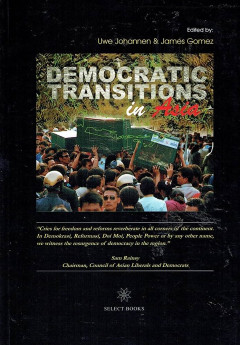
Democratic transitions in Asia
"Democratic Transitions in Asia" focuses on political changes in the Asian region. Since the 1997 economic crisis, countries of the region are seeing greater demands for the accountability of leaders. Symbolic of the region's continuing struggle for democratisation, the President of South Korea, Kim Dae Jung was awarded the Nobel Peace Prize in 2000, joining other recent Asian Nobel laureates, …
- Edisi
- -
- ISBN/ISSN
- 9814022179
- Deskripsi Fisik
- iv, 286 pages ; illustration ; 22 cm
- Judul Seri
- -
- No. Panggil
- 320. 959 Joh d
 Karya Umum
  Filsafat
  Agama
Agama  Ilmu-ilmu Sosial
  Bahasa
  Ilmu-ilmu Murni
  Ilmu-ilmu Terapan
  Kesenian, Hiburan, dan Olahraga
  Kesusastraan
  Geografi dan Sejarah