Ditapis dengan
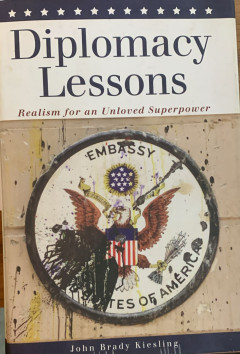
Diplomacy lessons: Realism for an unloved superpower
In Diplomacy Lessons, Kiesling reminds readers that U.S. power does not rest on military might alone and that anger at America has real consequences for U.S. national interests. The security and prosperity of the American people depend on efficient cooperation with foreigners on a range of issues, not only terrorism and nuclear nonproliferation but also trade policy, environmental protection, a…
- Edisi
- Ed. 1
- ISBN/ISSN
- 978-1-59797-017-4
- Deskripsi Fisik
- ix, 317 pages : index ; 23 cm
- Judul Seri
- -
- No. Panggil
- 327.73 Bra d

How America got it right: The U.S. march to military and political supremacy
As the world's dominant political force and military power, he says, we are the only nation that will actually go into the world and strike down evil. And we must not shirk that responsibility - especially because we cannot rely on our so-called allies to defend our freedoms. Alexander tells the dramatic and sometimes surprising story of how, from the American Revolution to the War on Terror, A…
- Edisi
- -
- ISBN/ISSN
- 1-4000-5288-2
- Deskripsi Fisik
- viii, 309 pages : bibl: hlm 293-296 : index ; 25 cm
- Judul Seri
- -
- No. Panggil
- 327.73 Ale h

In confidence : Moscow's ambassador to America's six Cold War presidents
Anatoly Dobrynin arrived in Washington in 1962. He was only forty-three, the youngest man ever to serve as Soviet ambassador to the United States. Amazingly he remained in Washington through the presidencies of Kennedy, Johnson, Nixon, Ford, Carter, and Reagan. Dobrynin became the main back channel for the White House and the Kremlin to exchange ideas, negotiate in secret, and set up summit mee…
- Edisi
- -
- ISBN/ISSN
- 0-8129-2328-6
- Deskripsi Fisik
- xiii, 672 pages : illustrations : index ; 25 cm
- Judul Seri
- -
- No. Panggil
- 327.2092 Dob c
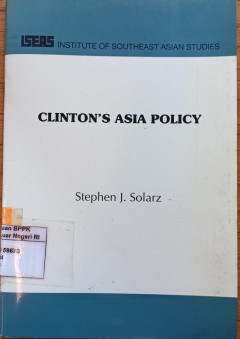
Clinton's Asia policy
A related adjustment in American policy toward China has been the extent to which the United States has re-initiated a high-level dialogue with the PRC President Bush, perhaps because he did not want to be seen as being too soft on China in the wake of the Tiananmen incident, suspended a high-level dialogue with Beijing. Under President Clinton, to some extent perhaps because the Administration…
- Edisi
- -
- ISBN/ISSN
- 981-3016-88-4
- Deskripsi Fisik
- viii, 22 pages ; 25 cm
- Judul Seri
- -
- No. Panggil
- 327.16959673 Sol c
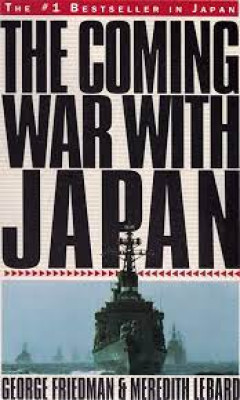
The coming war with Japan
Argues that the post-Cold War world will see the United States and Japan emerge as opponents, traces Japan's increasing power, and contends the United States holds the trump cards in the economic contest.
- Edisi
- -
- ISBN/ISSN
- 0-312-07677-0
- Deskripsi Fisik
- xv, 318 pages : illustration, table, bibliography, index ; 23 cm
- Judul Seri
- -
- No. Panggil
- 327.73052 Fri c

Japan and the United States: Troubled partners in a changing world
in the 1990s, the United States faces a rapidly unfolding security environment in the Asia-Pacific area. Its principal features are familiar : the economic dynamism of market economies ; the normalization of relations between China and the Soviet Union , symbolized by Gorbachev's visit to japan.
- Edisi
- First Edition
- ISBN/ISSN
- 0-08-041074-X
- Deskripsi Fisik
- xii, 144 pages ; 23 cm
- Judul Seri
- -
- No. Panggil
- 303.48273052 Moc j

The mighty and the almight : Reflections on America,God, and world affairs
In this fascinating book, Madeleine Albright weaves together history, personal experiences, and brilliant analysis in exploring how religion can be a force for liberty and tolerance rather than oppression and terror
- Edisi
- Edisi Pertama
- ISBN/ISSN
- 978-0-06-089258-6
- Deskripsi Fisik
- xii, 351 pages : index ; 20 cm
- Judul Seri
- -
- No. Panggil
- 261.87 Alb m

Reform in the Arab world: External influences and regional debates
September 11 provided a vision and a strategy to a US Presidency that until then had been groping for fresh ideas and a relevant foreign policy. The 'global war on terror' now became an article of faith for the United States. The US Government, media and think-tanks turned their attention to Islam, the Arab world and Saudi Arabia, and held them responsible for the catastrophe unleashed upon the…
- Edisi
- -
- ISBN/ISSN
- 81-8794378-5
- Deskripsi Fisik
- xiv, 173 pages ; 20 cm
- Judul Seri
- -
- No. Panggil
- 320.9174927 Ahm r

Days of infamy: MacArthur, Roosevelt, Churchill-The shocking truth revealed
Now, drawing on recently declassified American and British top-secret documents, New York Times bestselling historian John Costello reveals how major strategic and diplomatic miscalculations by Franklin D. Roosevelt and Winston S. Churchill together with the military blunders committed by General MacArthur set the stage for Japan's successful attacks on Pearl Harbor and Clark Field. For the fir…
- Edisi
- Ed. 1
- ISBN/ISSN
- 0-671-76985-5
- Deskripsi Fisik
- xi, 448 pages ; 24 cm
- Judul Seri
- -
- No. Panggil
- 940.53 2 Cos d

US relations with South Asia (since Christopher Columbus) and Pakistan-India …
This study has been undertaken in the context of this peculiar nature of the complex interaction, and the American interest in South Asia. All important milestones have been focused upon in this study from 1492, when Christopher Columbus managed to obtain the patronage of the Spanish crown to discover a sea route to India, down to the years just before the Partition of 1947. The visit to India …
- Edisi
- -
- ISBN/ISSN
- -
- Deskripsi Fisik
- ix, 504 pages ; 22 cm
- Judul Seri
- -
- No. Panggil
- 327.73054 Afr u
 Karya Umum
  Filsafat
  Agama
Agama  Ilmu-ilmu Sosial
  Bahasa
  Ilmu-ilmu Murni
  Ilmu-ilmu Terapan
  Kesenian, Hiburan, dan Olahraga
  Kesusastraan
  Geografi dan Sejarah