Ditapis dengan

Undaunted courage: Meriwether Lewis, Thomas Jefferson, and the opening of the…
Undaunted Courage is a comprehensive biography and historical narrative that follows Meriwether Lewis, Thomas Jefferson’s trusted secretary, and his role in leading the Lewis and Clark Expedition across the uncharted American West from 1804 to 1806. Stephen E. Ambrose explores Lewis’s personal life, his relationship with Jefferson, the expedition’s challenges, interactions with Native Ame…
- Edisi
- -
- ISBN/ISSN
- 0-684-82697-6
- Deskripsi Fisik
- 521 pages : illustrations ; 23,5 cm
- Judul Seri
- -
- No. Panggil
- 917.8042 AMB u

No longer enemies, not yet friends: An American soldier return to Vietnam
A former lieutenant who fought in Vietnam describes his emotional journey to reconciliation with his former enemies while participating in a humanitarian aid program in Vietnam.
- Edisi
- ed. 1
- ISBN/ISSN
- 0-393-003047-4
- Deskripsi Fisik
- 351 pages ; illustration (black and white) ; 24 cm
- Judul Seri
- -
- No. Panggil
- 915.9704 DOW n

Names on the land: A Historical account of place-naming in the United States
First published in 1945 and reissued as part of the New York Review Books Classics series, this work by George R. Stewart offers a comprehensive and engaging history of how places across the United States received their names. Blending linguistic analysis, folklore, and cultural history, the book explores Indigenous, colonial, regional, and modern naming traditions. Stewart traces the influence…
- Edisi
- -
- ISBN/ISSN
- 978-1-59017-273-5
- Deskripsi Fisik
- xx, 511 pages ; 20,5 cm
- Judul Seri
- -
- No. Panggil
- 917.3 STE n

The 10 big lies about America: Combating sestructive distortions about our na…
In this thought-provoking work, Michael Medved challenges widely circulated misconceptions about American history, culture, and national identity. The book identifies ten major “lies” or distortions that the author argues have shaped negative public perceptions of the United States. Combining historical analysis, cultural commentary, and political insight, Medved examines themes such as Ame…
- Edisi
- -
- ISBN/ISSN
- 978-0-307-39406-4
- Deskripsi Fisik
- vi, 280 pages ; 24,5 cm
- Judul Seri
- -
- No. Panggil
- 973 MED t

The Untold history of the United States
This book offers a revisionist account of United States history as presented by filmmaker Oliver Stone and historian Peter Kuznick. Serving as a companion to the acclaimed documentary series, it reexamines key political, military, and ideological developments of the 20th and early 21st centuries. The authors challenge conventional narratives by highlighting overlooked events, suppressed documen…
- Edisi
- -
- ISBN/ISSN
- 978-1-4516-1351-3
- Deskripsi Fisik
- xxxiii, 750 pages : illustrations ; 24 cm
- Judul Seri
- -
- No. Panggil
- 973.91 STO u

The Making of the diplomatic mind: The Training, outlook, and style of United…
This scholarly work examines the formation of professional identity among United States Foreign Service Officers during the period 1908–1931. Robert D. Schulzinger analyzes the recruitment, education, social background, and career expectations of diplomats in the early twentieth century, illustrating how their training and worldview shaped American diplomacy. The book explores institutional r…
- Edisi
- -
- ISBN/ISSN
- 0-8195-4086-2
- Deskripsi Fisik
- ix, 231 pages ; 23,5 cm
- Judul Seri
- -
- No. Panggil
- 353.00892 SCH m
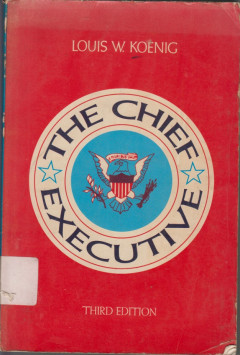
The Chief executive
This third edition of Louis W. Koenig’s influential work offers a comprehensive examination of the American presidency as the central institution of executive power in the United States. The book analyzes the constitutional foundations, political dynamics, administrative responsibilities, and leadership roles of the president. Koenig explores the evolution of presidential power, the relations…
- Edisi
- 3
- ISBN/ISSN
- 0-15-506672-2
- Deskripsi Fisik
- x, 452 pages ; 23,5 cm
- Judul Seri
- -
- No. Panggil
- 352.23 KOE c
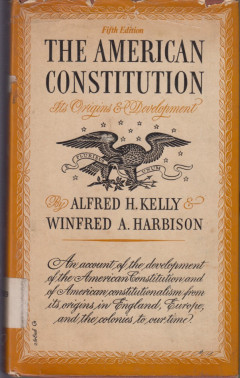
The American constitution: Its Origins and development
This widely used academic text provides a comprehensive historical analysis of the origins and evolution of the United States Constitution. In this fifth edition, Alfred H. Kelly and Winfred A. Harbison trace the development of constitutional principles from the colonial era through the founding period and into the twentieth century. The book explores the philosophical foundations of American c…
- Edisi
- -
- ISBN/ISSN
- 0-393-09176-7
- Deskripsi Fisik
- xvii, 1196 pages ; 24,5 cm
- Judul Seri
- -
- No. Panggil
- 342.73029 KEL a

Massachusetts, colony to commonwealth: Documents on the formation of Its cons…
This documentary collection presents key political, legal, and constitutional writings that trace the transformation of Massachusetts from a British colony to an independent commonwealth during the American Revolution. Edited by Robert J. Taylor, the volume compiles debates, legislative records, drafts, pamphlets, and other primary sources that illuminate the process leading to the creation of …
- Edisi
- -
- ISBN/ISSN
- 0-393-09396-4
- Deskripsi Fisik
- xi, 166 pages : illustrations ; 23,5 cm
- Judul Seri
- -
- No. Panggil
- 342.74402 TAY m
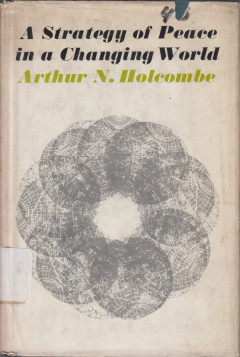
A Strategy of peace in a changing world
In this influential work, Arthur N. Holcombe examines the challenges of creating and sustaining peace in a rapidly changing international environment. He discusses the political, economic, and strategic forces shaping world affairs during the mid-twentieth century and explores the role of the United States in promoting global stability. Holcombe analyzes the requirements of an effective peace s…
- Edisi
- -
- ISBN/ISSN
- -
- Deskripsi Fisik
- 332 pages ; 21,5 cm
- Judul Seri
- -
- No. Panggil
- 327.172 HOL s
 Karya Umum
  Filsafat
  Agama
Agama  Ilmu-ilmu Sosial
  Bahasa
  Ilmu-ilmu Murni
  Ilmu-ilmu Terapan
  Kesenian, Hiburan, dan Olahraga
  Kesusastraan
  Geografi dan Sejarah