Ditapis dengan
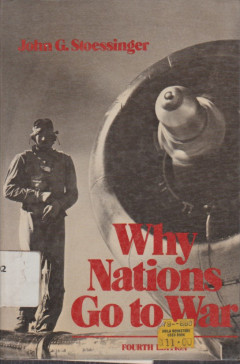
Why nations go to war
John G. Stoessinger's Why Nations Go to War is a classic analysis of the factors that drive states to war. Using a case study approach, this fourth edition examines major conflicts of the 20th century and highlights the role of political leaders, misperceptions, miscalculations, and international dynamics as crucial factors underlying the outbreak of war. Stoessinger emphasizes that the decisio…
- Edisi
- -
- ISBN/ISSN
- 0-312-87856-7
- Deskripsi Fisik
- xiii, 221 pages ; 21 cm
- Judul Seri
- -
- No. Panggil
- 355.02 STO w

Political realism and international morality: Ethics in the nuclear age
This book is a collection of papers presented at the Tenth Plenary Conference of the American Section of the International Association for Philosophy of Law and Social Philosophy, held in 1984 at the University of Notre Dame. It provides an in-depth discussion of the relationship between political realism and international morality, particularly in the context of the nuclear age. The contributo…
- Edisi
- -
- ISBN/ISSN
- 0-8133-0456-3
- Deskripsi Fisik
- x, 271 pages ; 23 cm
- Judul Seri
- -
- No. Panggil
- 172.4 KIP p
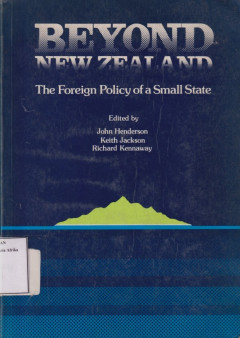
Beyond New Zealand: The Foreign policy of a small state
Beyond New Zealand: The Foreign Policy of a Small State is a scholarly examination of New Zealand’s diplomatic orientation, international role, and strategic challenges as a small state in a changing global environment. Edited by John Henderson, Keith Jackson, and Richard Kennaway, the book compiles analyses from leading experts on New Zealand’s external relations, its regional engagement i…
- Edisi
- -
- ISBN/ISSN
- 0456029303
- Deskripsi Fisik
- 270 pages ; 24 cm
- Judul Seri
- -
- No. Panggil
- 327.93 HEN b

Madagascar in the whirlwind of international relations: At The heart of the I…
This book by Serge Zafimahova offers a critical and insightful analysis of Madagascar’s international and regional political dynamics within the Indian Ocean. Drawing on the author’s extensive experience as a former international affairs correspondent and presidential adviser, the work examines the interaction between global politics and Madagascar’s domestic policy. It highlights issues …
- Edisi
- -
- ISBN/ISSN
- 2-913015-01-8
- Deskripsi Fisik
- 210 pages ; 23,5 cm
- Judul Seri
- -
- No. Panggil
- 327.669 ZAF m
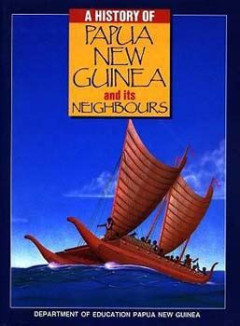
A History of Papua New Guinea and its neighbours
A History of Papua New Guinea and Its Neighbours is an introductory historical work that examines the development of Papua New Guinea within the regional context of Melanesia and the Pacific, as well as its interactions with neighboring countries. This book traces the long journey of Papuan society from prehistoric times, through early migrations, the development of culture and social systems, …
- Edisi
- First Edition
- ISBN/ISSN
- 0-7016-2590-2
- Deskripsi Fisik
- x, 60 pages; 25 cm
- Judul Seri
- -
- No. Panggil
- 995 WIL a
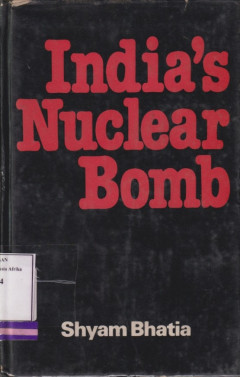
India's nuclear bomb
An in-depth investigation into India’s pursuit of nuclear capability during the Cold War era. The book examines political motivations, scientific developments, and strategic calculations behind India’s nuclear programme. Bhatia discusses key events leading to the first nuclear test in 1974 (“Smiling Buddha”), responses from global powers, and the domestic debates surrounding nuclear pol…
- Edisi
- -
- ISBN/ISSN
- 0-7069-0770-5
- Deskripsi Fisik
- 169 pages ; 22 cm
- Judul Seri
- -
- No. Panggil
- 355.8251 BHA i
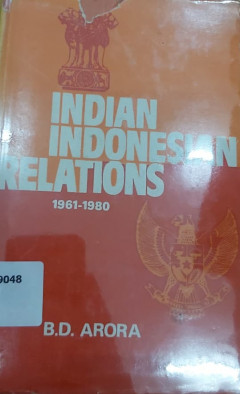
Indian Indonesia relations: 1961-1980
Inspired by centuries of mutual political, commercial, and cultural relations, and against the background of India’s spontaneous support during the Dutch–Indonesian struggle, this study examines the interaction of India and Indonesia from 1961 to 1980. While the early years reflected mutual goodwill and cooperation, later decades showed limitations, differing priorities, and ideological div…
- Edisi
- -
- ISBN/ISSN
- -
- Deskripsi Fisik
- xx, 371 pages ; 22 cm
- Judul Seri
- -
- No. Panggil
- 327.5405 ARO i

Nuclear India: Volume II
This first volume of Nuclear India by J. P. Jain provides an in-depth introduction to the origins, development, and strategic foundations of India’s nuclear program. The book examines India’s political motivations, scientific progress, and security concerns within the regional and global context. Jain discusses historical milestones, policy debates, technological challenges, and India’s p…
- Edisi
- -
- ISBN/ISSN
- -
- Deskripsi Fisik
- vxvii, 440 pages ; 22 cm
- Judul Seri
- -
- No. Panggil
- 355.0217 JAI n
Nuclear India: Volume II
This volume of Nuclear India by J. P. Jain explores India’s evolving nuclear policy, strategic motivations, and defense considerations. The author examines the historical development of India’s nuclear program, technological capabilities, and the geopolitical pressures influencing national security decisions. The book analyzes regional tensions in South Asia, global nuclear diplomacy, and I…
- Edisi
- -
- ISBN/ISSN
- -
- Deskripsi Fisik
- vxvii, 440 pages ; 22 cm
- Judul Seri
- -
- No. Panggil
- 355.0217 JAI n

Pax Indica: India and the world of the 21st century
"Indian diplomacy," a veteran diplomat told Shashi Tharoor many years ago, "is like the love-making of an elephant; it is conducted at a very high level, accompanied by much bellowing, and the results are not known for two years."
- Edisi
- -
- ISBN/ISSN
- 9780670085743
- Deskripsi Fisik
- 449 pages ; 23,5 cm
- Judul Seri
- -
- No. Panggil
- 327.540905 THA p
 Karya Umum
 Filsafat
 Agama
 Ilmu-ilmu Sosial
 Bahasa
 Ilmu-ilmu Murni
 Ilmu-ilmu Terapan
 Kesenian, Hiburan, dan Olahraga
 Kesusastraan
 Geografi dan Sejarah