Ditapis dengan

Indian philosophy
Indian Philosophy Volume II continues Sarvepalli Radhakrishnan's discussion of the major systems of Indian philosophy. This volume highlights the development of thought in the Nyaya, Vaisesika, Samkhya, Yoga, Purva Mimamsa, and Advaita Vedanta schools. Radhakrishnan explains the structure of logic, metaphysics, theory of knowledge, ethics, and the purpose of life according to various traditions…
- Edisi
- -
- ISBN/ISSN
- -
- Deskripsi Fisik
- 807 pages ; 22 cm
- Judul Seri
- Volume II
- No. Panggil
- 100.970 RAD i

Mountbatten: The Official biography Philip Ziegler
Mountbatten: The Official Biography by Philip Ziegler is a comprehensive life story of Louis Mountbatten, 1st Earl of Burma, covering his military career, political roles, and personal life. Ziegler draws on extensive archival material, interviews, and family papers to portray Mountbatten not only as a distinguished naval officer and wartime commander but also as the last Viceroy of India. The …
- Edisi
- -
- ISBN/ISSN
- 0-00-216543-0
- Deskripsi Fisik
- 786 pages : illustrations ; 24 cm
- Judul Seri
- -
- No. Panggil
- 923.254 ZIE m

Society in India: Continuity and change
Mandelbaum analyzes the caste system, the role of kinship networks, and the relationships between and within jatis (caste groups). He shows that the Indian social system, though very old and seemingly rigid, actually possesses powerful psychological and cultural dynamics particularly in family structure and the sense of belonging among its members.
- Edisi
- 1
- ISBN/ISSN
- 0-520-01623-8
- Deskripsi Fisik
- xi, 323 pages ; 24 cm
- Judul Seri
- -
- No. Panggil
- 954 MAN s
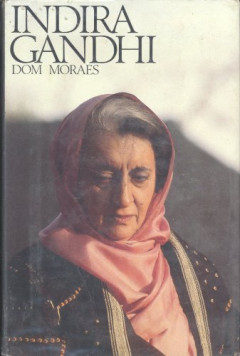
Indira Gandhi
Indira Gandhi by Dom Moraes is a deeply researched and intimate biography of Indira Gandhi, written by a journalist who had access to her personal circle. Published in 1980, it covers her early life, political rise, leadership as Prime Minister of India, and her personal struggles. Moraes provides a portrait of Indira as a complex leader — strong yet vulnerable, charismatic yet controversial.…
- Edisi
- -
- ISBN/ISSN
- 0-316-58191-7
- Deskripsi Fisik
- xvi, 336 pages : illustrations ; 24 cm
- Judul Seri
- -
- No. Panggil
- 954.045 MOR i
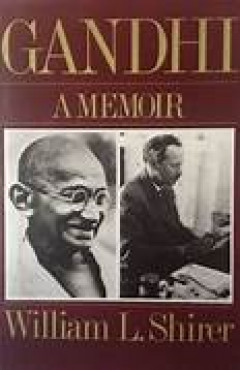
Gandhi: A Memoir
Gandhi: A Memoir presents William L. Shirer’s personal reflections on his encounters with Mahatma Gandhi and his impressions of Gandhi’s political and moral influence. Shirer, an American journalist covering India, shares his personal observations about Gandhi—from his simplicity and spiritual discipline to his brilliance in leading a nonviolent resistance against British imperialism. Shi…
- Edisi
- -
- ISBN/ISSN
- 0-671-25079-5
- Deskripsi Fisik
- 255 pages : illustrations ; 24 cm
- Judul Seri
- -
- No. Panggil
- 923.254 SHI g
Indira Gandhi's emergence and style
Indira Gandhi’s Emergence and Style by Nayantara Sahgal offers a psychological and political portrait of Indira Gandhi, focusing on her personality, leadership style, and how she rose to power. Sahgal dissects the interplay between Indira’s familial inheritance (as Nehru’s daughter) and her own temperament, arguing that her political behavior and decision-making were deeply shaped by her …
- Edisi
- -
- ISBN/ISSN
- 0-7069-0624-1
- Deskripsi Fisik
- ix, 215 pages ; 21 cm
- Judul Seri
- -
- No. Panggil
- 923.254 SAH i
My days with Nehru
My Days with Nehru by M. O. Mathai is a memoir recounting Mathai’s personal and working relationship with Jawaharlal Nehru, India’s first Prime Minister. Mathai, who served as Nehru’s private secretary, provides a revealing portrait of Nehru’s personality, work habits, political vision, and private life. Through detailed anecdotes, conversations, and reflections, Mathai describes not ju…
- Edisi
- -
- ISBN/ISSN
- 0 7069 0823 6
- Deskripsi Fisik
- xv, 200 pages : illustrations ; 22,5 cm
- Judul Seri
- -
- No. Panggil
- 954.042 MOM m

India through the lens: Photography 1840-1911
India Through the Lens: Photography 1840–1911, curated by Vidya Dehejia and a distinguished cast of contributors, charts the history of early photography in the Indian subcontinent. Through a collection of essays and photographs, the book examines how photography developed in India, from cityscapes, architecture, and natural landscapes to portraits of citizens and rulers. It also explores the…
- Edisi
- -
- ISBN/ISSN
- 1-890206-24-5
- Deskripsi Fisik
- 315 pages : illustrations ; 24 cm
- Judul Seri
- -
- No. Panggil
- 954.779 DEH i
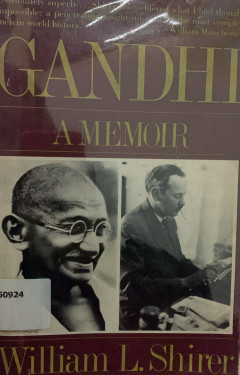
Gandhi: A Memoir
Recalling his friendship and conversations with the late Indian leader, William Shirer presents a portrait of Gandhi that spotlights his frailties as well as his accomplishments. As a young foreign correspondent, William Shirer reported briefly on Gandhi'but the year was 1931, when India's struggle for independence peaked and Gandhi scored perhaps his greatest political success. The year before…
- Edisi
- -
- ISBN/ISSN
- 0-671-25080-9
- Deskripsi Fisik
- 245 pages : illustrations ; 23,5 cm
- Judul Seri
- -
- No. Panggil
- 923.254 SHI g
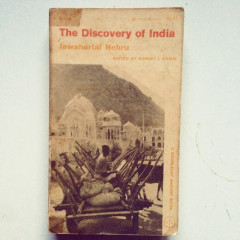
The Discovery of India
The Discovery of India adalah karya Jawaharlal Nehru yang sangat reflektif dan ilmiah, ditulis selama masa penahanannya di Benteng Ahmadnagar (1942–1945). Dalam narasi epistolary dan filosofis ini, Nehru menelusuri perjalanan budaya, sejarah, dan intelektual India yang luas — dari peradaban kunonya hingga penjajahan Inggris. Ia mengeksplorasi filsafat, agama, dan kehidupan politik India den…
- Edisi
- -
- ISBN/ISSN
- -
- Deskripsi Fisik
- xii, 426 pages ; 18 cm
- Judul Seri
- -
- No. Panggil
- 954.042 NEH d
 Karya Umum
  Filsafat
  Agama
Agama  Ilmu-ilmu Sosial
  Bahasa
  Ilmu-ilmu Murni
  Ilmu-ilmu Terapan
  Kesenian, Hiburan, dan Olahraga
  Kesusastraan
  Geografi dan Sejarah