Ditapis dengan
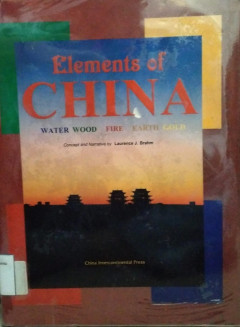
Elements of China: water, wood, fire, earth, gold
This visually rich cultural volume introduces readers to the Five Elements—Water, Wood, Fire, Earth, and Gold—which form the symbolic foundation of traditional Chinese philosophy, aesthetics, and identity. Laurence J. Brahm explores how these elements have shaped China’s history, architecture, arts, lifestyles, beliefs, and environmental perspectives. Through narrative and imagery, the bo…
- Edisi
- -
- ISBN/ISSN
- 7-5085-0045-8
- Deskripsi Fisik
- 203 pages : Ilustrations ; 29,5 cm
- Judul Seri
- -
- No. Panggil
- 951 BRA e

Elements of China: Water, wood, fire, earth, gold
This stunning photo collection explores China's geography, culture, and heritage through the lens of the Five Elements (Wu Xing) philosophy: water, wood, fire, earth, and gold (metal). Each section is dedicated to a single element, showcasing how that element manifests in the Chinese landscape, traditional architecture, art, and everyday life, providing a unique visual understanding of the rela…
- Edisi
- -
- ISBN/ISSN
- 978-7-5085-1392-8
- Deskripsi Fisik
- 237 pages : illustrations ; 33 cm
- Judul Seri
- -
- No. Panggil
- 910.51 BRA e
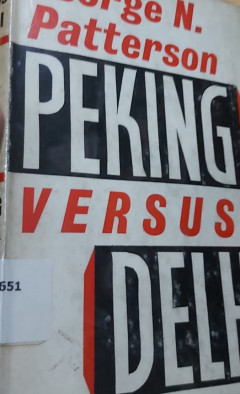
Peking versus Delhi
When India and China emerged with new governments, new leaders, and new policies, it soon became evident that their conflicting interests would draw them into confrontation. For over a decade, their manoeuvres for leadership in Asia intensified as India struggled for survival while China advanced rapidly. This book explores the background of the Sino-Indian conflict: where India’s policies…
- Edisi
- -
- ISBN/ISSN
- -
- Deskripsi Fisik
- 310 pages ; 22 cm
- Judul Seri
- -
- No. Panggil
- 327.54 PAT p
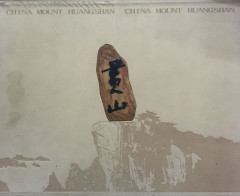
China mount Huangshan
This captivating photo collection is an in-depth visual exploration of Mount Huangshan (Yellow Mountain), one of China's most iconic and renowned mountains. Through high-quality photographs, the book captures the scenery of distinctive granite peaks, seas of clouds, unique pine trees, and hot springs. It serves as both a visual guide and a tribute to Huangshan's natural beauty.
- Edisi
- -
- ISBN/ISSN
- 978-7-5398-3107-7
- Deskripsi Fisik
- 133 pages : illustrations ; 25 cm
- Judul Seri
- -
- No. Panggil
- 915.12 TIM c
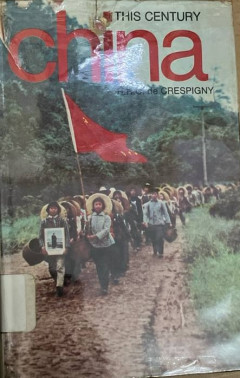
China this century
For all the world China is a great and important country. The Peking government controls the greatest population in the world and one of the largest areas of land China in this Century links the events of recent years in China with the debates of the present and the problems of the future. In the three quarters of a century since 1900 the people of China have been ruled by emperors, warlords, r…
- Edisi
- -
- ISBN/ISSN
- 17-004983-3
- Deskripsi Fisik
- xi, 299 pages : illustrations ; 22 cm
- Judul Seri
- -
- No. Panggil
- 951.041 CRE c
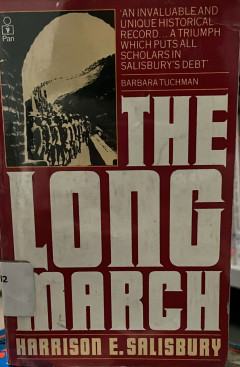
The Long march : The Untold story
By retracing the path, interviewing the survivors, and studying the archives, Salisbury chronicles the two-thousand-mile escape march from Chiang Kai-Shek in 1932 that marked the beginning of Chinese communism's rise to power under Mao Zedong.
- Edisi
- -
- ISBN/ISSN
- 9-780330-29451-5
- Deskripsi Fisik
- 419 pages : illustrations ; 20 cm
- Judul Seri
- -
- No. Panggil
- 951.04 SAL l
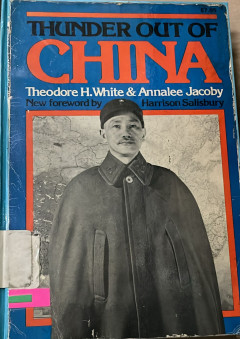
Thunder out of China
From the first outbreak of hostilities in northern China in 1937 to the Japanese surrender aboard the U.S.S. Missouri in 1945, this book recreates the decade of upheaval when China was caught in the grip of revolution and war and torn from its feudal past. The authors, Time-Life correspondents during the war years, report firsthand on the rise and fall of the Kuomintang nationalist government a…
- Edisi
- -
- ISBN/ISSN
- 0-306-80128-0
- Deskripsi Fisik
- viii, 331 pages : illustrations ; 21 cm
- Judul Seri
- -
- No. Panggil
- 951.042 WHI t

Years of trial turmoil and triumph : China from 1949 to 1988
This book is divided into four parts, following the course of China's social development. The first part looks back at how New China was founded, covering mainly the period from October 1949 to December 1956. The second part describes political and economic issues between January 1957 and April 1966. The third part gives an overall, systematic and accurate description of the ten-year "cultural…
- Edisi
- -
- ISBN/ISSN
- 0-8351-2261-1
- Deskripsi Fisik
- 319 pages : illustrations ; 21 cm
- Judul Seri
- -
- No. Panggil
- 951.04 HUA y
China : The People's republic, 1949-1976
This history of the People's Republic of China (1949-1976), the third and final volume in a major new history of modern China since 1840, offers a sweeping and penetrating account of a singular historical era During these pivotal decades, the Chinese struggled to find an alternative to the Soviet model of industrialization and to confront the awesome problems. of bureaucratization under the gu…
- Edisi
- -
- ISBN/ISSN
- 0-394-42873-0
- Deskripsi Fisik
- 255 pages ; 23 cm
- Judul Seri
- -
- No. Panggil
- 951.05 CHE c
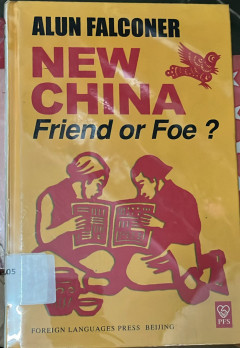
New China : Friend or foe?
New China: Friend or Foe? by Alun Falconer examines the political, economic, and strategic transformation of the People’s Republic of China in the modern era and evaluates its implications for the international community. The book explores China’s rapid economic growth, technological advancements, military modernization, and evolving global ambitions. Falconer analyzes how domestic policies…
- Edisi
- -
- ISBN/ISSN
- 7-119-03540-1
- Deskripsi Fisik
- xxi, 113 pages : illustrations ; 23 cm
- Judul Seri
- -
- No. Panggil
- 951.05 FAL n
 Karya Umum
  Filsafat
  Agama
Agama  Ilmu-ilmu Sosial
  Bahasa
  Ilmu-ilmu Murni
  Ilmu-ilmu Terapan
  Kesenian, Hiburan, dan Olahraga
  Kesusastraan
  Geografi dan Sejarah