Ditapis dengan
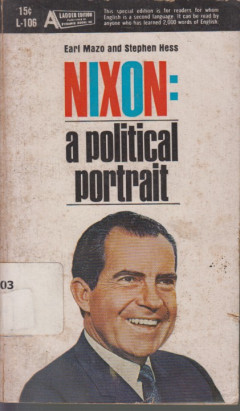
Nixon: A Political portrait
“Nixon: A Political Portrait” provides an accessible and concise account of the political rise of Richard Nixon. Written by journalists Earl Mazo and Stephen Hess, this abridged edition traces Nixon’s early career, his development as a national political figure, and the strategies that shaped his public image. Adapted for readers at a 2,000-word level, the book offers insights into Nixonâ…
- Edisi
- -
- ISBN/ISSN
- -
- Deskripsi Fisik
- 126 pages : illustrations ; 18 cm
- Judul Seri
- -
- No. Panggil
- 973.92 MAZ n
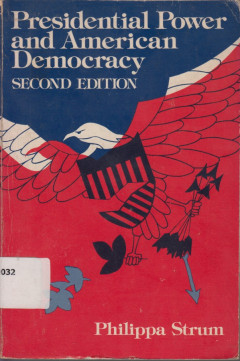
Presidential power and American cemocracy
This book examines the nature, limits, and evolution of presidential power within the framework of American democracy. Philippa Strum analyzes the constitutional foundations of executive authority, the historical development of presidential leadership, and the political dynamics that shape the balance of power between the president, Congress, and the judiciary. Through detailed discussion and c…
- Edisi
- -
- ISBN/ISSN
- 0-87620-719-0
- Deskripsi Fisik
- xiv, 184 pages ; 23 cm
- Judul Seri
- -
- No. Panggil
- 353.032 STR p
The Challenges we face
This book presents a collection of political speeches delivered by Richard M. Nixon, offering insights into the major domestic and international challenges faced by the United States during the early stages of the Cold War. Nixon discusses issues of national security, foreign policy, economic stability, and American leadership in global affairs. The volume reflects his perspectives on the respo…
- Edisi
- -
- ISBN/ISSN
- -
- Deskripsi Fisik
- 222 pages ; 17,5 cm
- Judul Seri
- -
- No. Panggil
- 973.92092 NIX c
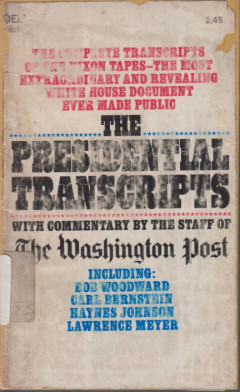
The Presidential transcripts
“The Presidential Transcripts” presents the complete published transcripts of conversations recorded in the White House during the Watergate scandal. Compiled and annotated by the staff of The Washington Post, the book provides essential insight into the political crisis that led to President Richard Nixon’s resignation. The transcripts reveal discussions on political strategy, attempts t…
- Edisi
- -
- ISBN/ISSN
- -
- Deskripsi Fisik
- xl, 693 pages ; 18 cm
- Judul Seri
- -
- No. Panggil
- 973.924 THE p
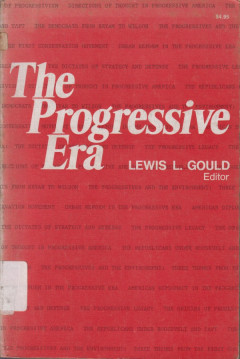
The Progressive era
This volume presents a comprehensive examination of the Progressive Era in the United States, a period marked by widespread political, social, and economic reform from the late nineteenth to early twentieth century. Edited by Lewis L. Gould, the collection brings together influential essays and analyses exploring the diverse motivations, leaders, and movements that shaped Progressive thought. I…
- Edisi
- -
- ISBN/ISSN
- 0-8156-2164-70-8156-2164-7
- Deskripsi Fisik
- x, 238 pages : illustrations ; 23 cm
- Judul Seri
- -
- No. Panggil
- 320.973 GOU p
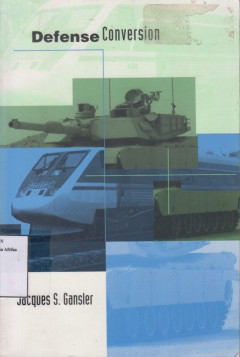
Defense conversion: Transforming the arsenal of democracy
Defense Conversion: Transforming the Arsenal of Democracy examines how the United States can shift its vast military-industrial infrastructure toward productive civilian uses after the Cold War. Jacques S. Gansler analyzes the challenges of converting defense-dependent industries, the economic impacts of reduced military spending, and the policy strategies needed to modernize America’s indust…
- Edisi
- -
- ISBN/ISSN
- 0-262-57116-1
- Deskripsi Fisik
- xiv, 277 pages : illustrations ; 23 cm
- Judul Seri
- -
- No. Panggil
- 338.476233 GAN d
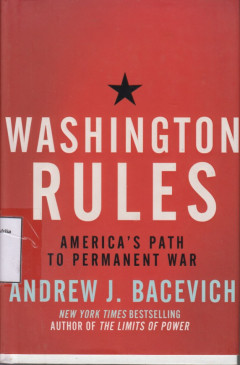
Washington rules: America’s path to permanent war
Washington Rules: America’s Path to Permanent War examines the long-standing foreign policy consensus that has shaped the United States’ global military posture since the mid-20th century. Andrew J. Bacevich argues that a deeply rooted set of strategic assumptions—maintained by political leaders, military institutions, and foreign-policy elites—has guided the nation toward continuous mi…
- Edisi
- -
- ISBN/ISSN
- 978-0-8050-9141-0
- Deskripsi Fisik
- 286 pages ; 22 cm
- Judul Seri
- -
- No. Panggil
- 355.033573 BAC w
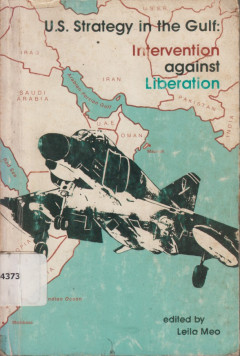
U.S. Strategy in the gulf: Intervention against liberation
bstract: This monograph analyzes United States strategic policies and military involvement in the Persian Gulf region during the period of regional upheaval. Edited by Leila Meo, the book examines the political motivations, geopolitical interests, and interventionist actions taken by the United States, particularly in relation to liberation movements and regional conflicts. It provides critic…
- Edisi
- -
- ISBN/ISSN
- 0-937694-50-9
- Deskripsi Fisik
- ii, 130 pages : illustrations ; 22,5 cm
- Judul Seri
- -
- No. Panggil
- 355.0335 MEO u
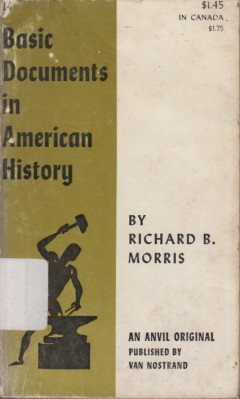
Basic documents in American history
“Basic Documents in American History” is a curated collection of foundational texts that shaped the political, social, and legal development of the United States. Compiled by historian Richard B. Morris, the book presents key documents—from colonial charters and revolutionary writings to early national policies—that illustrate the evolution of American governance and democratic ideals. …
- Edisi
- -
- ISBN/ISSN
- -
- Deskripsi Fisik
- 190 pages ; 18 cm
- Judul Seri
- -
- No. Panggil
- 973 MOR b
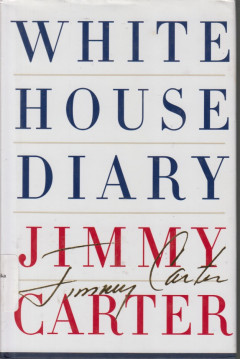
White house diary
White House Diary presents President Jimmy Carter’s detailed, day-to-day reflections during his years in the White House from 1977 to 1981. Drawn from his personal diary entries, the book provides an intimate look at major political decisions, diplomatic challenges, and domestic issues faced during his presidency. Carter offers insights into global events, key policy debates, and his interact…
- Edisi
- -
- ISBN/ISSN
- 978-0-374-28099-4
- Deskripsi Fisik
- xv, 370 pages : illustrations ; 23,5 cm
- Judul Seri
- -
- No. Panggil
- 973.926092 CAR w
 Karya Umum
  Filsafat
  Agama
Agama  Ilmu-ilmu Sosial
  Bahasa
  Ilmu-ilmu Murni
  Ilmu-ilmu Terapan
  Kesenian, Hiburan, dan Olahraga
  Kesusastraan
  Geografi dan Sejarah