Ditapis dengan

Macropolitics: International relations in a global society
Macropolitics: International Relations in a Global Society provides an in-depth examination of the political dynamics shaping interactions among states within an increasingly interconnected world. Richard W. Sterling analyzes major theoretical perspectives, global political structures, and the evolving roles of power, institutions, and interdependence. The book offers a comprehensive overview o…
- Edisi
- -
- ISBN/ISSN
- 0-394-48521-1
- Deskripsi Fisik
- xx, 648 pages ; 24 cm
- Judul Seri
- -
- No. Panggil
- 327 STE m
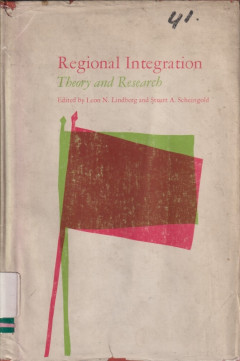
Regional integration: Theory and research
This volume compiles major scholarly essays exploring the theoretical foundations and empirical research on regional integration. Edited by Leon N. Lindberg and Stuart A. Scheingold, the book examines political, economic, and institutional dynamics shaping regional cooperation across various parts of the world. It includes influential works originally published in a special issue of Internation…
- Edisi
- -
- ISBN/ISSN
- -
- Deskripsi Fisik
- xi, 427 pages ; 26 cm
- Judul Seri
- -
- No. Panggil
- 327 LIN r
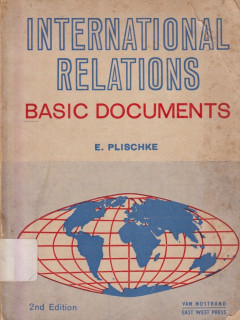
International relations: Basic documents
This volume presents a comprehensive collection of basic documents essential for the study of international relations. Compiled by Elmer Plischke, the book assembles treaties, declarations, charters, and major policy statements that have shaped the modern international system. Designed as a foundational reference for students and scholars, it provides direct access to key primary sources that i…
- Edisi
- -
- ISBN/ISSN
- -
- Deskripsi Fisik
- xii, 194 pages ; 24 cm
- Judul Seri
- -
- No. Panggil
- 327 PLI i

We now know: Rethinking cold war history
We Now Know: Rethinking Cold War History offers a groundbreaking reinterpretation of the Cold War using newly available archival evidence from the former Soviet Union, China, and Eastern Europe. John Lewis Gaddis analyzes the ideological, political, and strategic forces shaping the global conflict between the United States and the Soviet Union. The book re-examines major events—including the …
- Edisi
- -
- ISBN/ISSN
- 0-19-878071-0
- Deskripsi Fisik
- x, 425 pages ; 23,5 cm
- Judul Seri
- -
- No. Panggil
- 327.12 GAD w

International war: An Anthology and study guide
International War: An Anthology and Study Guide is a comprehensive collection of scholarly writings examining the origins, dynamics, and consequences of war in the international system. Edited by Melvin Small and J. David Singer, the volume brings together influential essays from leading researchers in political science, history, and international relations. The anthology explores major themes …
- Edisi
- -
- ISBN/ISSN
- 0-256-03646-2
- Deskripsi Fisik
- 393 pages : illustration ; 23,5 cm
- Judul Seri
- -
- No. Panggil
- 355.02 SMA i
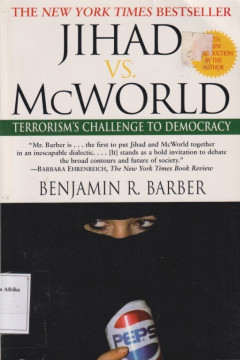
Jihad vs. mcworld
This book examines the major tensions shaping the modern world: the struggle between "Jihad," which is local tribalism and fundamentalism, and "McWorld," which is the forces of globalization, capitalism, and consumer culture. Benjamin Barber explains how these two forces—though seemingly opposed—both undermine democracy. "Jihad" divides society into narrow identities and ethnic conflicts, w…
- Edisi
- -
- ISBN/ISSN
- 978-0-345-38304-4
- Deskripsi Fisik
- xxxi, 389 pages : illustration ; 21 cm
- Judul Seri
- -
- No. Panggil
- 303.482 BAR j
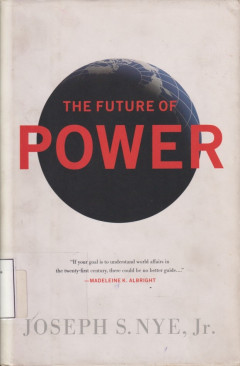
The Future of power
This book examines the changing dynamics of power in the era of globalization and information technology. Joseph S. Nye Jr., the figure who introduced the concept of "soft power," describes how traditional forms of power are shifting due to economic power, information flows, and global networks. Nye believes that the future of international relations will no longer be determined solely by milit…
- Edisi
- -
- ISBN/ISSN
- 978-1-58648-891-8
- Deskripsi Fisik
- xviii, 300 pages : illustration ; 24 cm
- Judul Seri
- -
- No. Panggil
- 303.33 NYE f
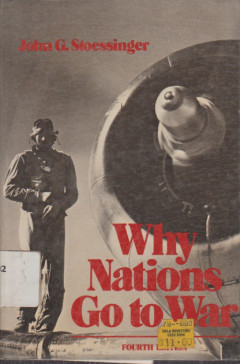
Why nations go to war
John G. Stoessinger's Why Nations Go to War is a classic analysis of the factors that drive states to war. Using a case study approach, this fourth edition examines major conflicts of the 20th century and highlights the role of political leaders, misperceptions, miscalculations, and international dynamics as crucial factors underlying the outbreak of war. Stoessinger emphasizes that the decisio…
- Edisi
- -
- ISBN/ISSN
- 0-312-87856-7
- Deskripsi Fisik
- xiii, 221 pages ; 21 cm
- Judul Seri
- -
- No. Panggil
- 355.02 STO w

Political realism and international morality: Ethics in the nuclear age
This book is a collection of papers presented at the Tenth Plenary Conference of the American Section of the International Association for Philosophy of Law and Social Philosophy, held in 1984 at the University of Notre Dame. It provides an in-depth discussion of the relationship between political realism and international morality, particularly in the context of the nuclear age. The contributo…
- Edisi
- -
- ISBN/ISSN
- 0-8133-0456-3
- Deskripsi Fisik
- x, 271 pages ; 23 cm
- Judul Seri
- -
- No. Panggil
- 172.4 KIP p
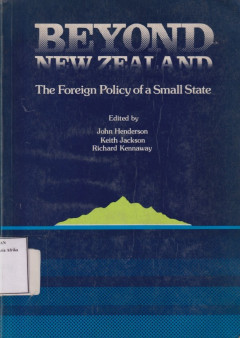
Beyond New Zealand: The Foreign policy of a small state
Beyond New Zealand: The Foreign Policy of a Small State is a scholarly examination of New Zealand’s diplomatic orientation, international role, and strategic challenges as a small state in a changing global environment. Edited by John Henderson, Keith Jackson, and Richard Kennaway, the book compiles analyses from leading experts on New Zealand’s external relations, its regional engagement i…
- Edisi
- -
- ISBN/ISSN
- 0456029303
- Deskripsi Fisik
- 270 pages ; 24 cm
- Judul Seri
- -
- No. Panggil
- 327.93 HEN b
 Karya Umum
  Filsafat
  Agama
Agama  Ilmu-ilmu Sosial
  Bahasa
  Ilmu-ilmu Murni
  Ilmu-ilmu Terapan
  Kesenian, Hiburan, dan Olahraga
  Kesusastraan
  Geografi dan Sejarah