Ditapis dengan

The politics of environment in Southeast Asia
Southeast Asia is a site of intense and ominous contradictions between economic growth and environmental protection, as well as between different social groups with competing interests in the natural resource base. Rapid industrialisation has brought both increased consumption of natural resources and increased competition for them.
- Edisi
- ed. 1
- ISBN/ISSN
- 0-415-17299-3
- Deskripsi Fisik
- x, 325 pages : illustrasi ; 24 cm
- Judul Seri
- -
- No. Panggil
- 333.70959 Hir p
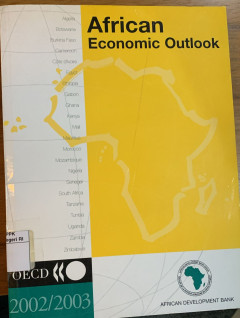
African economic outlook
The African economic outlook is a joint project between the African development bank and the OECD development centre. The project, initially funded by the European commission, combines the expertise accumulated by the OECD, which produces the OECD economic outlook twice a year, and the knowledge of the African development Bank on African economies. The objective is to review annually the recent…
- Edisi
- -
- ISBN/ISSN
- 92-64-10003-2
- Deskripsi Fisik
- 419 pages ; 27 cm
- Judul Seri
- -
- No. Panggil
- 330.6 Ban a

Vietnam's dilemmas and options: The challenge of economic transition in the 1…
New and exciting economic, political, and social developments have been rapidly unfolding in Vietnam since the mid-1980s. Doi moi (revolution) marks a new stage in the economic development of Vietnam, transforming the failed command/control economy into a market-oriented one. The drastic changes brought about by doi moi within Vietnam and the international events that impinge on it have stimula…
- Edisi
- -
- ISBN/ISSN
- 981-3016-38-8
- Deskripsi Fisik
- xvi, 306 pages ; 23 cm
- Judul Seri
- -
- No. Panggil
- 330.9597 Tha v
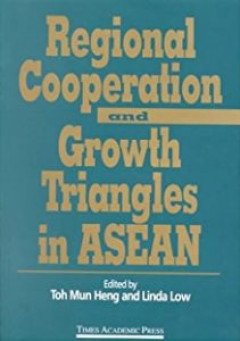
Regional cooperation and growth triangles in ASEAN
Comprising papers presented at an international symposium on the Growth Triangle, this book analyses (a) the development of the Southern Growth Triangle - which consists of Singapore, Johor in Malaysia and the Riau Islands in Indonesia; (b) the potential of a Northern Growth Triangle; and (c) external views of the Growth Triangle. The economic and political implications to establish similar int…
- Edisi
- -
- ISBN/ISSN
- 9812100210
- Deskripsi Fisik
- xx, 236 pages ; 23 cm
- Judul Seri
- -
- No. Panggil
- 334.0959 Hen r
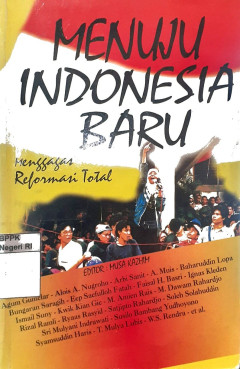
Menuju Indonesia baru: Menggagas reformasi total
Buku ini berisi tentang : CIMM (Center of Information for Mass Media) - Reformasi ekonomi - Reformasi sosial-politik - Reformasi budaya - Reformasi hukum - Reformasi industri-teknologi - Reformasi pendidikan
- Edisi
- cet.1
- ISBN/ISSN
- 979-9109-12-4
- Deskripsi Fisik
- 347 halaman : ilustrasi ; 21 cm
- Judul Seri
- -
- No. Panggil
- 361.24 Kaz m

Our time has come: The goals we set ourselves to obtain for our people are no…
The economic indicators tell us exactly what we accomplished these last three years. But economic growth by itself is not the truest measure of what we have been able to do. More important is that we have restored ordinary people's faith in our capacity to accomplish things together: we have reawakened popular optimism.
- Edisi
- -
- ISBN/ISSN
- 971-8927-03-4
- Deskripsi Fisik
- vii, 301 pages : index ; 23 cm
- Judul Seri
- -
- No. Panggil
- 320.959 9 Ram o
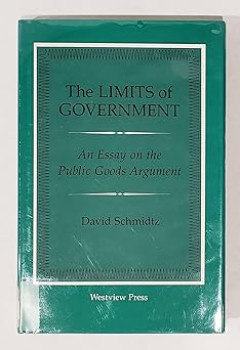
The limits of government: An essay on the public goods argument
The most widely accepted justification for political authority is that coercive institutions are necessary to provide for public goods. Making use of the tools of rational choice theory, economics, and the law of contracts, the author offers a critique of this argument. Along the way, he makes significant contributions to our understanding of the logic of contractarian arguments, the prisoner's…
- Edisi
- -
- ISBN/ISSN
- 0813308704
- Deskripsi Fisik
- xviii, 197 pages ; 23 cm.
- Judul Seri
- -
- No. Panggil
- 338.9 Sch l
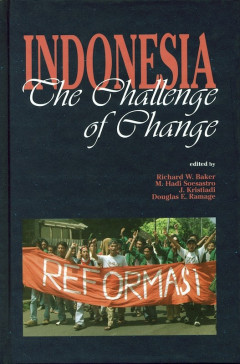
Indonesia: The challenge of change
Indonesian and US political scholars explore the impact of economic growth on twelve major Indonesian institutions, including private and public enterprises, formal political institutions, the armed forces, the bureaucracy, non-governmental organizations, the media, and trade unions. They find that the growing gap between a governing structure that is slow to change and a dynamic broader societ…
- Edisi
- -
- ISBN/ISSN
- 9813055693
- Deskripsi Fisik
- xvii,305 pages.; 23 cm
- Judul Seri
- -
- No. Panggil
- 338.9598 Bak i
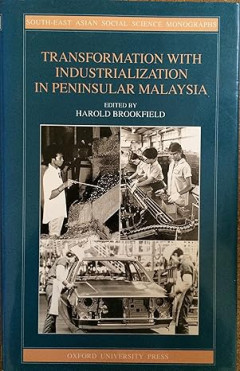
Transformation with industrialization in Peninsular Malaysia
From colonial times until the late 1970s the driving force of the Peninsular Malaysia economy was the production and export of primary products--first tin, than rubber and timber, and finally petroleum. In the 1980s export-oriented industrial production took over as the leading sector economy, enabling Malaysia to become a world-class economic performer. This volume shows how a small country wi…
- Edisi
- -
- ISBN/ISSN
- 9676530301
- Deskripsi Fisik
- xxii, 317 pages : illustration (black and white) ; 23 cm.
- Judul Seri
- -
- No. Panggil
- 338.095951 Bro t
Contemporary regional development in Africa
Contemporary Regional Development in Africa interrogates well-known concerns in the areas of regionalism and economic integration in contemporary Africa, while offering an added uniqueness by highlighting the capacity imperatives of the issues, and proposing critical policy guideposts. The volume juxtaposes a set of ’dynamic’ entanglements - new and micro-regionalism, informal cross-border …
- Edisi
- -
- ISBN/ISSN
- 9781472451439
- Deskripsi Fisik
- xix, 234 pages ; 24 cm
- Judul Seri
- -
- No. Panggil
- 337.6 Han c
 Karya Umum
  Filsafat
  Agama
Agama  Ilmu-ilmu Sosial
  Bahasa
  Ilmu-ilmu Murni
  Ilmu-ilmu Terapan
  Kesenian, Hiburan, dan Olahraga
  Kesusastraan
  Geografi dan Sejarah