Ditapis dengan
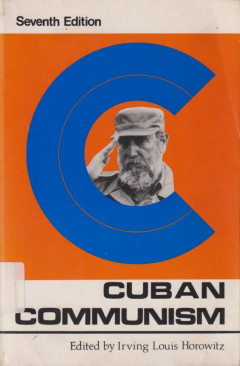
Cuban Communism
The seventh edition of Cuban Communism is a collection of academic writings edited by Irving Louis Horowitz. This book presents a comprehensive analysis of political, social, economic, and military developments in Cuba since the 1959 Revolution. Contributions from various authors provide a multidisciplinary perspective on Cuban communism, including international relations, internal power struct…
- Edisi
- -
- ISBN/ISSN
- 0-88738-794-2
- Deskripsi Fisik
- xix, 854 pages ; 23 cm
- Judul Seri
- -
- No. Panggil
- 972.910 HOR c

Governing The American Republic: Economic, law, and policies
This textbook examines the foundations of the American political system, focusing on the interaction between economics, law, and public policy. Written by Alan Stone and Richard P. Barke, the book provides an analytical overview of U.S. governmental structures, constitutional principles, policymaking processes, and the economic forces shaping political decisions. It serves as a comprehensive in…
- Edisi
- -
- ISBN/ISSN
- 0-312-34108-3
- Deskripsi Fisik
- 526 pages; 24 cm
- Judul Seri
- -
- No. Panggil
- 970 STO g
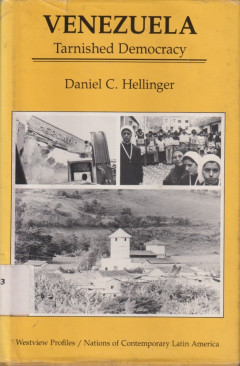
Venezuela: Tarnished democracy
This book provides an in-depth analysis of Venezuela’s political system, exploring the erosion of democratic institutions during the late twentieth century. Daniel C. Hellinger examines the dynamics of political parties, economic crises, social inequalities, and the weakening of representative governance. The work highlights how Venezuela’s once-stable democracy became increasingly fragile …
- Edisi
- -
- ISBN/ISSN
- 0-8133-0700-7
- Deskripsi Fisik
- Deskripsi fisik :
- Judul Seri
- -
- No. Panggil
- 987.063 HEL v

Chile and the Pacific
This book is a classic work on Chilean history, written by a group of leading historians: Sergio Villalobos, Osvaldo Silva, Fernando Silva, and Patricio Estelle. It examines the development of Chilean history from pre-Columbian times to the modern era, encompassing political, social, economic, and cultural aspects. Its narrative structure emphasizes the evolution of Chilean society and the hist…
- Edisi
- -
- ISBN/ISSN
- -
- Deskripsi Fisik
- 200 pages, 22 x 15 cm
- Judul Seri
- -
- No. Panggil
- 983 EMB c
How Europe underdeveloped Africa
This influential work by historian Walter Rodney examines the economic and political mechanisms through which Europe contributed to the underdevelopment of Africa. Rodney argues that European imperialism, slavery, and colonial exploitation systematically impoverished African societies while enriching Europe. Combining historical analysis with economic theory, the book explores precolonial Afric…
- Edisi
- -
- ISBN/ISSN
- -
- Deskripsi Fisik
- 316 pages ; 18 cm
- Judul Seri
- -
- No. Panggil
- 325.3 ROD h
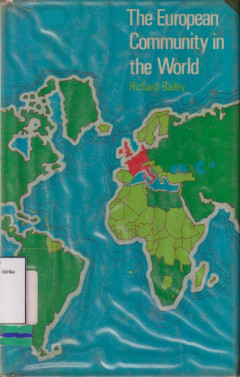
The European community in the world
This book provides an overview of the role of the European Community (EC) in international affairs during the early 1970s. Richard Bailey examines the political, economic, and diplomatic activities of the EC, its relations with major world powers, and its influence on global trade and development. The work discusses how the EC emerged as a new actor in world politics and evaluates its challenge…
- Edisi
- -
- ISBN/ISSN
- 0-09-118721-4
- Deskripsi Fisik
- 200 pages : illustration ; 22 cm
- Judul Seri
- -
- No. Panggil
- 337.14 BAI e
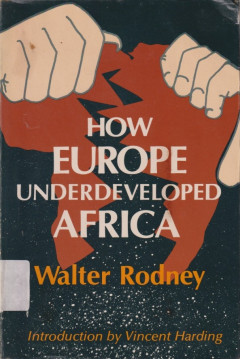
How Europe underdeveloped Africa
How Europe Underdeveloped Africa by Walter Rodney is a groundbreaking study of the historical, political, and economic processes that shaped Africa’s underdevelopment. Rodney argues that European colonialism and global capitalism systematically extracted wealth from the continent, creating long-term structural inequalities. Drawing from historical evidence and economic analysis, the book demo…
- Edisi
- Revised Edition
- ISBN/ISSN
- 0-88258-096-5
- Deskripsi Fisik
- xxiv, 312 pages ; 22,5 cm
- Judul Seri
- -
- No. Panggil
- 330.96 ROD h
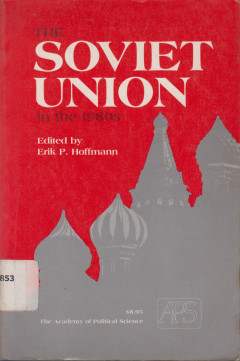
The Soviet Union in the 1980s
The Soviet Union in the 1980s is a scholarly volume featuring articles presented in the Proceedings of the Academy of Political Science. This issue analyzes the political, economic, and social dynamics of the USSR during a transformative decade marked by stagnation, leadership transitions, and the early stages of reform. Contributors examine Soviet domestic and foreign policy, ideological devel…
- Edisi
- -
- ISBN/ISSN
- 0065-0684
- Deskripsi Fisik
- xii, 244 pages ; 23 cm
- Judul Seri
- -
- No. Panggil
- 947.085 HOF s
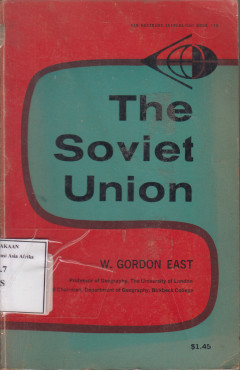
The Soviet Union
This book provides a comprehensive geographical and socio-economic survey of the Soviet Union as it existed in the early 1960s. Written by noted geographer W. Gordon East, the work examines the physical landscape, population distribution, natural resources, agriculture, industry, and regional differences across the vast Soviet territory. It also discusses historical influences that shaped the S…
- Edisi
- -
- ISBN/ISSN
- -
- Deskripsi Fisik
- 136 pages : illustrations ; 20,5 cm
- Judul Seri
- -
- No. Panggil
- 914.704 EAS s
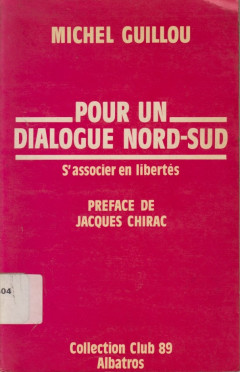
Pour un dialogue Nord–Sud : S’associer en libertés
This book presents Michel Guillou's analysis of the importance of dialogue between the North (developed) and South (developing) in building equal cooperation based on freedom. Through an international political and socio-economic perspective, the author highlights the structural barriers that cause global inequality and offers a collaborative approach to creating more equitable relations. With …
- Edisi
- -
- ISBN/ISSN
- -
- Deskripsi Fisik
- 252 pages ; 24 cm
- Judul Seri
- -
- No. Panggil
- 303.482 GOU p
 Karya Umum
 Filsafat
 Agama
 Ilmu-ilmu Sosial
 Bahasa
 Ilmu-ilmu Murni
 Ilmu-ilmu Terapan
 Kesenian, Hiburan, dan Olahraga
 Kesusastraan
 Geografi dan Sejarah