Ditapis dengan
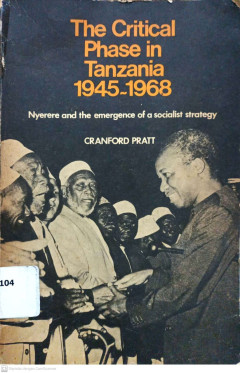
The Critical phase in Tanzania 1945-1968
This book analyzes the crucial phase in Tanzania's political development between 1945 and 1968, when Julius K. Nyerere formulated and implemented the strategy of African socialism known as Ujamaa. Cranford Pratt explains the political, economic, and social dynamics that shaped the country's direction from the late colonial period to the beginning of independence. Using a historical and analytic…
- Edisi
- -
- ISBN/ISSN
- 0-19-572450-X
- Deskripsi Fisik
- x, 309 pages : illustration ; 23 cm
- Judul Seri
- -
- No. Panggil
- 967.8104 PRA c
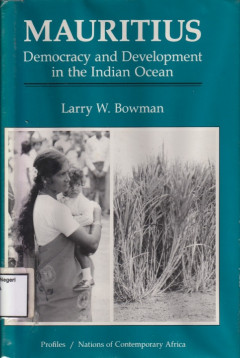
Mauritius: Democracy and development in the Indian ocean
Larry W. Bowman's Mauritius: Democracy and Development in the Indian Ocean examines the political, social, and economic development of Mauritius from the post-independence period to the late 20th century. Within the Indian Ocean region, Mauritius is a unique example of a small island nation that has successfully managed ethnic and religious diversity while maintaining democratic stability. The …
- Edisi
- -
- ISBN/ISSN
- 0-8133-0508-X
- Deskripsi Fisik
- xiv, 208 pages : illustration ; 23,5 cm
- Judul Seri
- -
- No. Panggil
- 969.820 BOW m

Freedom and development: A Selection from writings and speeches, 1968-1973
Freedom and Development / Uhuru na Maendeleo collects speeches and writings by Julius K. Nyerere from 1968–1973, when Tanzania was developing its political and economic identity after independence. Through the concept of Ujamaa, or African socialism, Nyerere explains the relationship between political freedom, economic development, and social responsibility. This collection illustrates Nyerer…
- Edisi
- -
- ISBN/ISSN
- -
- Deskripsi Fisik
- xvii, 400 pages : illustration ; 22 cm
- Judul Seri
- -
- No. Panggil
- 320.9678 NYE f
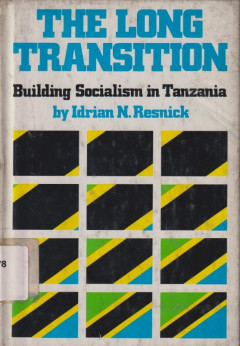
The Long transition: Building socialism in Tanzania
Idrian N. Resnick's The Long Transition: Building Socialism in Tanzania is an in-depth study of the process of building socialism in Tanzania during the leadership of Julius K. Nyerere. The book explores the Ujamaa ideology as the foundation of Tanzanian socialism, and how this theory was applied in the country's economic and social policies. Resnick outlines the challenges faced by the governm…
- Edisi
- -
- ISBN/ISSN
- 0-85345-555-4
- Deskripsi Fisik
- 304 pages ; 21 cm
- Judul Seri
- -
- No. Panggil
- 335.009678 RES l
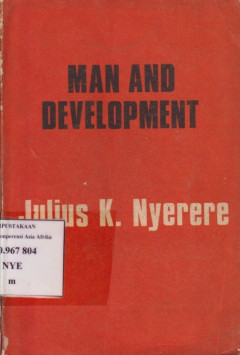
Man and development
Man and Development is a collection of essays by Julius K. Nyerere that examines the concept of human and social development as the foundation of Ujamaa ideology in Tanzania. The book emphasizes that development is not merely economic growth, but also the enhancement of human dignity, equitable distribution of prosperity, and social solidarity. Nyerere critiques the materialistic Western model …
- Edisi
- -
- ISBN/ISSN
- 0-19-644032-7
- Deskripsi Fisik
- vii, 125 pages ; 18,5 cm
- Judul Seri
- -
- No. Panggil
- 303.44 KAM m

Nyerere on socialism
The book "Nyerere on Socialism" compiles the introduction and writings of President Julius K. Nyerere, previously published in two works: Freedom and Unity (1966) and Freedom and Socialism / Uhuru na Ujamaa (1968). This work contains an explanation of the concept of Ujamaa, the principles of African socialism, and Nyerere's political ideas in building postcolonial Tanzanian society. Through the…
- Edisi
- -
- ISBN/ISSN
- -
- Deskripsi Fisik
- vi, 58 pages ; 21 cm
- Judul Seri
- -
- No. Panggil
- 320.531 NYE n
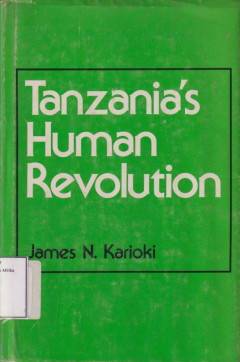
Tanzania's human revolution
This book analyzes the social, political, and economic changes in post-independence Tanzania, particularly through the human development policies initiated during the era of President Julius Nyerere. James N. Karioki evaluates the implementation of Ujamaa socialism, collective village development, and their impact on the country's social structure. In addition to discussing theory and policy, t…
- Edisi
- -
- ISBN/ISSN
- 0-271-00206-9
- Deskripsi Fisik
- 225 pages ; 23,5 cm
- Judul Seri
- -
- No. Panggil
- 309.1678 KAR t

Des Sagaies aux ombrelles: Madagascar (1947–2002)
This book provides a comprehensive historical and analytical account of Madagascar from 1947 to 2002, tracing the country’s political, social, and cultural transformations across five decades. Written by Jacques Tiersonnier, S.J., with contributions from Céline Mathon, the work examines key events such as the 1947 uprising, the post-colonial political restructuring, the rise and fall of vari…
- Edisi
- -
- ISBN/ISSN
- 2-7475-6782-6
- Deskripsi Fisik
- 296 pages ; 21,5 cm
- Judul Seri
- -
- No. Panggil
- 969.1 TIE d

A Social history of Ethiopia: The Northern and central highlands from early m…
A Social History of Ethiopia by Richard Pankhurst provides an in-depth study of social conditions in the northern and central highlands of Ethiopia, from the medieval period to the emergence of Emperor Téwodros II in the 19th century. This book discusses the development of Ethiopian society, social structures, agrarian economies, inter-ethnic relations, and the political dynamics that shaped t…
- Edisi
- -
- ISBN/ISSN
- -
- Deskripsi Fisik
- 409 pages : illustration ; 21 cm
- Judul Seri
- -
- No. Panggil
- 963.02 PAN s
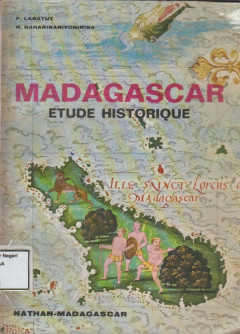
Madagascar: A Historical study
This historical study of Madagascar, authored by F. Labatut and R. Raharinarivonirina, provides a comprehensive overview of the island’s political, social, and cultural development. Designed primarily for educational purposes, the book traces Madagascar's history from early settlement and the rise of major kingdoms through the colonial period and into the modern era. With a preface by S. Raja…
- Edisi
- -
- ISBN/ISSN
- -
- Deskripsi Fisik
- 222 pages : illustration ; 24 cm
- Judul Seri
- -
- No. Panggil
- 969.105 LAB m
 Karya Umum
  Filsafat
  Agama
Agama  Ilmu-ilmu Sosial
  Bahasa
  Ilmu-ilmu Murni
  Ilmu-ilmu Terapan
  Kesenian, Hiburan, dan Olahraga
  Kesusastraan
  Geografi dan Sejarah