Ditapis dengan

Sri Lanka: A lost revolution?: The inside story of the JVP
In it's most apparent dimension, this book is a very effective biography of the JVP movement - the lives and tragedies of Sri Lanka's most fearsome insurrection. Sri Lanka - The lost revolution? describes events during a tragic period of our country. The upheaval shook the nation to its very foundation and traumatised an entire generation. No other account of the events that have taken place…
- Edisi
- -
- ISBN/ISSN
- 955-26-004-9
- Deskripsi Fisik
- viii, 366 pages : illustrations (black and white) ; 21 cm
- Judul Seri
- -
- No. Panggil
- 954.92 Gun s
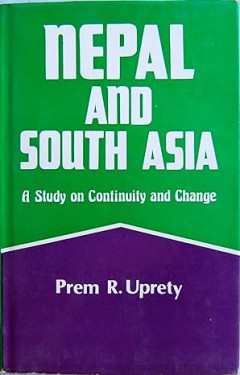
Nepal and South Asia: A study on continuity and change
Nepal and India are not only non-aligned nations belonging to the third world; but are also bastions of traditional conservatism going through a process of hectic change and transformation. They share a common culture, values, and socio-religious traditions and are going through a rapid social and technological changes as the world prepares itself to step in to the shoes of the twenty-first cen…
- Edisi
- Ed. 1
- ISBN/ISSN
- 81-7169-296-6
- Deskripsi Fisik
- x, 205 pages ; 22 cm
- Judul Seri
- -
- No. Panggil
- 954.92 Upr n
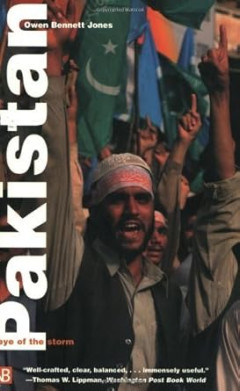
Pakistan: Eye of the storm
Pakistan - with its political instability, vociferous Islamic community, pressing economic and social problems, access to nuclear weapons, and proximity to Afghanistan - stands at the very center of global attention. Can General Musharraf, Pakistan's military ruler, control the forces that helped create the Taliban in Afghanistan? In this book, journalist Owen Bennett Jones looks at Pakistan's …
- Edisi
- -
- ISBN/ISSN
- 969-402-347-2
- Deskripsi Fisik
- xix, 328 pages : illustrations (black and white) ; 22 cm
- Judul Seri
- -
- No. Panggil
- 954.91 Jon p

Inside the Middle East: Making sense of the most dangerous and complicated re…
Melamed considers all the major power players in the Middle East, explains the underlying issues, and creates a three-dimensional picture, an illustration that connects the dots and provides a fascinating roadmap. He elucidates developments such as the Arab Spring, the downfall of the Muslim Brotherhood, the rise of ISIS, the epic Sunni-Shiite animosity, the essence of the war in Syria, the rol…
- Edisi
- -
- ISBN/ISSN
- 978-1-63450-572-7
- Deskripsi Fisik
- xviii, 374 pages ; 23 cm
- Judul Seri
- -
- No. Panggil
- 956 Mel i
Sri Lanka: Towards nation building
Contents: 1. Introduction 2. Consensus document of the Shramaya/United Nations University South Asian perspectives group on nation building in Sri Lanka 3. Political crisis 4. Identity conflicts 5. Nation-building: A Muslim perspectives 6. Plantation-village integration 7. Nation building through the process of constitutional reform
- Edisi
- -
- ISBN/ISSN
- 955-9258-00-1
- Deskripsi Fisik
- 209 pages ; 21 cm
- Judul Seri
- -
- No. Panggil
- 954.92 Moo s
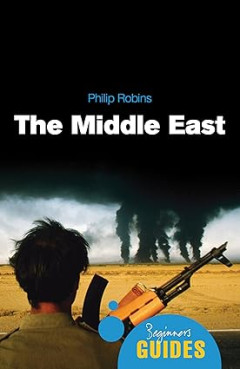
The Middle East: A beginners guide
The Middle East is notorious in the West for many reasons, few of them are positive. Synonymous with terrorism, oil riches, bad governance, corruption, and conflict, it has led many Western commentators to write it off as both backward and insular. In this pioneering introduction, Oxford University's Philip Robins argues that the region is plagued by the same problems that afflict the rest of …
- Edisi
- -
- ISBN/ISSN
- 978-1-85168-675-9
- Deskripsi Fisik
- x, 226 pages : illustrations (black and white) ; 20
- Judul Seri
- -
- No. Panggil
- 956 Rob m
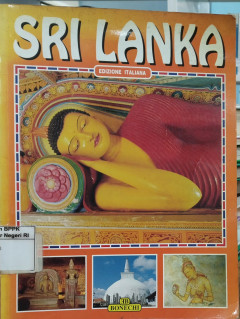
Sri Lanka
After five centuries of colonial rule, Sri Lanka became independent in 1948 and the Republic was founded in 1972. An interesting ethnic mix coexists in the country including 74% Sinhalese, 12.6% Tamil, 5.5 % of Indian Tamils, 7.1% of Moors and 0.3% of Malaysians (also Muslims), 0.3 of "Burghers" (citizens of European origin) and 0.3% of other origins. The four main religions are represented in …
- Edisi
- -
- ISBN/ISSN
- 88-8029-238-2
- Deskripsi Fisik
- 127 pages : illustrations ; 26 cm
- Judul Seri
- -
- No. Panggil
- 954.92 Gun s
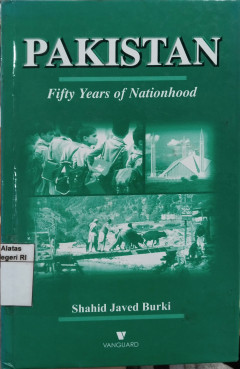
Pakistan: Fifty years of nationhood
Although Pakistan achieved independence in 1947, it still has not succeeded in integrating its diverse peoples into a nation as its short yet turbulent history vividly demonstrates. The nation's search for stability is traced in this new introduction to Pakistan's political, economic and social development. New chapters detail political developments since 1991, including the elections of 1993 a…
- Edisi
- -
- ISBN/ISSN
- 969-402-338-6
- Deskripsi Fisik
- xxi, 250 pages ; 22 cm
- Judul Seri
- -
- No. Panggil
- 954.91 Bur p

Children of paradise: The struggle for the soul of Iran
In 1979, seemingly overnight, moving at a clip some thirty years faster than the rest of the world, Iran became the first revolutionary theocracy in modern times. Since then, the country has been largely a black box to the West, a sinister presence looming over the horizon. But inside Iran, a breathtaking drama has unfolded since then, as religious thinkers, political operatives, poets, journal…
- Edisi
- -
- ISBN/ISSN
- 978-0-399-57334-7
- Deskripsi Fisik
- xv, 494 pages ; 21 cm
- Judul Seri
- -
- No. Panggil
- 955 Sec c
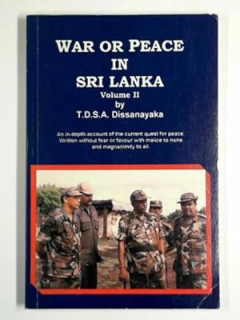
War or peace in Sri Lanka vol. II
Contents: 1. The prologue 2. The protracted war 3. The crux of the problem 4. The quest for peace 5. The epilogue
- Edisi
- Cet. 1
- ISBN/ISSN
- 955-572-002-9
- Deskripsi Fisik
- viii, 197 pages : illustrations ; 22 cm
- Judul Seri
- -
- No. Panggil
- 954.92 Dis w
 Karya Umum
  Filsafat
  Agama
Agama  Ilmu-ilmu Sosial
  Bahasa
  Ilmu-ilmu Murni
  Ilmu-ilmu Terapan
  Kesenian, Hiburan, dan Olahraga
  Kesusastraan
  Geografi dan Sejarah