Ditapis dengan
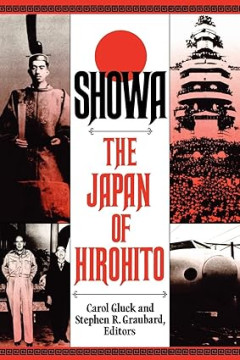
Showa: The Japan of Hirohito
This "stimulating and comprehensive" (Kirkus Reviews) collection of original essays on twentieth-century Japan's history and culture provides a unique mix of American and Japanese perspectives on Showa. With an important, substantial Introduction by Carol Gluck, the volume explores the strengths of the Japanese economy, the issue of democracy and Japan's political culture, Japan's achievements …
- Edisi
- -
- ISBN/ISSN
- 0-393-02984-0
- Deskripsi Fisik
- Ixii, 315 pages ; 24 cm
- Judul Seri
- -
- No. Panggil
- 952 Glu s
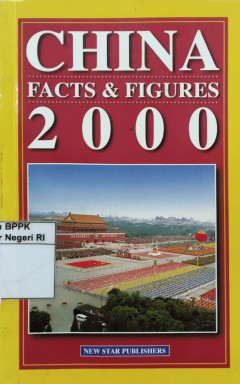
China facts & figures 2000
Contents: 1. National conditions 2. Politics 3. Economy 4. Science and technology, education, culture and art, public health and sports etc.
- Edisi
- Ed. 1
- ISBN/ISSN
- 7-80148-309-X
- Deskripsi Fisik
- 222 pages : illustration ; 18 cm
- Judul Seri
- -
- No. Panggil
- 951 Pub c
An outline history of China 1919-1949
This book is actually a sequel to, and the eleventh chapter of, An Outline History of China edited by Prof. Bai Shouyi and published by the Foreign Languages Press in English in 1982. The May 4th Movement of 1919 is regarded as the beginning of the new-democratic revolution in China. From that time until the founding of the People's Republic of China on October 1, 1949, the four decades saw …
- Edisi
- Ed. 1
- ISBN/ISSN
- 7-119-01498-6
- Deskripsi Fisik
- 319 pages : illustrations (black and white) ; 21 cm
- Judul Seri
- -
- No. Panggil
- 951 Sho o
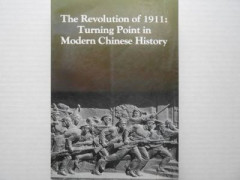
The revolution of 1911: Turning point in modern Chinese history
The Revolution of 1911 is the most important event in early 20th century China. At that time the Qing Dynasty, which had ruled over China for 260 years, was overthrown, ending two thousand years of feudal monarchic dictatorship. With the subsequent establishment of the Republic of China, democracy and the republican form of government was able to strike a deep root in the hearts of the Chinese …
- Edisi
- -
- ISBN/ISSN
- 0-8351-2889-X
- Deskripsi Fisik
- ii, 544 pages ; 21 cm
- Judul Seri
- -
- No. Panggil
- 951 Cai r
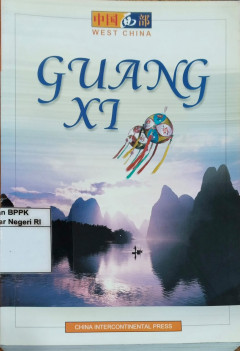
Guang Xi
Contents: 1. The only coastal province in the western region 2. The region with the biggest population of minority nationalities 3. Beautiful and abundant southern border etc.
- Edisi
- Ed. 1 ; Cet. 1
- ISBN/ISSN
- 7-80113-812-0
- Deskripsi Fisik
- 134 pages : illustrations ; 20 cm
- Judul Seri
- -
- No. Panggil
- 951 Pre g
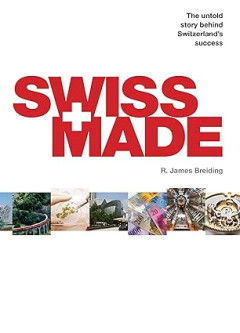
Swiss Made: The untold story behind Switzerland's success
Why has Switzerland a tiny, landlocked country with few natural advantages become so successful for so long at so many things? In banking, pharmaceuticals, machinery, even textiles, Swiss companies rank alongside the biggest and most powerful global competitors. How did they get there? Can the Swiss continue to perform in a hyper-competitive global economy? Swiss Made offers answers to these…
- Edisi
- -
- ISBN/ISSN
- 978-1-84668-586-6
- Deskripsi Fisik
- xi, 388 pages : illustrations ; 25 cm
- Judul Seri
- -
- No. Panggil
- 949.4 Bre s
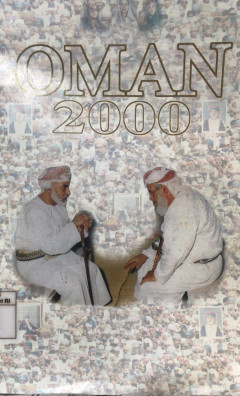
Oman 2000: Thirty years of dedications
The contents of this book: 1. Qaboos The Leaders 2. Oman: Human Civilization 3. The Administrative System 4. Protectors of The Nation and Public Order, etc.
- Edisi
- -
- ISBN/ISSN
- -
- Deskripsi Fisik
- 163 pages : illustrations ; 30 cm
- Judul Seri
- -
- No. Panggil
- 953.5 Oma o
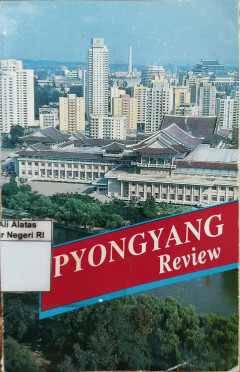
Pyongyang review
Contents: 1. Traces of long history 2. Sacred land of the Korean nation 3. Youth city, city of culture 4. Production - Supply bases etc.
- Edisi
- -
- ISBN/ISSN
- -
- Deskripsi Fisik
- 166 pages : illustrations ; 18 cm
- Judul Seri
- -
- No. Panggil
- 951.9 Hou p
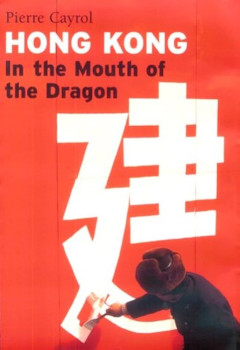
Hong Kong: In the mouth of the dragon
Hong Kong reverted to Chinese rule on July 1, 1997. This book, by one of Europe's leading journalists covering Asian affairs, offers a far-reaching, in-depth portrait of Hong Kong, its people, and their hopes and fears for the future after reunification.
- Edisi
- -
- ISBN/ISSN
- 0-8048-2115-1
- Deskripsi Fisik
- 135 pages ; 19 cm
- Judul Seri
- -
- No. Panggil
- 951.25 Cay h
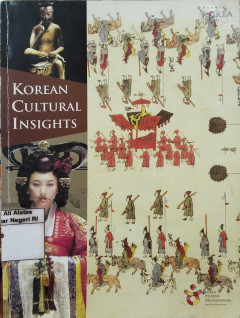
Korean cultural insights
Contents: 1. Korea, Koreans, and Korean culture 2. Historical vestiges 3. Traditional arts 4. The Korean aesthetic etc.
- Edisi
- -
- ISBN/ISSN
- -
- Deskripsi Fisik
- 126 pages : illustrations ; 22 cm
- Judul Seri
- -
- No. Panggil
- 951.9 Byu k
 Karya Umum
  Filsafat
  Agama
Agama  Ilmu-ilmu Sosial
  Bahasa
  Ilmu-ilmu Murni
  Ilmu-ilmu Terapan
  Kesenian, Hiburan, dan Olahraga
  Kesusastraan
  Geografi dan Sejarah