Ditapis dengan
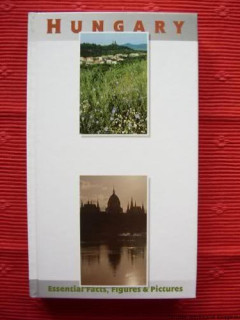
Hungary: Essential facts, figures and pictures
Contents: 1. The country and its people 2. Geographical location 3. Natural environment 4. Geographical regions 5. People 6. Settlement patterns 7. Public administration 8. Language.
- Edisi
- -
- ISBN/ISSN
- 963-7560-30-0
- Deskripsi Fisik
- 313 pages : ilustrations ; 23 cm
- Judul Seri
- -
- No. Panggil
- 943.9 Mol h

The little Czech and the great Czech nation: National identity and the post-c…
Ladislav Holy brings to this timely study of national identity the skills of a seasoned researcher, a cosmopolitan perspective, and the insights of an insider. Drawing on historical and literary sources as well as ethnography, he analyzes Czech discourses on national identity. Arguing that there were specifically "Czech" aspects to the Communist regime and to the "velvet revolution", he explore…
- Edisi
- -
- ISBN/ISSN
- 0-521-55584-1
- Deskripsi Fisik
- xi, 226 pages ; 23 cm
- Judul Seri
- -
- No. Panggil
- 943.7 Hol l
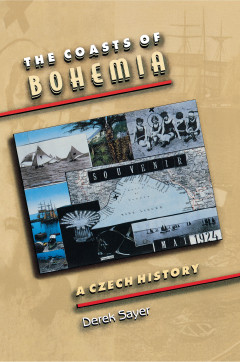
The coasts of Bohemia: A Czech history
The Coasts of Bohemia draws on an enormous array of literary, musical, visual, and documentary sources ranging from banknotes to statues, museum displays to school textbooks, funeral orations to operatic stage-sets, murals in subway stations to censors' indexes of banned books. It brings us into intimate contact with the ever changing details of daily life―the street names and facades of buil…
- Edisi
- -
- ISBN/ISSN
- 0-691-05052-X
- Deskripsi Fisik
- xv, 442 pages : illustrations ; 23 cm
- Judul Seri
- -
- No. Panggil
- 943.7 Say c
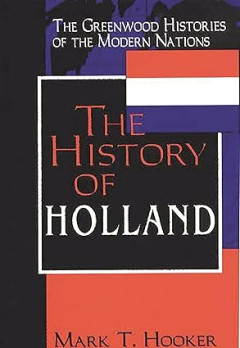
The history of Holland
Holland was once a superpower upon whose empire the sun never set. Today it is on the leading edge of social change. This history of Holland, from its earliest beginnings to the present day, provides the most up-to-date survey of modern Dutch history, including the current Dutch approach to a number of social issues, such as the welfare state, the environment, socialized medicine, and the role …
- Edisi
- -
- ISBN/ISSN
- 0-313-30658-3
- Deskripsi Fisik
- xxi, 236 pages ;24 cm
- Judul Seri
- -
- No. Panggil
- 949.2 Hoo h
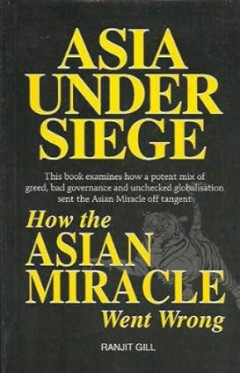
Asia under siege: How the Asian miracle went wrong
Contents: Part 1 The meltdown 1. Questioning the myth of Asia's economic miracle 2. IMF: we told you so 3. A different view 4. Bloody baht Part 2 The fallout 1. Asia's economic miracle 2. The calm before the storm 3. Dr Mahathir bombshell, etc.
- Edisi
- -
- ISBN/ISSN
- 981-04-0144-2
- Deskripsi Fisik
- 196 pages ; 21 cm
- Judul Seri
- -
- No. Panggil
- 950 Gil a
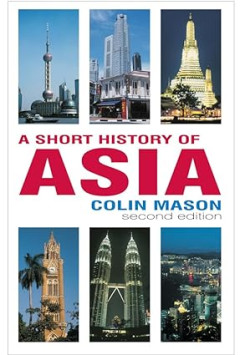
A short history of Asia
The peoples of Asia now make up more than half of the world's population. They are increasingly well-educated, and successful in every area of modern trade and technology. Their influence in the rest of the world is also becoming greater. Colin Mason provides a readable and clear introduction to their history and traditions, from prehistory right up to the present day. This thoroughly revised, …
- Edisi
- -
- ISBN/ISSN
- 1-4039-3612-9
- Deskripsi Fisik
- viii, 318 pages : illustrations (black and white) ; 21 cm
- Judul Seri
- -
- No. Panggil
- 950 Mas s
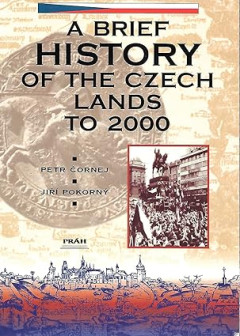
A Brief History of the Czech Lands to 2000
This brief history of the Czech Lands has been compiled by leading Czech historians. Its brevity and clarity result from their highly skillful refinements and distillation of profound and detailed knowledge. This little book is one that the reader can either read from start to finish or use as a reference for years to come. Historically, the Czech Republic is made up of three Bohemia, Moravia, …
- Edisi
- -
- ISBN/ISSN
- 80-7252-026-1
- Deskripsi Fisik
- 94 pages : illustrations (black and white) ; 20 cm
- Judul Seri
- -
- No. Panggil
- 943.7 Cor b
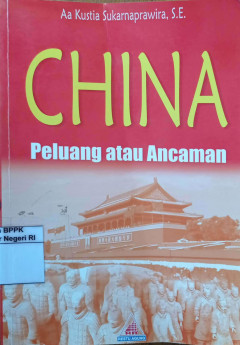
China: Peluang atau ancaman
Buku ini berisi tentang perjalanan panjang sejarah China masa lalu mulai dari pembangunan ekonomi, sistem pertahanan nasional, hubungan luar negeri hingga hubungan dengan aktor-aktor penting.
- Edisi
- -
- ISBN/ISSN
- 979-007-071-3
- Deskripsi Fisik
- xix, 219 halaman : ilustrasi ; 23 cm
- Judul Seri
- -
- No. Panggil
- 951 Suk c
China perspectives
This book presents a comprehensive and accessible analysis of China's socio-political economy. The authors provide insightful explanations of China's economic reforms which started in 1978, have triggered China's integration with the world economy, privatized farming, liberalized markets, intensified healthy competition in industry, and introduced modern macro-economic management. The book comb…
- Edisi
- -
- ISBN/ISSN
- 81-207-2359-7
- Deskripsi Fisik
- vi, 249 pages ; 22 cm
- Judul Seri
- -
- No. Panggil
- 951 Put c

The secret history of the Mongol queens: How the daughters of Genghis Khan re…
The Mongol queens of the thirteenth century ruled the largest empire the world has ever known. Yet sometime near the end of the century, censors cut a section from The Secret History of the Mongols, leaving a single tantalizing quote from Genghis Khan: “Let us reward our female offspring.” Only this hint of a father’s legacy for his daughters remained of a much larger story. The queen…
- Edisi
- -
- ISBN/ISSN
- 978-0-307-40715-3
- Deskripsi Fisik
- xvii, 317 pages : illustrations (black and white) ; 25
- Judul Seri
- -
- No. Panggil
- 950.2 Wea s
 Karya Umum
  Filsafat
  Agama
Agama  Ilmu-ilmu Sosial
  Bahasa
  Ilmu-ilmu Murni
  Ilmu-ilmu Terapan
  Kesenian, Hiburan, dan Olahraga
  Kesusastraan
  Geografi dan Sejarah