Ditapis dengan
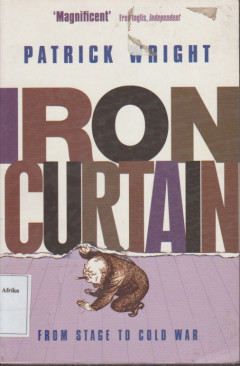
Iron curtain: From stage to cold war
Patrick Wright's Iron Curtain: From Stage to Cold War traces the development of the term "iron curtain" from 19th-century theater to its role as a key geopolitical metaphor during the Cold War. It explains how the concept of the "Iron Curtain" was shaped through performance art, propaganda, and European political dynamics, and then popularized by Winston Churchill in a 1946 speech. Wright outli…
- Edisi
- -
- ISBN/ISSN
- 978-0-19-923150-8
- Deskripsi Fisik
- xvi, 488 pages : illustration ; 20 cm
- Judul Seri
- -
- No. Panggil
- 327.12 WRI i
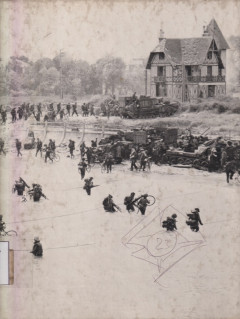
The Second front
The Second Front is an in-depth account of the Allied efforts to open a new front in Western Europe during World War II. Written by Douglas Botting with the editors of Time-Life Books, the volume traces the strategic planning that led to Operation Overlord and the dramatic events of D-Day. It examines earlier attempts such as the ill-fated Dieppe Raid, the buildup of men and materiel in Britain…
- Edisi
- -
- ISBN/ISSN
- 0-8094-2500-9
- Deskripsi Fisik
- 208 pages : illustration ; 29 cm
- Judul Seri
- -
- No. Panggil
- 940.542 BOT s
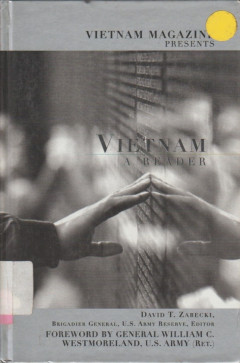
Vietnam: A Reader
Vietnam: A Reader is a curated collection of historical writings, personal accounts, analysis, and journalism originally published in Vietnam Magazine, offering an in-depth look into the Vietnam War from multiple perspectives. Edited by Brigadier General David Zabecki, this volume brings together contributions from military historians, war correspondents, veterans, and scholars. The book provid…
- Edisi
- -
- ISBN/ISSN
- 0-7394-2611-7
- Deskripsi Fisik
- xx, 411 pages : illustration ; 21,5 cm
- Judul Seri
- -
- No. Panggil
- 959.704 ZAB v
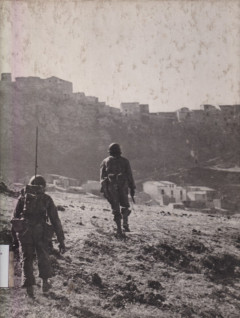
The Italian campaign
The Italian Campaign provides a detailed narrative of the Allied advance through Italy during World War II, beginning with the invasion of Sicily and continuing through the difficult battles up the Italian peninsula. Written by Robert Wallace with the editors of Time-Life Books, this volume explores the strategic importance of Italy, the challenging terrain, and the fierce resistance mounted by…
- Edisi
- -
- ISBN/ISSN
- 0-8094-2504-1
- Deskripsi Fisik
- 208 pages : illustration ; 29 cm
- Judul Seri
- -
- No. Panggil
- 940.542 WAL i
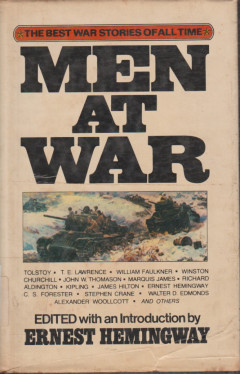
Men at war: The Best war stories of all time
"Men at War" is a classic anthology compiled by Ernest Hemingway, comprising some of the greatest war stories of all time from some of the world's greatest writers. It features stories from diverse historical periods and perspectives, highlighting the tension, tragedy, courage, and humanity of the war experience. With a foreword by Hemingway himself, the book offers a profound reflection on the…
- Edisi
- -
- ISBN/ISSN
- 0-517-02084-X
- Deskripsi Fisik
- xxvii, 1072 pages ; 23 cm
- Judul Seri
- -
- No. Panggil
- 808.8393 HEM m
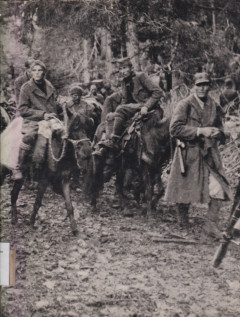
Partisans and Guerrillas
Partisans and Guerrillas explores the widespread resistance movements that emerged across Europe during World War II. Written by Ronald H. Bailey with the editors of Time-Life Books, the volume highlights the daring operations of underground fighters, from the Balkans to Western Europe, who conducted sabotage, intelligence gathering, and guerrilla warfare against Axis occupation forces. The boo…
- Edisi
- -
- ISBN/ISSN
- -
- Deskripsi Fisik
- 208 pages : illustration ; 29 cm
- Judul Seri
- -
- No. Panggil
- 940.542 BAI p
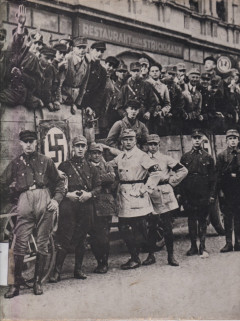
Prelude to war
Prelude to War explores the political, economic, and social conditions that led to the outbreak of World War II. Written by Robert T. Elson and the editors of Time-Life Books, the volume examines the rise of totalitarian regimes in Germany, Italy, and Japan, the failures of diplomacy, and the global tensions of the 1930s. The book highlights key events such as Hitler’s consolidation of power,…
- Edisi
- -
- ISBN/ISSN
- -
- Deskripsi Fisik
- 216 pages : illustration ; 29 cm
- Judul Seri
- -
- No. Panggil
- 940.542 ELS p

Reflections on the Nigerian civil war: A Call for realism
This book provides an analytical and deeply personal reflection on the Nigerian Civil War (1967–1970). Written by Raph Uwechue, a prominent diplomat and public intellectual, the work examines the origins of the conflict, the political and ethnic tensions that fueled it, and the humanitarian crisis that followed. Uwechue calls for a realistic understanding of the war's causes and consequences,…
- Edisi
- -
- ISBN/ISSN
- -
- Deskripsi Fisik
- 189 pages : illustrations ; 22 cm
- Judul Seri
- -
- No. Panggil
- 966.9052 UWE r
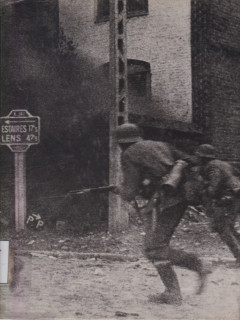
Blitzkrieg
Blitzkrieg examines the revolutionary German tactic of “lightning war” that transformed early World War II. Written by Robert Wernick with the editors of Time-Life Books, this volume explores how Germany combined speed, armor, air power, and coordinated assault to overwhelm Poland, the Low Countries, and France between 1939 and 1940. The book details the development of armored divisions, th…
- Edisi
- -
- ISBN/ISSN
- 0-8094-2456-8
- Deskripsi Fisik
- 208 pages : illustration ; 29 cm
- Judul Seri
- -
- No. Panggil
- 940.542 WER b
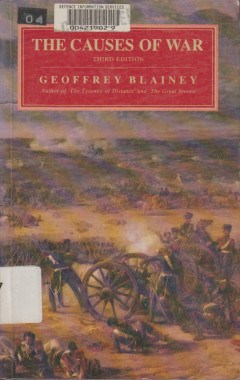
The Causes of war
Geoffrey Blainey's The Causes of War is a classic study of why wars happen and why peace fails to endure. In this third edition, Blainey examines the historical patterns of international conflict, highlighting the factors of perception, miscalculation, balance of power, and national interests that often trigger war. The book also examines the relationship between optimism and the political deci…
- Edisi
- -
- ISBN/ISSN
- 0-02-903591-0
- Deskripsi Fisik
- xii, 325 pages ; 21,5 cm
- Judul Seri
- -
- No. Panggil
- 355.027 BLA c
 Karya Umum
  Filsafat
  Agama
Agama  Ilmu-ilmu Sosial
  Bahasa
  Ilmu-ilmu Murni
  Ilmu-ilmu Terapan
  Kesenian, Hiburan, dan Olahraga
  Kesusastraan
  Geografi dan Sejarah