Ditapis dengan

Public issues before parliament
This book examines various public, social, economic, or political issues raised, discussed, and debated before a legislative body (parliament). Its content will likely include an in-depth analysis of the legislative process, the challenges parliamentarians face in responding to public demands, and the impact of parliamentary decisions on the wider public. It can serve as a guide or critical ana…
- Edisi
- -
- ISBN/ISSN
- 978-93-5080-037-9
- Deskripsi Fisik
- 377 pages : illustrations ; 22 cm
- Judul Seri
- -
- No. Panggil
- 328.37 DAR p
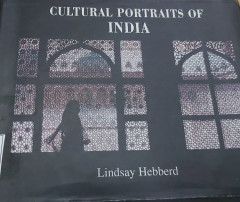
Cultural portraits of India
This book is a celebration of India on the occasion of the nation’s fiftieth anniversary of independence. For over a decade, photographer Lindsay Hebberd traveled the length and breadth of India to capture the beauty and diversity of one of the most colorful and fascinating countries on earth. Originally produced for an international exhibition tour, these photographs illustrate the natural b…
- Edisi
- -
- ISBN/ISSN
- -
- Deskripsi Fisik
- 205 pages : illustrations ; 25 cm
- Judul Seri
- -
- No. Panggil
- 954.008 WAS c

The Indian dimension: Politics of continental development
This collection of articles and lectures covers a remarkable range of subjects. Together, they help towards an understanding of the bewildering complexity of India’s continental policy. Romesh Thapar, one of India’s most distinguished commentators, is editor of Seminar, the seventeen-year-old prestigious monthly symposium, and has been engaged in many spheres of activity, particularly in In…
- Edisi
- -
- ISBN/ISSN
- 0-7069-0538-5
- Deskripsi Fisik
- viii, 192 pages ; 22 cm
- Judul Seri
- -
- No. Panggil
- 320.954 THA i

Public policy formulation and implementation in India
This book provides an analytical study of how public policies are formulated and implemented within the complex institutional and administrative structures of India. It examines the dynamics between political leadership, bureaucracy, and public institutions that shape the processes of decision-making in the country. Through detailed discussions, the author highlights the challenges faced in …
- Edisi
- -
- ISBN/ISSN
- 81-86637-02-4
- Deskripsi Fisik
- 221 pages ; 22 cm
- Judul Seri
- -
- No. Panggil
- 354.5402 PAU p
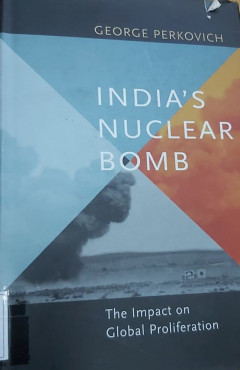
India's nuclear bomb: The Impact on global proliferation
In May 1998, India shocked the world—as well as many of its own citizens—by detonating five nuclear weapons in the Rajasthan desert. This landmark act raised central questions: Why did India pursue nuclear weapon status at a time when 149 nations had signed a ban on nuclear testing? What prompted India’s new Hindu nationalist government to depart from decades of nuclear restraint? And how…
- Edisi
- -
- ISBN/ISSN
- 0-520-21772-1
- Deskripsi Fisik
- xiii, 597 pages ; 25 cm
- Judul Seri
- -
- No. Panggil
- 355.02 PER i
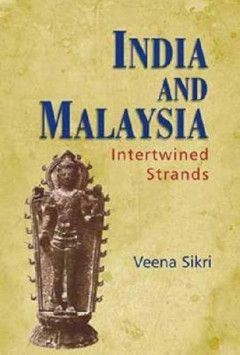
India and Malaysia
This book offers a panoramic yet in-depth historical analysis of the inter-linkages between India and Malaysia, which are a microcosm of the much larger relationship between South Asia and Southeast Asia, as these have evolved for more than two millennia. Both regions shared rich traditions, first of their Hindu and Buddhist, and later of their Islamic heritage. Till the arrival of European col…
- Edisi
- -
- ISBN/ISSN
- 978-93-5098-016-3
- Deskripsi Fisik
- xviii, 490 pages : illustrations ; 22 cm
- Judul Seri
- -
- No. Panggil
- 327.5954 SIK i

India and the world through the eyes of Indians diplomats
If there is anything constant in the world, it is change, especially in today's globalised world. Thirty mandarins of the South Block look at the current changes in different parts of the world, try to connect them with developments of the recent past, analyse and dissect them with experience and understanding spanning decades and strive to foresee what's likely to happen and weigh how that co…
- Edisi
- -
- ISBN/ISSN
- 978-81-8328-3847
- Deskripsi Fisik
- xxiii, 459 pages ; 24 cm
- Judul Seri
- -
- No. Panggil
- 327.54 KUM i
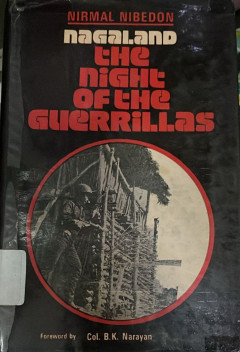
Nagaland : The Night of the guerrillas
This is the explosive story of the underground movement in Nagaland never written before. It is an investigative report of the secret trails where the dew never dries, a trail which ended far beyond the Indian borders, snaking into the monsoon-soaked jungles of Kachin, where men like Zewtu fought and died unsung. These were the forests of no return where men like Kaito, Zhukiye. Mowu, Zuheto a…
- Edisi
- -
- ISBN/ISSN
- 978-18978-2938-7
- Deskripsi Fisik
- 404 pages : illustrations ; 23 cm
- Judul Seri
- -
- No. Panggil
- 954.165 NIB n

India : bangkitnya raksasa baru asia, calon pemain utama dunia di era globali…
Bagaimana India bisa sedahsyat ini? India memulai dari dunia pendidikan dengan mencetak tenaga ahli bidang teknologi informasi. Hingga tercipta apa yang dinamakan Lembah Silikon India (Silicon Valley of India). Di lembah Silikon ini berdiri sekitar 200 industri besar peranti lunak dengan menyerap ratusan ribu karyawan.Sepak terjang India tidak sampai di situ, India pun melejit dalam industri ot…
- Edisi
- -
- ISBN/ISSN
- 978-979-709-300-6
- Deskripsi Fisik
- xxiv, 248 halaman ; 21 cm
- Judul Seri
- -
- No. Panggil
- 959 SUH i

Lord of the Kyber : The Story of the North West frontier
One hundred and forty years before Russians invaded Afghanistan in 1979, causing an outcry of protest from the West. The British had marched into Kabul and put their puppet king on the throne. The years which followed saw three wars, countless skirmishes and thousands of deaths - but the Pathans, or Pushtuns, and their fellow tribesmen of the NorthWest Frontier, remained undefeated. Pushtun…
- Edisi
- -
- ISBN/ISSN
- 0-571-11796-1
- Deskripsi Fisik
- 234 pages : illustrations ; 23 cm
- Judul Seri
- -
- No. Panggil
- 954.91 SIN l
 Karya Umum
  Filsafat
  Agama
Agama  Ilmu-ilmu Sosial
  Bahasa
  Ilmu-ilmu Murni
  Ilmu-ilmu Terapan
  Kesenian, Hiburan, dan Olahraga
  Kesusastraan
  Geografi dan Sejarah