Ditapis dengan

A Strategy of interdependence: A Program for the control of conflict between …
This book presents a comprehensive program for controlling conflict between the United States and the Soviet Union during the Cold War era. Vincent P. Rock outlines a strategic framework based on political interdependence, diplomatic negotiation, and cooperative security measures. The work analyzes sources of tension between the two superpowers and proposes practical mechanisms to prevent escal…
- Edisi
- -
- ISBN/ISSN
- -
- Deskripsi Fisik
- xv, 399 pages ; 23 cm
- Judul Seri
- -
- No. Panggil
- 327.17 ROC s
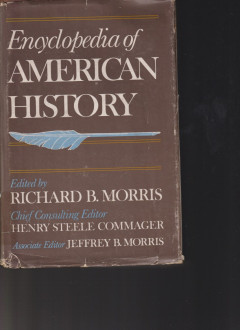
Encyclopedia of American history
The Encyclopedia of American History: Bicentennial Edition provides a comprehensive chronological overview of the major events, developments, and figures that have shaped the United States from its origins to the modern era. Edited by renowned historian Richard B. Morris, with contributions from Jeffrey B. Morris, this reference work offers accessible entries, updated historical interpretations…
- Edisi
- Bicentennial
- ISBN/ISSN
- 0-06-013081-4
- Deskripsi Fisik
- Deskripsi fisik : xiv, 1245 pages : illustration ; 24 cm
- Judul Seri
- -
- No. Panggil
- 973.03 MOR e

The American Republic: Politics, institutions, and policies
This book offers a comprehensive overview of the political system of the United States, examining its institutions, public policies, and the dynamics of governance. It provides an analytical foundation for understanding how American political structures operate, the roles of key actors, and the processes that shape national decision-making. Designed for political science students, the volume bl…
- Edisi
- -
- ISBN/ISSN
- 0-314-28509-1
- Deskripsi Fisik
- ix, 353 pages : illustrations ; 25,5 cm
- Judul Seri
- -
- No. Panggil
- 320.973 RED a
Secret societies of America’s elite: From the knights templar to skull and …
This book explores the hidden influence of secret societies on America's political and cultural elite, tracing their origins from the medieval Knights Templar to modern groups such as Skull and Bones. Steven Sora examines the rituals, symbolism, and historical evolution of these organizations, revealing how clandestine networks have shaped leadership, decision-making, and power structures in th…
- Edisi
- -
- ISBN/ISSN
- 0-89281-959-6
- Deskripsi Fisik
- ix, 324 pages ; 23 cm
- Judul Seri
- -
- No. Panggil
- 366.00973 SOR s
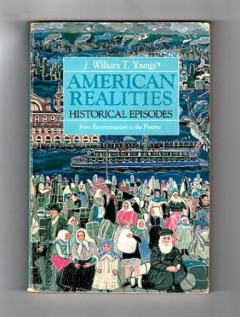
American realities historical episodes
American Realities presents a series of historical episodes that illuminate the development of the United States from Reconstruction through the modern era. J. William T. Youngs introduces readers to key events and personalities that shaped American political, social, and cultural life. Through narrative chapters supported by illustrations and quotations, the book explores industrialization, im…
- Edisi
- -
- ISBN/ISSN
- 0-316-977292
- Deskripsi Fisik
- xii, 286 pages : illustrations ; 23 cm
- Judul Seri
- -
- No. Panggil
- 973.9 YOU a

The United States and China in the twentieth century
This book provides a comprehensive examination of the political, diplomatic, and economic relations between the United States and China throughout the twentieth century. Michael Schaller analyzes major historical events, ideological confrontations, and policy shifts that shaped the complex bilateral relationship, from early interactions to the Cold War era. The work highlights how both nationsâ…
- Edisi
- -
- ISBN/ISSN
- 0-19-502599-7
- Deskripsi Fisik
- vii, 199 pages : illustrations ; 21,5 cm
- Judul Seri
- -
- No. Panggil
- 327.73 SCH u
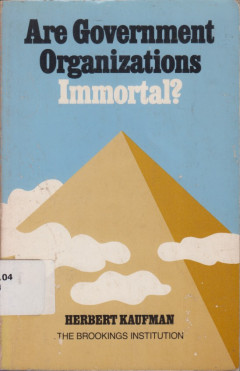
Are government organizations immortal?
Are Government Organizations Immortal? analyzes the longevity of governmental agencies in the United States. Herbert Kaufman examines why some public organizations persist for decades while others disappear, identifying political, structural, and environmental factors that shape their survival. Through empirical research, he explores patterns of organizational continuity, governmental resilienc…
- Edisi
- -
- ISBN/ISSN
- 0-8157-4839-6
- Deskripsi Fisik
- viii, 79 pages : illustrations ; 22 cm
- Judul Seri
- -
- No. Panggil
- 353.04 KAU a
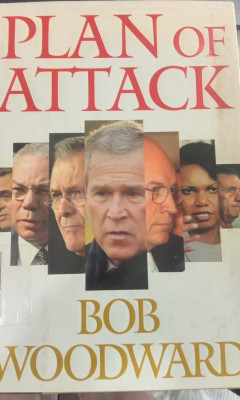
Plan of attack
Plan of Attack is the definitive account of how and why President George W. Bush, his war council, and allies launched a preemptive attack to topple Saddam Hussein and occupy Iraq. Bob Woodward's latest landmark account of Washington decision making provides an original, authoritative narrative of behind-the-scenes maneuvering over two years, examining the causes and consequences of the most co…
- Edisi
- -
- ISBN/ISSN
- 0-7432-5547-X
- Deskripsi Fisik
- xii, 467 pages : ilustrations (black and white) ; 24 cm
- Judul Seri
- -
- No. Panggil
- 956.7044 WOO p

Nixon in the white house: The Frustration of power
This book analyzes the presidency of Richard Nixon, focusing on the challenges and limitations of executive power during his administration. Written by journalists Rowland Evans, Jr. and Robert D. Novak, the work explores Nixon’s leadership style, political strategies, and conflicts within the White House and with Congress, the media, and public opinion. It provides an in-depth examination of…
- Edisi
- -
- ISBN/ISSN
- 0-394-46273-4
- Deskripsi Fisik
- 431 pages : 24,2 cm
- Judul Seri
- -
- No. Panggil
- 973.927 EVA n
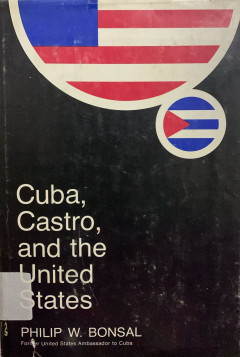
Cuba, Castro, and the United States
Cuba, Castro, and the United States is a firsthand analysis of diplomatic relations between Cuba and the United States during the early years of the Cuban Revolution. Written by Philip W. Bonsal, former U.S. Ambassador to Cuba, the book examines Fidel Castro’s rise to power, U.S. foreign policy toward Cuba, and the political tensions that shaped Cold War relations in the Caribbean.
- Edisi
- First edition
- ISBN/ISSN
- -
- Deskripsi Fisik
- xii, 318 pages : illustration ; 23,5 cm
- Judul Seri
- -
- No. Panggil
- 972.91064 BON c
 Karya Umum
  Filsafat
  Agama
Agama  Ilmu-ilmu Sosial
  Bahasa
  Ilmu-ilmu Murni
  Ilmu-ilmu Terapan
  Kesenian, Hiburan, dan Olahraga
  Kesusastraan
  Geografi dan Sejarah