Ditapis dengan

Roosevelt : Studie über glück und macht
This book is a biographical and psychological study of Franklin D. Roosevelt, written by Emil Ludwig. The author explores Roosevelt’s character, leadership style, and exercise of power, focusing on the relationship between personal happiness and political authority. Published in 1938, the work reflects contemporary perspectives on Roosevelt’s presidency and offers insight into political lea…
- Edisi
- -
- ISBN/ISSN
- -
- Deskripsi Fisik
- 309 pages : illustration ; 20,5 cm
- Judul Seri
- -
- No. Panggil
- 973.917 LUD r

Deng Xiao Ping and the making of modern China
This comprehensive biography of Deng Xiaoping, written by Richard Evans, a longtime Western diplomat and researcher in China, traces Deng Xiaoping's life from his youth, involvement in the revolution, his role in the Chinese Communist Party, and his role as a key architect of China's economic modernization. With a thorough and historically researched writing style, this book depicts how Deng sh…
- Edisi
- -
- ISBN/ISSN
- 978-7-5125-0483-7
- Deskripsi Fisik
- 388 pages : illustrations ; 24 cm
- Judul Seri
- -
- No. Panggil
- 951.056092 EVA d

Suharto and his generals: Indonesian military politics 1975–1983
This study provides a detailed analysis of the internal dynamics of the Indonesian Armed Forces during the crucial period of 1975 to 1983 under President Suharto’s rule. It examines the political roles, rivalries, and influence of Suharto’s generals, highlighting how military structures shaped national policy and power distribution. Through extensive documentation and interviews, the book r…
- Edisi
- -
- ISBN/ISSN
- -
- Deskripsi Fisik
- xiii, 280 pages : illustration ; 25,5 cm
- Judul Seri
- -
- No. Panggil
- 355.033598 JEN s
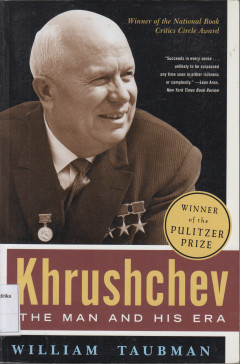
Khrushchev: The Man and His era
This Pulitzer Prize–winning biography offers an extensive and deeply researched portrait of Nikita Khrushchev, one of the most pivotal leaders of the Soviet Union. William Taubman reconstructs Khrushchev’s life—from his rise through the Communist Party under Stalin, to his surprising emergence as premier, and his attempts to reform the Soviet system while managing the dangers of the Cold …
- Edisi
- -
- ISBN/ISSN
- 978-0-393-05279-5
- Deskripsi Fisik
- xx, 871 pages : illustrations ; 23,5 cm
- Judul Seri
- -
- No. Panggil
- 947.084092 TAU k

Leaders, leadership, & U. S. policy in Latin America
In this book Michael Kryzanek examines the ways in which the critical interaction between individual leaders and the U.S. policy community affects the substance and direction of hemispheric relations. Throughout, the author uses case studies to illustrate how individual heads of state respond to the issues of drugs, debt, trade, and regional security. Such leaders as Salinas of Mexico, Gaviria …
- Edisi
- -
- ISBN/ISSN
- 0-8133-7950-4
- Deskripsi Fisik
- xii, 249 pages : index ; 23 cm
- Judul Seri
- -
- No. Panggil
- 327.7308 KRY l
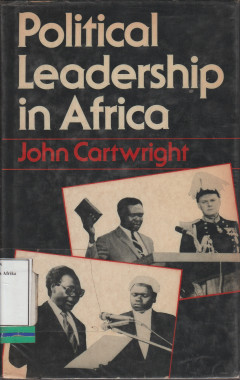
Political leadership in Africa
This book examines the dynamics of political leadership in various African countries from the independence era to the early 1980s. J. Cartwright analyzes the characteristics of African leaders, power patterns, political structures, and social factors influencing government stability. Using a political science and sociological approach, this book provides a comprehensive overview of how African …
- Edisi
- -
- ISBN/ISSN
- 0-7099-0751-6
- Deskripsi Fisik
- 310 pages : illustrations ; 22 cm
- Judul Seri
- -
- No. Panggil
- 306.2096 CAR p
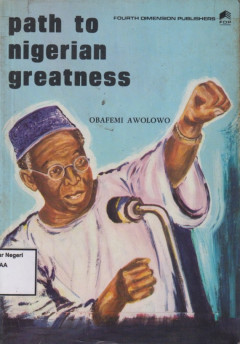
Path to Nigerian greatness
This book presents Chief Obafemi Awolowo’s reflections on the political, economic, and social foundations necessary for achieving national greatness in Nigeria. Drawing from his experience as a statesman, philosopher, and nationalist leader, Awolowo outlines the principles of ethical governance, federalism, economic planning, and social justice. The work explores Nigeria’s challenges and op…
- Edisi
- -
- ISBN/ISSN
- 978-156-166-1
- Deskripsi Fisik
- ix, 225 pages ; 21 cm
- Judul Seri
- -
- No. Panggil
- 320.9669 AWO p

Collective leadership and factionalism: An Essay on Ho Chi Minh’s legacy
This book provides a scholarly examination of the legacy of Ho Chi Minh through the lens of collective leadership and internal factionalism within the Vietnamese Communist Party. Thai Quang Trung analyzes how leadership structures shaped political decision-making in Vietnam during and after Ho Chi Minh’s era. The essay explores ideological divisions, struggles between political factions, and …
- Edisi
- -
- ISBN/ISSN
- 9971-988-01-1
- Deskripsi Fisik
- viii, 136 pages ; 23 cm
- Judul Seri
- -
- No. Panggil
- 959.704092 THA c
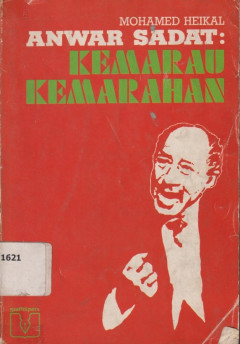
Anwar Sadat: Kemarau emarahan
Anwar Sadat: Kemarau Kemarahan, translated from Mohamed Heikal’s Autumn of Fury, offers an in-depth and critical examination of the final years of President Anwar Sadat’s rule. As one of Egypt’s leading journalists and a close observer of political developments, Heikal analyzes the political, social, and regional tensions that shaped Sadat’s leadership. The book discusses Sadat’s dome…
- Edisi
- -
- ISBN/ISSN
- -
- Deskripsi Fisik
- xiii, 250 pages : illustration ; 21 cm
- Judul Seri
- -
- No. Panggil
- 962.053092 HEI a
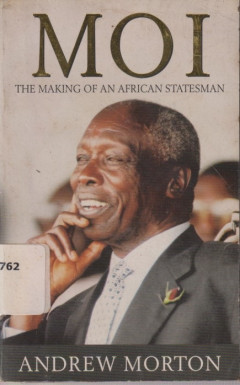
Moi: The Making of an African statesman
This book provides a detailed biography of Daniel arap Moi, the second President of Kenya, tracing his early life, rise through political ranks, and eventual emergence as a central figure in Kenyan national leadership. Andrew Morton examines Moi’s personal background, political ideology, leadership style, and the challenges he faced in guiding Kenya through periods of political transition. Dr…
- Edisi
- First published
- ISBN/ISSN
- 1-85479-369-6
- Deskripsi Fisik
- xi, 305 pages : illustration ; 17,5 cm
- Judul Seri
- -
- No. Panggil
- 967.6205092 AND m
 Karya Umum
  Filsafat
  Agama
Agama  Ilmu-ilmu Sosial
  Bahasa
  Ilmu-ilmu Murni
  Ilmu-ilmu Terapan
  Kesenian, Hiburan, dan Olahraga
  Kesusastraan
  Geografi dan Sejarah