Ditapis dengan
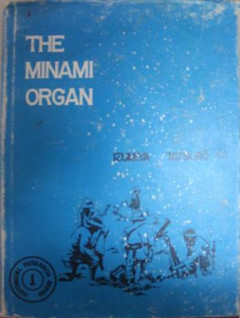
The minami organ
The Minami Organ explores the historical role of Minami Kikan, a Japanese intelligence and political operations agency active in Southeast Asia during the pre-war and wartime period. Written by Izumiya Tatsuro, the book provides detailed accounts of Japan’s political strategies, covert operations, and regional influence. This edition is an English translation by U Tun Aung Chain of the Univer…
- Edisi
- 1
- ISBN/ISSN
- -
- Deskripsi Fisik
- 214 pages : illustrations ; 24,5 cm
- Judul Seri
- -
- No. Panggil
- 959.105 TAT m

They came to Japan : An Anthology of European reports on Japan. 1543-1640
They Came to Japan is a translated anthology compiling over thirty European reports, letters, and missionary accounts written between 1543 and 1640. Edited by Michael Cooper, the volume offers a vivid portrait of sixteenth- and seventeenth-century Japan through the eyes of Europeans — merchants, Jesuit missionaries, and other travelers. The contributors include those who lived in Japan for ex…
- Edisi
- 1
- ISBN/ISSN
- 0-520-04509-2
- Deskripsi Fisik
- xiv, 439 pages ; 20 cm
- Judul Seri
- -
- No. Panggil
- 952.025 COO t

The loophole of the protection in the individual Scheme of Indonesian Specifi…
This paper examines protection gaps faced by Indonesian Specified Skilled Workers (SSW) in Japan under the individual sending scheme, despite the bilateral cooperation established in 2019 and a significant increase to 69,537 workers as of June 2025. Analysis using systems thinking and design thinking identifies key weaknesses: lack of worker awareness regarding mortality and health insurance, l…
- Edisi
- -
- ISBN/ISSN
- -
- Deskripsi Fisik
- -
- Judul Seri
- -
- No. Panggil
- Sesdilu 80-2026

Kobe
Kobe is a pictorial and descriptive publication issued by the Kobe City Government, presenting the city of Kobe through photographic documentation and visual narratives. The book highlights Kobe’s urban landscape, architecture, and atmosphere, offering an overview of the city’s identity as a modern port city in Japan. Through high-quality photography, the publication serves as both a cultur…
- Edisi
- -
- ISBN/ISSN
- -
- Deskripsi Fisik
- 127 pages : illustrations ; 33 cm
- Judul Seri
- -
- No. Panggil
- 915.216 KOB k
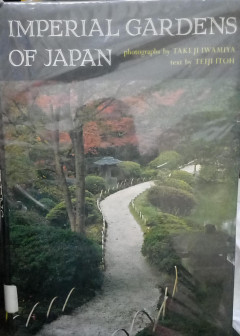
Imperial gardens of Japan
Imperial Gardens of Japan presents a comprehensive visual and textual study of three of Japan’s most significant imperial gardens: Sento Gosho, Katsura Imperial Villa, and Shugaku-in Imperial Villa. Featuring photographs by Takeji Iwamiya and scholarly text by Teiji Itoh, the book explores the historical, aesthetic, and architectural principles underlying traditional Japanese garden design. O…
- Edisi
- -
- ISBN/ISSN
- 0-8348-1507-9
- Deskripsi Fisik
- 290 pages : illustrations ; 36 cm
- Judul Seri
- -
- No. Panggil
- 712.60952 IWA i

Emperor hirohito and his chief aide-de-camp: The Honjo diary, 1933-36
This book presents a translated and annotated version of the Honjō Diary, written by General Honjō Shigeru, the chief aide-de-camp to Emperor Hirohito. Covering the years 1933 to 1936, the diary provides firsthand insight into political, military, and court affairs during a turbulent period in Japan’s prewar history. Mikiso Hane offers contextual analysis to help readers understand the empe…
- Edisi
- -
- ISBN/ISSN
- 0-86008-319-5
- Deskripsi Fisik
- ix, 263 pages ; 23,5 cm
- Judul Seri
- -
- No. Panggil
- 952.033 HAN e
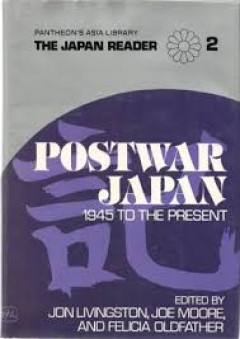
Postwar Japan 1945 to the present
Postwar Japan: 1945 to the Present is an anthology that chronicles Japan’s political, social, and economic transformations in the aftermath of World War II. Edited by Jon Livingston, Joe Moore, and Felicia Oldfather, the volume collects essays, primary sources, and commentary from scholars to provide a comprehensive view of Japan’s reconstruction under Allied occupation, its democratization…
- Edisi
- -
- ISBN/ISSN
- 0-394-70669-2
- Deskripsi Fisik
- xxi, 598 pages ; 20 cm
- Judul Seri
- -
- No. Panggil
- 952.04 LIV p
The Modern history of Japan
a concise and accessible account of Japan’s development from the Meiji Restoration (1868) to the post–World War II era. The book covers key political, economic, and social changes, including industrialization, modernization of institutions, rise of imperialism, militarism, and Japan’s transformation into a modern state. Yasuoka also discusses the impact of war, especially World War II, an…
- Edisi
- -
- ISBN/ISSN
- -
- Deskripsi Fisik
- 135 pages : illustrations ; 26 cm
- Judul Seri
- -
- No. Panggil
- 942.047 YAS m

Hiroshima and nagasaki: The Physical, medical, and social effects of the atom…
A detailed historical analysis of the United States’ decision to deploy atomic weapons against Japan in August 1945. Feis examines the strategic, political, and military factors that led to this unprecedented action, exploring alternatives such as a conventional invasion, coercion through diplomatic inducement, and the shock of the atomic bomb itself.
- Edisi
- -
- ISBN/ISSN
- 0-465-02985-X
- Deskripsi Fisik
- xli, 705 pages : illustrations ; 23,5 cm
- Judul Seri
- -
- No. Panggil
- 940.5426 LIN h

Unbeaten tracks in Japan: An Account of travels in the interior, including vi…
Nineteenth-century English traveler, writer, and natural historian Isabella Bird contributes this stunning narrative to the genre of early travelogues about Japan. The volume Unbeaten Tracks in Japan includes a series of essays recounting Bird's months-long sojourn in the Far East. Already a treat for fans of 19th century travel literature, the book is rendered all the more unique by virtue of …
- Edisi
- -
- ISBN/ISSN
- 0-8048-1000-1
- Deskripsi Fisik
- xxv, 336 pages : illustrations ; 18 cm
- Judul Seri
- -
- No. Panggil
- 910.0252 BIR u
 Karya Umum
  Filsafat
  Agama
Agama  Ilmu-ilmu Sosial
  Bahasa
  Ilmu-ilmu Murni
  Ilmu-ilmu Terapan
  Kesenian, Hiburan, dan Olahraga
  Kesusastraan
  Geografi dan Sejarah