Ditapis dengan

Seizing the Muslim fashion creative economy market to promote Indonesia’s e…
Market and the creative economy industry became the central potentials for the Indonesian industry. The 3,43% share of the Indonesian population of the world and its rich natural resources made the country’s bargaining power as a potential creative economy market. According to the Global Religious Futures, Indonesia is the largest Muslim majority country globally, with a total of 229.62 milli…
- Edisi
- -
- ISBN/ISSN
- -
- Deskripsi Fisik
- -
- Judul Seri
- -
- No. Panggil
- Sesdilu 72-2022

Seeds of terror : How heroin is bankrolling the taliban and Al-Qaeda
Examines the role of drug trafficking in the support of terrorist groups and the international criminal underworld connected to the Taliban in Pakistan and Afghanistan, arguing that the most important focus for Western policymakers is to stop the flow of money to terrorist networks.
- Edisi
- 1
- ISBN/ISSN
- 978-0-312-37927-8
- Deskripsi Fisik
- xvii, 300 pages : ilustrations ; 24 cm
- Judul Seri
- -
- No. Panggil
- 362.293581 PET s

Expanding Indonesia’s health industry: Seizing opportunities in Africa
Indonesia’s health industry has significant opportunities to expand its presence in Africa amid growing efforts to strengthen local healthcare production and reduce dependence on imported medical supplies. Indonesian health companies face regulatory, political, financial, and institutional barriers in entering African markets. Strategic investment and public-private partnerships can be streng…
- Edisi
- -
- ISBN/ISSN
- -
- Deskripsi Fisik
- -
- Judul Seri
- -
- No. Panggil
- Sesdilu 78-2025

Promoting Indonesia through gamification on view of Indonesia survey at Indon…
This paper examines the potential of Indonesia’s gaming industry as a tool for international promotion and cultural diplomacy. Despite its rapid growth and increasing global recognition, national policy lacks a clear international promotion strategy and does not involve the Ministry of Foreign Affairs (MoFA) in relevant coordination. The paper proposes gamifying the “View of Indonesia Surve…
- Edisi
- -
- ISBN/ISSN
- -
- Deskripsi Fisik
- -
- Judul Seri
- -
- No. Panggil
- Sesdilu 77-2024

The Home front: U.S.A.
The Home Front: U.S.A. portrays the dramatic transformation of American society during World War II. Written by Ronald H. Bailey with the editors of Time-Life Books, this volume explores how the United States mobilized its economy, industry, and population for the global conflict. It examines rationing programs, war production, civil defense efforts, and the significant roles played by women an…
- Edisi
- -
- ISBN/ISSN
- 0-8094-2490-8
- Deskripsi Fisik
- 208 pages : illustration ; 29 cm
- Judul Seri
- -
- No. Panggil
- 940.542 BAI h

Corporate society: Class, property, and contemporary capitalism
So argues John McDermott in Corporate Society, an original and far-reaching analysis of the impact of the modern corporation on contemporary social structure. Combining business history with political insight, McDermott offers a systematic critique of the post-industrial order and the illusions it fosters. He warns against the development of a "post-society industry" in which the corporate orde…
- Edisi
- -
- ISBN/ISSN
- 0-8133-0708-2
- Deskripsi Fisik
- xvi, 208 pages : index ; 23 cm
- Judul Seri
- -
- No. Panggil
- 306.36 Der c

Energy and US foreign policy: The quest for resource security after the Cold War
The quest for oil can be seen as a defining principle of global US foreign policy, an imperative which has shaped and redefined the practice of American diplomacy, especially in the wake of 9/11, which raised questions about the stability of global oil resources. In "Energy and US Foreign Policy", Ahmed Mahdi relates the military expansion of the world's biggest superpower to its quest to gain …
- Edisi
- -
- ISBN/ISSN
- 978-1-84885-776-6
- Deskripsi Fisik
- 311 pages ; 22 cm
- Judul Seri
- -
- No. Panggil
- 333.790973 Mah e
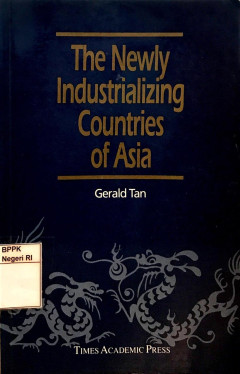
The newly industrializing countries of Asia
This book presents a comparative analysis of these remarkable achievements, in the light of analytical debates in the development economics literature.
- Edisi
- -
- ISBN/ISSN
- 9812100245
- Deskripsi Fisik
- xvii, 381 pages : illustration (black and white); 22 cm.
- Judul Seri
- -
- No. Panggil
- 338.959 Tan n

Japan between Asia and the West: Economic power and strategic balance
Japan seeks economic competitiveness vis-a-vis the West and economic dominance in Asia, but it mainly competes through cooperative use of economic resources, which facilitates realization of the goals of partner nations. This book studies Japan's balance between the United States and East Asia by focusing on the use of economic power - defense spending, consumption, and investment - to advance …
- Edisi
- -
- ISBN/ISSN
- 0-7656-0777-8
- Deskripsi Fisik
- xiv, 225 pages ; 23 cm.
- Judul Seri
- -
- No. Panggil
- 337.52 Wan j

Creative economy and culture: Challenges, change and futures for the creative…
Creativity, new ideas and innovation – and with them the growth of knowledge – have spilled out of the lab, studio and factory into the street, scene, and social media. Now, everyday life is productive, everyone is creative, and new ideas can come from anywhere around the world. Instead of confining cultural expression to talented artists and expert professionals, this book investigates …
- Edisi
- -
- ISBN/ISSN
- 978-85702-877-8
- Deskripsi Fisik
- xi, 250 pages : illustration (black and white) ; 23,5 cm.
- Judul Seri
- -
- No. Panggil
- 338.9 Har c
 Karya Umum
 Filsafat
 Agama
 Ilmu-ilmu Sosial
 Bahasa
 Ilmu-ilmu Murni
 Ilmu-ilmu Terapan
 Kesenian, Hiburan, dan Olahraga
 Kesusastraan
 Geografi dan Sejarah