Ditapis dengan

Gender mainstreaming in Indonesia’s climate policy and diplomacy
This study examines gender mainstreaming in Indonesia’s climate policies and its implications for climate diplomacy. It analyses gender-responsive climate adaptation, women’s representation in leadership and decision-making, and opportunities to strengthen gender equality in climate governance. Using scenario planning, the study identifies policy options for the Ministry of Foreign Affairs,…
- Edisi
- -
- ISBN/ISSN
- -
- Deskripsi Fisik
- -
- Judul Seri
- -
- No. Panggil
- Sesparlu 68-2021

Ministry of Foreign Affairs as the coordinator for foreign relation and polic…
This paper examines the coordinating role of Indonesia’s Ministry of Foreign Affairs in managing interministerial and interagency engagement in foreign relations. As international issues increasingly require cross-sectoral approaches, the study assesses existing coordination practices across four thematic areas, identifies institutional challenges, and applies scenario planning to develop pol…
- Edisi
- -
- ISBN/ISSN
- -
- Deskripsi Fisik
- -
- Judul Seri
- -
- No. Panggil
- Sesparlu 68-2021

The artificial intelligence imperative: ensuring the relevance of Indonesia'…
Artificial Intelligence (AI) is transforming diplomacy, international competition, and global governance, requiring Indonesia’s Ministry of Foreign Affairs to strengthen its institutional and technological capabilities. Conventional diplomatic processes increasingly face limitations in addressing complex geopolitical challenges and data-driven decision-making. This policy brief recommends tra…
- Edisi
- -
- ISBN/ISSN
- -
- Deskripsi Fisik
- -
- Judul Seri
- -
- No. Panggil
- Sesparlu 79-2026

Strengthening economic intelligence to advance Indonesia’s economic diplomacy
In the past years, the Ministry of Foreign Affairs of the Republic Indonesia (MOFA RI) has refocused its priorities, including to further advance economic diplomacy to help accelerate the recovery of Indonesia’s economy. To achieve this, various policies to further boost trade and investment ties have been actively pursued in recent years. Moreover, numerous breakthroughs have also been under…
- Edisi
- -
- ISBN/ISSN
- -
- Deskripsi Fisik
- -
- Judul Seri
- -
- No. Panggil
- Sesdilu 72-2022

Measuring gender equality in the MOFA: creating indicators for evidence-based…
The Ministry of Foreign Affairs of Indonesia (MoFA) has implemented gender mainstreaming policies to promote gender equality and justice in the workplace. However, systematic evaluation of these policies remains limited. This paper develops a Gender Equality Indicator (GEI) to assess workplace gender equality in areas such as education, career advancement, equal pay, representation, sexual hara…
- Edisi
- -
- ISBN/ISSN
- -
- Deskripsi Fisik
- -
- Judul Seri
- -
- No. Panggil
- SESDILU 70-2021

Optimizing International Atomic Energy Agency's Zoonotic Disease Integrated A…
The COVID-19 pandemic highlighted the importance of international cooperation in strengthening national responses to zoonotic diseases. In 2020, the International Atomic Energy Agency (IAEA) launched the Zoonotic Disease Integrated Action (ZODIAC) initiative to support member states, including Indonesia, through technical assistance and diagnostic technologies such as RT-PCR. However, ZODIAC’…
- Edisi
- -
- ISBN/ISSN
- -
- Deskripsi Fisik
- -
- Judul Seri
- -
- No. Panggil
- SESDILU 70-2021

Koran, Kalashnikov and Laptop : The Neo-Taliban insurgency in Afghanistan
Since the Allied invasion of Afghanistan in 2002, the Bush administration has celebrated the imminent demise of the Taliban, with claims of a "moral and psychological defeat" playing a prominent role in the presidential elections of 2004. Some commentators suggested that "reconstruction and development" had won over the Afghan population, despite widespread criticism of the meager distribution …
- Edisi
- -
- ISBN/ISSN
- 978-1-85065-872-6
- Deskripsi Fisik
- xv, 259 pages : illustrations ; 23 cm
- Judul Seri
- -
- No. Panggil
- 958.1047 GIO k
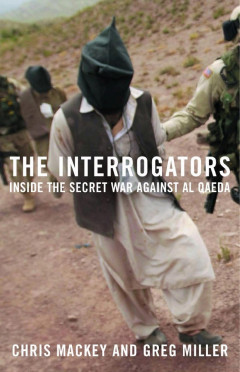
The Interrogators : Inside the secret war agains Al-Qaeda
More than 3,000 prisoners in the war on terrorism have been captured, held, and interrogated in Afghanistan alone. But no one knows what transpired in those interactions between prisoner and interrogator -- until now. In The Interrogators, Chris Mackey, the senior interrogator at Bagram Air Base and in Kandahar, where al-Qaeda and Taliban prisoners were first detained and questioned, lifts the…
- Edisi
- 1
- ISBN/ISSN
- 0-316-87112-5
- Deskripsi Fisik
- xxvii, 484 pages : ilustrations ; 25 cm
- Judul Seri
- -
- No. Panggil
- 958.1 MAC i

Constructing Indonesia's foreign policy toward artificial intelligences as on…
This paper examines Indonesia's critical juncture in shaping its foreign policy towards artificial intelligence (AI) development as a transformative force reshaping economies, industries, and societies globally. While AI offers promise for innovation, productivity, and economic growth, it also presents multifaceted risks spanning economic, social, and geopolitical dimensions that require compre…
- Edisi
- -
- ISBN/ISSN
- -
- Deskripsi Fisik
- -
- Judul Seri
- -
- No. Panggil
- Sesdilu 76-2024

Strengthening gender mainstreaming to enhance Indonesia’s positive image
This paper examines efforts by Indonesia's Ministry of Foreign Affairs to promote gender mainstreaming in alignment with national and international commitments, including the Sustainable Development Goals (SDGs) on gender equality. Although Indonesia ranks 87th out of 146 countries in the 2023 Global Gender Gap Index, the government has undertaken various legislative and policy measures to achi…
- Edisi
- -
- ISBN/ISSN
- -
- Deskripsi Fisik
- -
- Judul Seri
- -
- No. Panggil
- Sesdilu 76-2024
 Karya Umum
 Filsafat
 Agama
 Ilmu-ilmu Sosial
 Bahasa
 Ilmu-ilmu Murni
 Ilmu-ilmu Terapan
 Kesenian, Hiburan, dan Olahraga
 Kesusastraan
 Geografi dan Sejarah