Ditapis dengan

A Century of horrors: Communism, nazism, and the uniqueness of the shoah
This book presents a profound comparative study of the twentieth century’s two most destructive ideological systems—Communism and Nazism—and examines why the Shoah remains historically and morally unique. Alain Besançon analyzes the philosophical roots, political methods, and human consequences of totalitarian regimes, highlighting the deep differences in their motivations and atrocities…
- Edisi
- -
- ISBN/ISSN
- 978-1-933859-17-0
- Deskripsi Fisik
- xxi, 119 pages ; 22 cm
- Judul Seri
- -
- No. Panggil
- 320.9 BES c
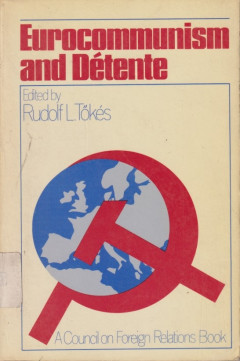
Eurocommunism and détente
Eurocommunism and Détente is a collection of analytical essays examining the rise of Eurocommunist movements in Western Europe and their impact on East–West relations during the 1970s. Edited by Rudolf L. Tőkés, the volume brings together contributions from leading scholars who assess the ideological divergence of Western Communist parties from Soviet orthodoxy, their attempts to redefine …
- Edisi
- -
- ISBN/ISSN
- 0-8147-8162-4
- Deskripsi Fisik
- x, 578 pages ; 21 cm
- Judul Seri
- -
- No. Panggil
- 335.43094 TOK e
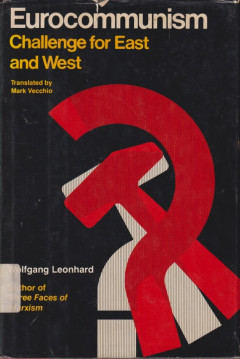
Eurocommunism: Challenge for east and west
Eurocommunism: Challenge for East and West by Wolfgang Leonhard offers an in-depth analysis of the Eurocommunist movement as it developed in Western Europe during the 1970s. Leonhard examines the ideological foundations, political strategies, and organizational changes within major Communist parties in Italy, France, and Spain, and contrasts them with Soviet-style Communism in Eastern Europe. T…
- Edisi
- -
- ISBN/ISSN
- 0-03-044951-0
- Deskripsi Fisik
- x, 398 pages ; 23,5 cm
- Judul Seri
- -
- No. Panggil
- 320.51 LEO e
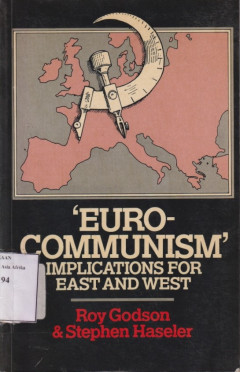
‘Eurocommunism’: Implications for east and west
Eurocommunism’: Implications for East and West examines the rise of Eurocommunist movements across Western Europe and their political significance during the late 20th century. Written by Roy Godson and Stephen Haseler, the book analyzes the ideological evolution of Eurocommunist parties, their relations with the Soviet Union, their influence on domestic politics, and the implications for Eas…
- Edisi
- -
- ISBN/ISSN
- 0-333-25677-8
- Deskripsi Fisik
- ix, 144 pages ; 21,5 cm
- Judul Seri
- -
- No. Panggil
- 329.02094 GOD e
Communism and political systems in Western Europe
Communism and Political Systems in Western Europe is a scholarly collection of essays examining the development, strategies, and influence of communist movements and parties in Western Europe after 1945. Edited by David E. Albright, the volume analyzes the ideological evolution of European communism, its relationship with state institutions, and its impact on democratic systems. Through compara…
- Edisi
- -
- ISBN/ISSN
- 0-89158-308-4
- Deskripsi Fisik
- xx, 379 pages : illustration ; 23,5 cm
- Judul Seri
- -
- No. Panggil
- 335.43094 ALB c

The Unfinished revolution: Making sense of the communist past in Central-East…
The Unfinished Revolution by James Mark examines how Central and Eastern European societies have understood, negotiated, and remembered their communist past since the revolutions of 1989. Through comparative case studies, the book explores the social, political, and cultural transformations that shaped post-communist identity. Mark analyzes themes such as collective memory, political justice, d…
- Edisi
- -
- ISBN/ISSN
- 978-0-300-16716-0
- Deskripsi Fisik
- xxviii, 312 pages : illustration ; 24 cm
- Judul Seri
- -
- No. Panggil
- 943.705 MAR u
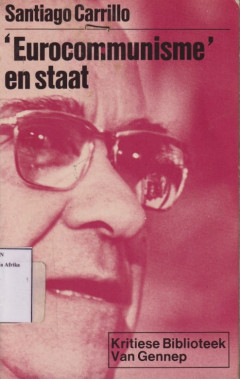
Eurocommunisme en staat
Eurocommunisme en staat is a Dutch translation of Santiago Carrillo's work discussing the development of eurocommunism as a new form of communist movement in Western Europe in the 1970s. This book describes how communist parties in various European countries tried to adapt the principles of communism to the reality of democratic politics, as well as how they viewed the role of the state, power …
- Edisi
- -
- ISBN/ISSN
- 90 6012 363 8
- Deskripsi Fisik
- 197 pages ; 20 cm
- Judul Seri
- -
- No. Panggil
- 335.43 CAR e
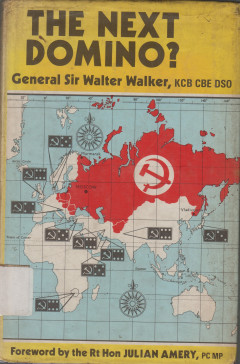
The Next domino?
The Next Domino? examines the geopolitical tensions of the late Cold War through the perspective of General Sir Walter Walker, former NATO Commander-in-Chief of Allied Forces Northern Europe. The book analyzes the perceived threat of Soviet expansion and the possibility of a "domino effect" in global political instability. Walker discusses military strategy, ideological confrontation, and Weste…
- Edisi
- -
- ISBN/ISSN
- 0-85205-005-4
- Deskripsi Fisik
- xvi, 371 pages : illustrations ; 24 cm
- Judul Seri
- -
- No. Panggil
- 327.41047 WAL n
V. I. Lenin on Britain
V. I. Lenin on Britain is a curated collection of Lenin’s writings focused on British politics, labor movements, and international relations. Through speeches, articles, and correspondence, Lenin analyzes the development of capitalism in Britain, the character of the British working class, and the role of the Labour Party within the broader socialist struggle. The volume provides insight into…
- Edisi
- -
- ISBN/ISSN
- -
- Deskripsi Fisik
- 628 pages : ; 19 cm
- Judul Seri
- -
- No. Panggil
- 335.43 LEN v
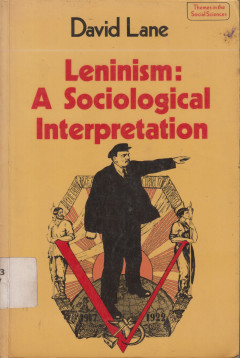
Leninism: A Sociological interpretation
Leninism: A Sociological Interpretation by David Lane offers a comprehensive analysis of Leninist ideology as both a political doctrine and a social system. Lane examines how Leninism diverges from classical Marxism and explores its institutionalization within the Soviet Union. Through a sociological perspective, the book discusses the structures of power, class relations, and political control…
- Edisi
- -
- ISBN/ISSN
- 0-521-23855-2
- Deskripsi Fisik
- x, 150 pages ; 23 cm
- Judul Seri
- -
- No. Panggil
- 335.43 LAN l
 Karya Umum
  Filsafat
  Agama
Agama  Ilmu-ilmu Sosial
  Bahasa
  Ilmu-ilmu Murni
  Ilmu-ilmu Terapan
  Kesenian, Hiburan, dan Olahraga
  Kesusastraan
  Geografi dan Sejarah