Ditapis dengan

Chinese Foreign Policy after the Cultural Revolution, 1966–1977
Chinese Foreign Policy after the Cultural Revolution, 1966–1977 analyzes the evolution of China’s foreign policy during and immediately after the Cultural Revolution. Written by Robert G. Sutter, the book examines how domestic political turmoil affected China’s external relations and diplomatic behavior. It explores policy changes, strategic priorities, and China’s interactions with maj…
- Edisi
- -
- ISBN/ISSN
- 0-89158-342-4
- Deskripsi Fisik
- 176 pages; 30 cm
- Judul Seri
- -
- No. Panggil
- 327.51 SUT c
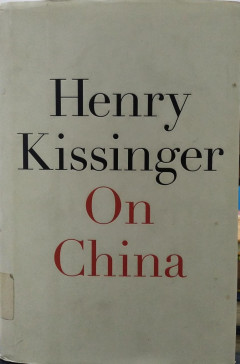
Henry kissinger on China
On China is a comprehensive analysis of Chinese history, diplomacy, and strategic culture written by former U.S. Secretary of State Henry Kissinger. Drawing on his personal experiences and diplomatic engagements with Chinese leaders, particularly during the normalization of U.S.–China relations, the book explores China’s worldview, historical memory, and approach to international relations.…
- Edisi
- -
- ISBN/ISSN
- 978-1-59420-271-1
- Deskripsi Fisik
- 586 pages : Ilustrations ; 24 cm
- Judul Seri
- -
- No. Panggil
- 327.51 KIS o

The Chinese calculus of deterrence: India and Indochina
The Chinese Calculus of Deterrence analyzes China’s strategic thinking and foreign policy behavior in its relations with India and the states of Indochina. Written by Allen S. Whiting, the book examines the use of military force, deterrence strategies, and political calculations employed by the People’s Republic of China during periods of regional conflict. This study provides a detailed as…
- Edisi
- -
- ISBN/ISSN
- 0-472-07600-5
- Deskripsi Fisik
- 299 pages: illustrations ; 23 cm
- Judul Seri
- -
- No. Panggil
- 327.51 WHI c
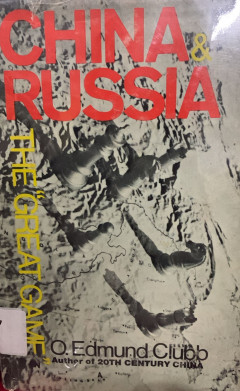
China & Russia: The Great Game
China & Russia: The Great Game examines the complex and shifting relationship between China and the Soviet Union during the twentieth century. Written by diplomat and China scholar O. Edmund Clubb, the book analyzes ideological conflict, geopolitical rivalry, and historical tensions that shaped Sino-Soviet relations. Drawing on diplomatic experience and historical analysis, the work provides va…
- Edisi
- -
- ISBN/ISSN
- -
- Deskripsi Fisik
- 578 pages : illustration ; 23 cm
- Judul Seri
- -
- No. Panggil
- 327.1247 CLU c
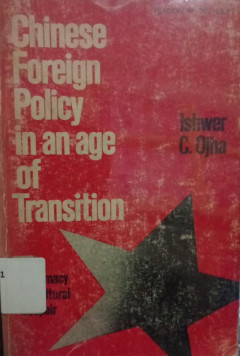
Chinese foreign policy in an age of transition
Chinese Foreign Policy in an Age of Transition analyzes the transformation of the People’s Republic of China’s foreign policy during a critical period of political, ideological, and international change. Written by Ishwer C. Ojha, the book examines China’s diplomatic strategies, cultural diplomacy, and international positioning in the post-revolutionary era. This second edition reflects u…
- Edisi
- Second edition
- ISBN/ISSN
- 0-8070-5959-5
- Deskripsi Fisik
- 287 pages ; 20 cm
- Judul Seri
- -
- No. Panggil
- 327.51 OJH c
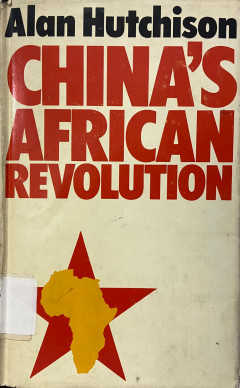
China’s African revolution
This book examines the political, ideological, and strategic dimensions of China’s involvement in Africa during the Cold War period. It analyzes China’s support for revolutionary movements, its diplomatic relations with African states, and the broader implications of Sino-African cooperation. The study provides insight into China’s foreign policy objectives and its efforts to influence po…
- Edisi
- -
- ISBN/ISSN
- 0-89158-025-5
- Deskripsi Fisik
- 313 pages; illustrations: 25 cm
- Judul Seri
- -
- No. Panggil
- 327.5106 HUT c

China's world: The Foreign policy of a developing state
This book analyzes the foreign policy of the People’s Republic of China from the perspective of a developing state. It examines China’s diplomatic behavior, international objectives, and strategic responses within the global political system during the Cold War era. Emphasizing economic limitations, ideological considerations, and national interests, the study provides insight into how Chin…
- Edisi
- -
- ISBN/ISSN
- 0-231-03511-X
- Deskripsi Fisik
- ix, 260 pages ; 22 cm
- Judul Seri
- -
- No. Panggil
- 327.51 SIM c

Sino-Soviet crisis politics: A Study of political change and communication
Richard Wich's Sino-Soviet Crisis Politics is an in-depth study of the political dynamics and communication between the People's Republic of China and the Soviet Union during a period of heightened ideological and strategic tensions during the Cold War. Through analysis of archives, political statements, and communication patterns between the two countries, Wich outlines how the crisis and conf…
- Edisi
- -
- ISBN/ISSN
- 0-674-80935-1
- Deskripsi Fisik
- 313 pages ; 23,5 cm
- Judul Seri
- -
- No. Panggil
- 327.51047 WIC s

Soviet and Chinese Influence in the Third World
This book discusses the influence of the Soviet Union and the People's Republic of China in Third World countries during the Cold War period. Alvin Z. Rubinstein analyzes the foreign policy strategies of these two communist countries and how they competed and cooperated in expanding their ideology, military influence, and diplomatic relations in Asia, Africa, and Latin America. This work also e…
- Edisi
- -
- ISBN/ISSN
- 0-275-09640-8
- Deskripsi Fisik
- ix, 231 pages ; 23,5 cm
- Judul Seri
- -
- No. Panggil
- 327.09172 RUB s

The People’s Republic of China Foreign Affairs archives compilation (Volume…
This volume presents a curated selection of diplomatic archives from the Ministry of Foreign Affairs of the People’s Republic of China, focusing on the Chinese delegation’s participation in the 1955 Asian-African Conference in Bandung. The documents provide insights into China’s foreign policy strategies, diplomatic interactions, preparatory communications, and the geopolitical context su…
- Edisi
- -
- ISBN/ISSN
- -
- Deskripsi Fisik
- 260 pages : illustrations ; 24,5 cm
- Judul Seri
- -
- No. Panggil
- 327.51 MIN p
 Karya Umum
  Filsafat
  Agama
Agama  Ilmu-ilmu Sosial
  Bahasa
  Ilmu-ilmu Murni
  Ilmu-ilmu Terapan
  Kesenian, Hiburan, dan Olahraga
  Kesusastraan
  Geografi dan Sejarah