Ditapis dengan
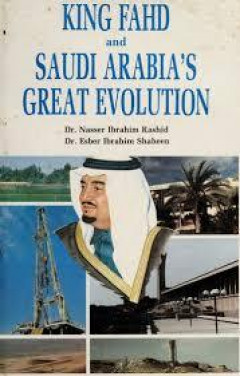
King Fahd and Saudi Arabia's great evolution
King Fahd and Saudi Arabia’s Great Evolution is a historical‐analytical work that examines the transformation of Saudi Arabia under King Fahd’s leadership. Written by Nasser Ibrahim Rashid and Esber I. Shaheen, the book explores how the Kingdom evolved politically, socially, and economically during Fahd’s reign, especially emphasizing the impact of oil wealth, modernization, and interna…
- Edisi
- -
- ISBN/ISSN
- 0-940485-00-1
- Deskripsi Fisik
- v, 342 pages : illustration ; 24 cm
- Judul Seri
- -
- No. Panggil
- 953.8 RAS k
Saudi Arabia and its royal family
This book provides an early and detailed look into the formation of modern Saudi Arabia and the rise of the House of Saud. Powell examines the political consolidation achieved by King Abdulaziz (Ibn Saud), the social and religious foundations of the new kingdom, and its relations with regional and Western powers. Written shortly after the unification of the Arabian Peninsula, the book offers a …
- Edisi
- 1
- ISBN/ISSN
- 0-8184-0326-8
- Deskripsi Fisik
- 368 pages : illustrations ; 24 cm
- Judul Seri
- -
- No. Panggil
- 953.805 POW s
Kerajan petrodolar Saudi Arabia
Buku ini mengisahkaan fakta-fakta yang membuat sejarah: sejak abdul azis ibnu saud bangkit menjadi pahlawan padang pasir; raja faisal yang berani menghentikan ekspor minyak sehingga negeri-negeri barat kalang-kabut; usaha modernisasi pendidikan; sampai adnan kashogi sebagai simbol saudagar multi milyader arab dengan 50 perusahaan besarnya yang tersebar di seluruh dunia.
- Edisi
- Cetakan 1
- ISBN/ISSN
- -
- Deskripsi Fisik
- 662 halaman: illustrasi; 22 cm
- Judul Seri
- -
- No. Panggil
- 953.8 LAC k
Oman wa syarqi al-fariqiyah
This book examines the development and influence of Arab intellectual thought in Africa. It explores historical interactions between Arab societies and African regions, focusing on cultural exchange, education, religion, and scholarship. The author highlights how Arab-Islamic traditions contributed to the formation of intellectual, social, and cultural life across various parts of Africa from e…
- Edisi
- -
- ISBN/ISSN
- -
- Deskripsi Fisik
- 159 pages ; 24,5 cm
- Judul Seri
- -
- No. Panggil
- 909.096 ALM o
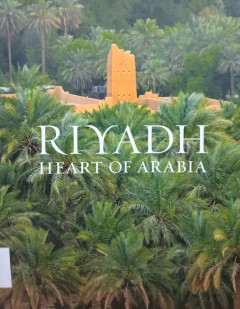
Riyadh heart of Arabia
Riyadh: Heart of Arabia is a richly illustrated photographic journey through Saudi Arabia’s capital region, written by Mohsen Al-Dajani (a Bedouin-born pilot) with co-author Brian Salter. Over three years, the authors document the city’s past and present — from mud-brick palaces, modern skyscrapers, and bustling souqs, to archaeological sites and the rugged natural beauty of its surroundi…
- Edisi
- -
- ISBN/ISSN
- 978-603-01-0376-8
- Deskripsi Fisik
- 232 pages : iilustrations ; 30 cm
- Judul Seri
- -
- No. Panggil
- 915.311104 ALD r
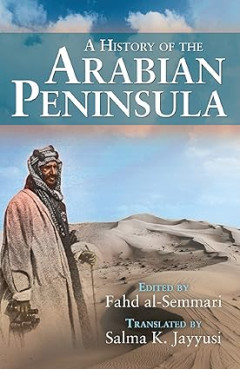
A history of the Arabian peninsula
The importance of this collection lies in its origins: for the first time, leading Saudi Arabian historians have created a history of the Arabian Peninsula which analyzes that history from an internal Arabian perspective. The book explores the original Bedouin settlement of the region, the development of the major urban areas of Arabia during the Umayyad period, the socio-political and economic…
- Edisi
- -
- ISBN/ISSN
- 978-1-84511-688-0
- Deskripsi Fisik
- viii, 312 pages ; 24 cm
- Judul Seri
- -
- No. Panggil
- 953 SEM h
Encyclopedia of the Palestinians
Encyclopedia of the Palestinians, edited by Philip Mattar, provides a comprehensive and authoritative reference on the history, culture, society, politics, and notable figures of the Palestinian people. This volume brings together contributions from leading scholars and includes detailed entries on key historical events, cultural traditions, political movements, and biographies of influential P…
- Edisi
- -
- ISBN/ISSN
- 0-8160-3043-X
- Deskripsi Fisik
- xi, 514 pages : illustration ; 28,5 cm
- Judul Seri
- -
- No. Panggil
- 909.04927403 MAT e

The Six day war
This book is a narrative and analytical reconstruction of the Six-Day War of 1967, written by Randolph S. Churchill and his grandson Winston S. Churchill. The authors trace the series of diplomatic, political, and military events that triggered the conflict between Israel and the Arab states, and describe the course of a war that was short but had a major impact on the geopolitics of the Middle…
- Edisi
- -
- ISBN/ISSN
- -
- Deskripsi Fisik
- 261 pages : illustration ; 18 cm
- Judul Seri
- -
- No. Panggil
- 956.04 CHU s
The Elusive peace: The Middle East in the twentieth century
This book provides a comprehensive analysis of political developments and conflicts in the Middle East throughout the twentieth century. William R. Polk examines the historical roots of Arab–Jewish tensions, the geopolitical interests of regional and global powers, and the recurring obstacles to achieving lasting peace. Through detailed historical narratives and policy insights, the author hi…
- Edisi
- -
- ISBN/ISSN
- 0-312-24383-9
- Deskripsi Fisik
- 201 pages ; 22 cm
- Judul Seri
- -
- No. Panggil
- 327.5694 POL e
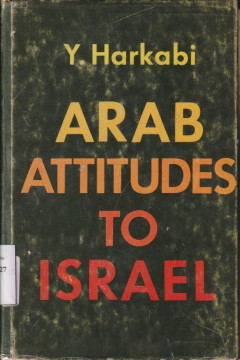
Arab attitudes to Israel
“Arab Attitudes to Israel” provides a comprehensive analytical study of how the Arab world has perceived and responded to the establishment and development of the State of Israel. Yehoshafat Harkabi examines political, ideological, religious, and strategic factors shaping Arab policies, public discourse, and regional dynamics. Through extensive documentation, the book traces the evolution o…
- Edisi
- -
- ISBN/ISSN
- 0-853-03157-6
- Deskripsi Fisik
- xxiii, 527 pages ; 23 cm
- Judul Seri
- -
- No. Panggil
- 327.5694 HAR a
 Karya Umum
  Filsafat
  Agama
Agama  Ilmu-ilmu Sosial
  Bahasa
  Ilmu-ilmu Murni
  Ilmu-ilmu Terapan
  Kesenian, Hiburan, dan Olahraga
  Kesusastraan
  Geografi dan Sejarah