Text
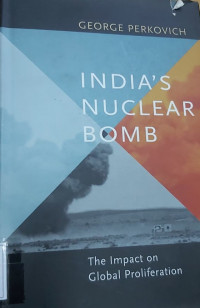
India's nuclear bomb: The Impact on global proliferation
In May 1998, India shocked the world—as well as many of its own citizens—by detonating five nuclear weapons in the Rajasthan desert. This landmark act raised central questions: Why did India pursue nuclear weapon status at a time when 149 nations had signed a ban on nuclear testing? What prompted India’s new Hindu nationalist government to depart from decades of nuclear restraint? And how had U.S. nonproliferation policy influenced India’s decisions?
India’s Nuclear Bomb is the definitive, comprehensive history of how the world’s largest democracy grappled with the twin desires to possess and to renounce nuclear weapons. Drawing from extensive interviews with India’s key scientists, military leaders, diplomats, and politicians, as well as newly declassified U.S. documents, George Perkovich reveals significant historical insights into India’s nuclear strategy. His analysis uncovers the cultural, ethical, and postcolonial influences shaping India’s seemingly paradoxical stance, showing that India’s evolving self-perception has played as large a role in its nuclear policy as external threats.
Ketersediaan
| PMKAA00865 | 355.02 PER i | Museum KAA (India) | Tersedia |
Informasi Detail
- Judul Seri
-
-
- No. Panggil
-
355.02 PER i
- Penerbit
- London : University of California Press., 1999
- Deskripsi Fisik
-
xiii, 597 pages ; 25 cm
- Bahasa
-
English
- ISBN/ISSN
-
0-520-21772-1
- Klasifikasi
-
355.02
- Tipe Isi
-
-
- Tipe Media
-
-
- Tipe Pembawa
-
-
- Edisi
-
-
- Subjek
- Info Detail Spesifik
-
-
- Pernyataan Tanggungjawab
-
George Perkovich
Versi lain/terkait
Tidak tersedia versi lain
Komentar
Anda harus masuk sebelum memberikan komentar
 Karya Umum
  Filsafat
  Agama
Agama  Ilmu-ilmu Sosial
  Bahasa
  Ilmu-ilmu Murni
  Ilmu-ilmu Terapan
  Kesenian, Hiburan, dan Olahraga
  Kesusastraan
  Geografi dan Sejarah