Text
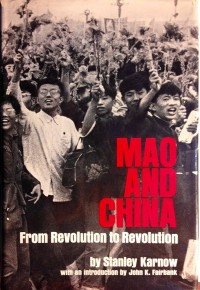
Mao and China : From Revolution to revolution
Within the past decade, China has sustained a series of self-induced traumas that may well be without precedent in human history. In what condition do the Chinese enter the 1970s, and onto the world stage they have shunned for so long? In this major new book— based on more than ten years of research— the veteran observer of Chinese affairs Stanley Karnow presents a comprehensive, dramatic account of the tur ultuous events that have changed the face of China, and suggests that this extraordinaly country will continue to be confronted by ins ability. In the process, Mr. Karnow offers important and provocative answers to many questions about China's present and future.
Mao Tse-tung has consistently believed in permanent revolution. In the years after the Communist takeover of China in 1949; he constantly urged the Chinese "masses" to oust entrenched bureaucrats and to play a more dynamic political role. Mr. Karnow describes how Mao, driven by his obsession to perpetuate the revolution, repeatedly pitted himself against the Chinese Communist Party apparatus-even though he was its nominal Chairman.
The most convulsive of these mass movements erupted in late 1965 with the Great Proletarian Cultural Revolution. Though the Chairman was then ostensibly idolized by China's 800 million people, the failure of his Great Leap Forward of 1958 and other setbacks had inspired widespread if covert resistance to his ideological line.
Ketersediaan
| PMKAA00787 | 951.256 KAR m | Museum KAA (China) | Tersedia |
Informasi Detail
- Judul Seri
-
-
- No. Panggil
-
951.256 KAR m
- Penerbit
- Canada : The Viking Press, Inc., 1972
- Deskripsi Fisik
-
xv, 592 pages : illustrations ; 23 cm
- Bahasa
-
English
- ISBN/ISSN
-
670-45427-3
- Klasifikasi
-
951.256
- Tipe Isi
-
-
- Tipe Media
-
-
- Tipe Pembawa
-
-
- Edisi
-
-
- Subjek
- Info Detail Spesifik
-
-
- Pernyataan Tanggungjawab
-
Stanley Karnov
Versi lain/terkait
Tidak tersedia versi lain
Komentar
Anda harus masuk sebelum memberikan komentar
 Karya Umum
  Filsafat
  Agama
Agama  Ilmu-ilmu Sosial
  Bahasa
  Ilmu-ilmu Murni
  Ilmu-ilmu Terapan
  Kesenian, Hiburan, dan Olahraga
  Kesusastraan
  Geografi dan Sejarah