Text
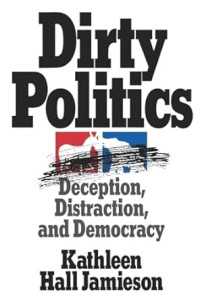
Dirty politics : Deception, distraction, and democracy
In Dirty Politics, campaign analyst Kathleen Hall Jamieson provides an eye-opening look at political ads and speeches, showing us how to read, listen to, and watch political campaigns. Jamieson provides a sophisticated (and often humorous) analysis of advertising technique, describing how television ads use soft focus, slow motion, lyrical or patriotic music (Reagan used "I'm Proud to be an American") to place a candidate in a positive light, or quick cuts, black and white, videotape, and ominous music (for instance, the theme from "Jaws") to portray the opposition. She shows how ads sometimes mimic news spots to add authenticity (Edwin Edwards, in his race against David Duke, actually used former NBC correspondent Peter Hackis, who would begin an ad saying "This is Peter Hackis in Baton Rouge"). And Jamieson points out that consultants create inflammatory ads hoping that the major networks will pick them up and run them as news, giving the ad millions of dollars of free air time. The most striking example would be the Willie Horton ad, which the press aired repeatedly (as an example of negative advertising) long after the ad had ceased running. (In fact, it never ran on the major networks as an ad, only as news).
Contents
1. Attack campaigning
2. Ads and the news
3. News coverage of the campaign
4. Accountability, engagement, and democracy.
Ketersediaan
| 2024-2240 | 659.1932 Jam d | Perpustakaan Diplomasi | Tersedia |
Informasi Detail
- Judul Seri
-
-
- No. Panggil
-
659.1932 Jam d
- Penerbit
- New York : Oxford University Press., 1992
- Deskripsi Fisik
-
335 pages : illustrations (black and white) ; 23 cm
- Bahasa
-
English
- ISBN/ISSN
-
0-19-508553-1
- Klasifikasi
-
659.1932
- Tipe Isi
-
-
- Tipe Media
-
-
- Tipe Pembawa
-
-
- Edisi
-
-
- Subjek
- Info Detail Spesifik
-
-
- Pernyataan Tanggungjawab
-
Kathleen Hall Jamieson
Versi lain/terkait
Tidak tersedia versi lain
Komentar
Anda harus masuk sebelum memberikan komentar
 Karya Umum
  Filsafat
  Agama
Agama  Ilmu-ilmu Sosial
  Bahasa
  Ilmu-ilmu Murni
  Ilmu-ilmu Terapan
  Kesenian, Hiburan, dan Olahraga
  Kesusastraan
  Geografi dan Sejarah