Text
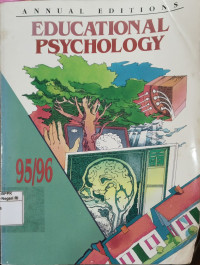
Annual editions: Educational psychology 1995/96
Educational psychology is an interdisciplinary subject that includes human development, learning, instructional strategies, intelligence, motivation, assessment, and classroom management. It also gives special attention to the application of this knowledge to teaching.
Annual Editions: Educational Psychology 95/96 is presented in six units. An overview precedes each unit and explains how the articles in the unit are related to the broader issues within educational psychology. The first unit presents issues central to the teaching role. The authors discuss the challenges of responding to calls for educational reform and the role of research in meeting those challenges.
The second unit is concerned with child and adolescent development and covers the cognitive, social, and emotional components of development. The articles in this unit examine the developmental implications of early childhood programs for teachers, the social forces affecting children and adolescents, and the personal and social skills needed to cope with school learning and developmental tasks.
The third unit, concerning exceptional and culturally diverse students, focuses on the learning disabled, the gifted, and minority students. All of these students are different in some way and require an individualized approach to education. The articles in this unit review the characteristics of these children and suggest programs and strategies to meet their needs.
The fourth unit includes articles about theories of learning and instructional strategies. The different views of learning, such as information processing, behaviorism, and constructivist learning, represent the accumulation of years of research on the way humans change in thinking or behavior due to experience. The principles generated from each approach have important implications for teaching. These implications are addressed in a section on instructional strategies, covering such topics as instructional methods, authentic instruction, computer-aided teaching, learning styles, and discovery methods.
The topic of motivation is perhaps one of the most important aspects of school learning. Effective teachers need to motivate their students both to learn and to behave responsibly. How to manage children and what forms of discipline to use are issues that concern parents as well as teachers and administrators. The articles in the fifth unit present a variety of perspectives on motivating students and discuss approaches to managing student behavior.
The articles in unit six review assessment approaches that can be used to diagnose learning and improve instruction. The focus is on grading practices and appropriate uses of standardized tests. Performance based assessment is introduced as a promising new approach to classroom measurement.
This tenth edition of Annual Editions: Educational Psychology has been revised so as to present articles that are current and useful. Your responses to the selection and organization of materials are appreciated. Please fill out and return the prepaid article rating form on the last page of the book.
Ketersediaan
| 2024-1753 | 370.1505 Cau a | Perpustakaan Diplomasi | Tersedia |
Informasi Detail
- Judul Seri
-
-
- No. Panggil
-
370.1505 Cau a
- Penerbit
- Guildford : Dushkin Publishing Group., 1995
- Deskripsi Fisik
-
240 pages : illustrations (black and white) ; 27 cm
- Bahasa
-
English
- ISBN/ISSN
-
1-56134-398-6
- Klasifikasi
-
370.1505
- Tipe Isi
-
-
- Tipe Media
-
-
- Tipe Pembawa
-
-
- Edisi
-
Ed. 10
- Subjek
- Info Detail Spesifik
-
-
- Pernyataan Tanggungjawab
-
Kathleen M. Cauley
Versi lain/terkait
Tidak tersedia versi lain
Komentar
Anda harus masuk sebelum memberikan komentar
 Karya Umum
  Filsafat
  Agama
Agama  Ilmu-ilmu Sosial
  Bahasa
  Ilmu-ilmu Murni
  Ilmu-ilmu Terapan
  Kesenian, Hiburan, dan Olahraga
  Kesusastraan
  Geografi dan Sejarah