Text
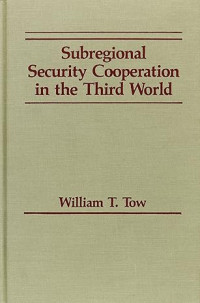
Subregional security cooperation in the third world
Within the past decade, traditional regional security organizations formed during the cold War have gradually been supplanted by more indigenous groupings designed specifically to address local security problems. Professor Tow argues that these subregional security organizations (SRSOs) have provided their members with a new self-confidence, encouraging them to formulate their common security interests and to face the "outside" world in a more unified fashion. The strategic and economic vulnerability of the new associations, however, has not been overcome to the extent that their members originally had hoped, and their continued relevance in an environ- ment of rapid international change remains uncertain.
Tow assesses the extent to which five SRSOs the Association of Southeast Asian Nations (ASEAN), the Gulf Cooperation Council (GCC), the Organization of East Caribbean States (OECS), the Southern African Development Coordination Conference (SADCC), and the South Pacific Forum (SPF)-have succeeded in meeting commonly defined security threats, in ameliorating their members' political and economic vulner- abilities, and in compelling the major powers to accept the legitimacy of their regional security agendas. He also considers more general questions of "regional" vs. "subregional" security and the regime characteristics that have contributed to the formation of SRSOs. His final chapter focuses on the significance in the context of broader security issues.
Ketersediaan
| 2024-1322 | 341.72091724 Tow s | Perpustakaan Diplomasi | Tersedia |
Informasi Detail
- Judul Seri
-
-
- No. Panggil
-
341.72091724 Tow s
- Penerbit
- Colorado : Lynne Rienner Publishers., 1990
- Deskripsi Fisik
-
ix, 155 pages : illustrations (black and white) ; 23 cm
- Bahasa
-
Indonesia
- ISBN/ISSN
-
1-155587-201-8
- Klasifikasi
-
341.72091724
- Tipe Isi
-
-
- Tipe Media
-
-
- Tipe Pembawa
-
-
- Edisi
-
-
- Subjek
-
-
- Info Detail Spesifik
-
-
- Pernyataan Tanggungjawab
-
William T. Tow
Versi lain/terkait
Tidak tersedia versi lain
Komentar
Anda harus masuk sebelum memberikan komentar
 Karya Umum
  Filsafat
  Agama
Agama  Ilmu-ilmu Sosial
  Bahasa
  Ilmu-ilmu Murni
  Ilmu-ilmu Terapan
  Kesenian, Hiburan, dan Olahraga
  Kesusastraan
  Geografi dan Sejarah