Text
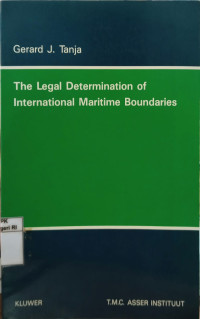
The legal determination of international maritime boundaries
The legal determination of international maritime boundaries for 'resource-related' zones has become one of the most controversial issues in the contemporary international law of the sea. As a result of the increasing practice among States to claim 200-mile zones, these delimitation processes have demonstrated that vital geo-political, economic and security aspects are involved. As these conflicting interests may have profound effects on the overall relations between States, the need for a satisfactory legal framework is obvious.
In order to analyse the principles and rules which operate within this legal framework, the author examines relevant developments in state practice, case law and doctrine up to 1990. More than 150 delimitation agreements concerning the delimitation of the con- tinental shelf, Exclusive Fishery Zone and Exclusive Economic Zone are discussed; case law has been meticulously examined. This comprehensive approach has resulted in a general textbook on maritime delimitation law which takes account of the most recent trends in actual practice and jurisprudence.
According to the author, the system of the 'equidistance special circumstances equitable result' rule has received substantial support in state practice. It seems that the rule does not fundamentally differ from the concept of equity infra legem as developed in case law after 1982 and subsequently refined. He concludes, therefore, that the 'dif- ference in legal terminology is nowadays more a difference in words than a fundamental difference of opinion with respect to the legal content of the principles and rules in- volved'.
Ketersediaan
| 2024-0972 | 341.7566 Tan l | Perpustakaan Diplomasi | Tersedia |
| 2024-0973 | 341.7566 Tan l | Perpustakaan Diplomasi | Tersedia |
Informasi Detail
- Judul Seri
-
-
- No. Panggil
-
341.7566 Tan l
- Penerbit
- Netherlands : Kluwer Law International., 1990
- Deskripsi Fisik
-
xxi, 360 pages : illustrations (black and white) ; 24 cm
- Bahasa
-
English
- ISBN/ISSN
-
9065444785
- Klasifikasi
-
341.7566
- Tipe Isi
-
-
- Tipe Media
-
-
- Tipe Pembawa
-
-
- Edisi
-
-
- Subjek
-
-
- Info Detail Spesifik
-
-
- Pernyataan Tanggungjawab
-
Gerard J. Tanja
Versi lain/terkait
Tidak tersedia versi lain
Komentar
Anda harus masuk sebelum memberikan komentar
 Karya Umum
  Filsafat
  Agama
Agama  Ilmu-ilmu Sosial
  Bahasa
  Ilmu-ilmu Murni
  Ilmu-ilmu Terapan
  Kesenian, Hiburan, dan Olahraga
  Kesusastraan
  Geografi dan Sejarah