Ditapis dengan

A History of South Africa: Social & economic
This classic book by C. W. de Kiewiet provides an in-depth analysis of South Africa's social and economic development from the colonial period to the early 20th century. The author outlines the historical factors that shaped racial tensions, the dynamics of the agricultural and mining economies, and the impact of colonial policies on the structure of society. As a key reference work on South Af…
- Edisi
- -
- ISBN/ISSN
- 0-19-821638-6
- Deskripsi Fisik
- xii, 291 pages ; 21,5 cm
- Judul Seri
- -
- No. Panggil
- 968.05 KIE h
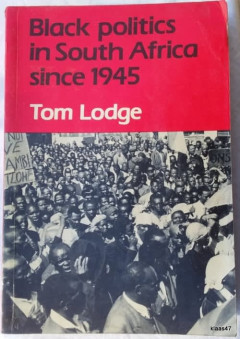
Black politics in South Africa since 1945
This book is a comprehensive study of the development of black politics in South Africa since 1945. Tom Lodge analyzes the dynamics of black political organizations, resistance movements, mass action, and the relationships between anti-apartheid groups. It explores the social, economic, and ideological factors that shaped black politics during the apartheid era. With in-depth research based on …
- Edisi
- -
- ISBN/ISSN
- 0-582-64327-9
- Deskripsi Fisik
- 389 pages; 23 cm
- Judul Seri
- -
- No. Panggil
- 968.00496 LOD b
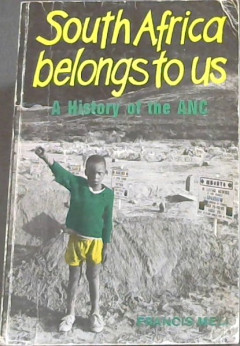
South Africa belongs to us
This book is a comprehensive history of the African National Congress (ANC), South Africa's oldest liberation organization. Francis Meli describes the ANC's origins, the development of its struggle against apartheid, its political strategies, the roles of its leaders, and the organization's internal dynamics. Through archival documentation, interviews, and photographs gathered from Sechaba and …
- Edisi
- -
- ISBN/ISSN
- 0-949255-52-5
- Deskripsi Fisik
- 255 pages, 21 x 14 cm
- Judul Seri
- -
- No. Panggil
- 986 MEL s

The rise of African Nationalism in South Africa: The African National congres…
This book is an in-depth academic study of the rise of African nationalism in South Africa through the history of the African National Congress (ANC) from 1912 to 1952. Peter Walshe traces the organizational development, internal dynamics, struggle strategies, and socio-political influence of the ANC in confronting the strengthening apartheid system. This work provides a comprehensive analysis …
- Edisi
- -
- ISBN/ISSN
- 0-520-01810-9
- Deskripsi Fisik
- 479 pages; 23 cm
- Judul Seri
- -
- No. Panggil
- 968.05 WAL t

Gadafi: Voice from the desert
Gadafi: Voice from the Desert presents an insightful biographical account of Muammar Gaddafi, tracing his early life, ideological development, and rise to power in Libya. Originally written in French and later translated into English, the book explores the cultural, political, and historical context that shaped Gaddafi’s revolutionary aspirations. Mirella Bianco provides a narrative that blen…
- Edisi
- First published
- ISBN/ISSN
- 0-582-78062-4
- Deskripsi Fisik
- xi, 197 pages ; 21 cm
- Judul Seri
- -
- No. Panggil
- 961.205 MIR g
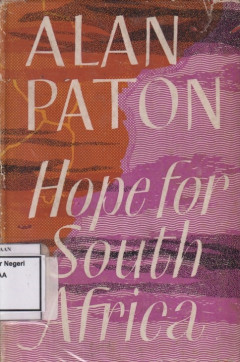
Hope for South Africa
Alan Paton's "Hope for South Africa" examines the political, social, and moral conditions of South Africa during the apartheid era. This book expresses hope for social change and justice for all South Africans. As a humanist and anti-apartheid figure, Paton presents a profound critique of racial injustice while offering an optimistic view of the nation's future. This work is an important …
- Edisi
- -
- ISBN/ISSN
- -
- Deskripsi Fisik
- vii, 94 pages : illustration ; 19 cm
- Judul Seri
- -
- No. Panggil
- 968 PAT h
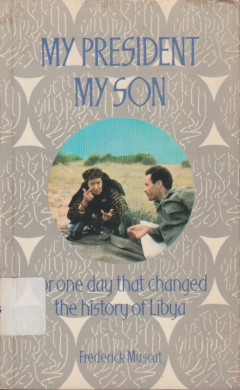
My President, My Son
My President, My Son is a biographical narrative written by Frederick Muscat that explores the early life, family background, and rise of Libya’s leader Muammar al-Qaddafi. The book provides personal insights into Qaddafi’s relationship with his mother, Aisha, whose influence shaped his character and political convictions. Presented from an intimate perspective, the work portrays the social…
- Edisi
- Revised edition
- ISBN/ISSN
- -
- Deskripsi Fisik
- 188 pages : illustration ; 21,5 cm
- Judul Seri
- -
- No. Panggil
- 963.1053092 FRE m
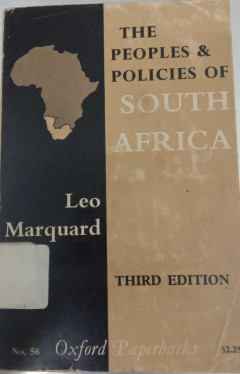
The Peoples and policies of South Africa
Leo Marquard's The Peoples and Policies of South Africa examines the dynamics of South African society, including political structures, government policies, and racial relations during the apartheid era. This third revised edition provides an in-depth analysis of the social, economic, and policy developments that shaped modern South Africa. As a classic work on South Africa, it is an essential …
- Edisi
- Ed. 3
- ISBN/ISSN
- -
- Deskripsi Fisik
- 284 pages; 20 cm
- Judul Seri
- -
- No. Panggil
- 968 MAR t
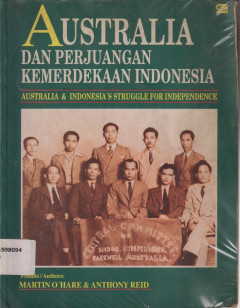
Australia dan perjuangan kemerdekaan Indonesia
Buku ini membahas keterlibatan dan peran Australia dalam masa perjuangan kemerdekaan Indonesia. Ditulis oleh Martin O’Hare dan Anthony Reid, karya ini menguraikan hubungan diplomatik, sikap politik, serta reaksi masyarakat Australia terhadap perkembangan nasionalisme Indonesia pada periode 1945–1949. Melalui telaah arsip, dokumen sejarah, dan analisis akademik, buku ini menggambarkan dinami…
- Edisi
- -
- ISBN/ISSN
- 9789796051663
- Deskripsi Fisik
- xvi, 98 halaman : ilustrasi ; 28 cm
- Judul Seri
- -
- No. Panggil
- 959.803 OHA a
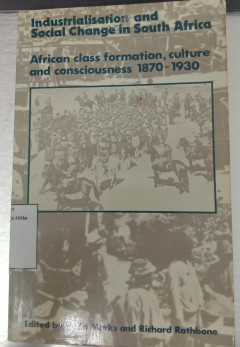
Industrialisation and social change in South Africa: African class formation,…
This book is a collection of essays examining the impact of industrialization on social change in South Africa between 1870 and 1930. Edited by Shula Marks and Richard Rathbone, it examines the formation of African social classes, cultural developments, and changes in social consciousness resulting from modernization and capitalism. It highlights how economic and political dynamics shaped socia…
- Edisi
- -
- ISBN/ISSN
- 0-582-64337-6
- Deskripsi Fisik
- 383 pages; 21 cm
- Judul Seri
- -
- No. Panggil
- 968 MAR i
 Karya Umum
  Filsafat
  Agama
Agama  Ilmu-ilmu Sosial
  Bahasa
  Ilmu-ilmu Murni
  Ilmu-ilmu Terapan
  Kesenian, Hiburan, dan Olahraga
  Kesusastraan
  Geografi dan Sejarah