Ditapis dengan
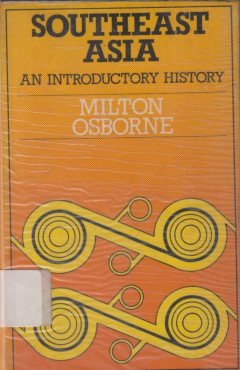
Southeast Asia: An Introductory history
This book provides an introductory survey of the history of Southeast Asia from the early eighteenth century to the late 1970s. Milton Osborne offers a clear and accessible overview of political, social, cultural, and economic developments across the region, highlighting both shared historical patterns and distinctive national trajectories. The work explains key transformations, colonial encoun…
- Edisi
- -
- ISBN/ISSN
- -
- Deskripsi Fisik
- 205 pages : illustrations ; 21,5 cm
- Judul Seri
- -
- No. Panggil
- 959 OSB s

In Search of Southeast Asia: A Modern history
In Search of Southeast Asia: A Modern History is a comprehensive historical study edited by David Joel Steinberg, written by leading scholars on Southeast Asia. The book explores the political, social, cultural, and economic developments of Southeast Asian countries from pre-colonial times through the modern period. It provides an integrated regional perspective covering Indonesia, Malaysia, Th…
- Edisi
- -
- ISBN/ISSN
- -
- Deskripsi Fisik
- xii, 522 pages : illustrations ; 23,5 cm
- Judul Seri
- -
- No. Panggil
- 959.05 STE s
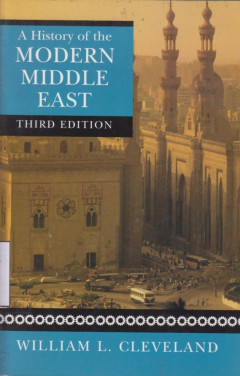
A History of the modern Middle East
“A History of the Modern Middle East” provides a comprehensive and accessible overview of the political, social, and economic developments of the Middle East from the early modern era to the early 21st century. William L. Cleveland examines the fall of the Ottoman Empire, the formation of modern nation-states, colonial legacies, Arab nationalism, the Arab–Israeli conflict, Islamic movemen…
- Edisi
- -
- ISBN/ISSN
- 0-8133-4048-9
- Deskripsi Fisik
- xviii, 588 pages : illustrations ; 23 cm
- Judul Seri
- -
- No. Panggil
- 956.05 CLE h

The Arabs' new frontier
This book explores the shifting political landscape of the Arab world during the mid-1970s, highlighting the emergence of new political forces and regional dynamics that shaped the Middle East. Robert Stephens analyzes the evolution of Arab nationalism, inter-Arab relations, and the impact of global power struggles on the region. Through detailed political observations, the author provides insi…
- Edisi
- -
- ISBN/ISSN
- 0-85117-0986
- Deskripsi Fisik
- 279 pages : illustrations ; 22 cm
- Judul Seri
- -
- No. Panggil
- 956 STE a

History of Eastern Arabia 1750–1800: The Rise and development of Bahrain, K…
This book provides a detailed historical analysis of the political, social, and economic development of Eastern Arabia from 1750 to 1800. Ahmad Mustafa Abu-Hakima examines the rise of Bahrain and Kuwait, as well as the emergence of Wahhabi Saudi Arabia as a significant regional force. Drawing from archival sources and previous scholarship, the author explores tribal dynamics, regional conflicts…
- Edisi
- -
- ISBN/ISSN
- 0-85382-022-8
- Deskripsi Fisik
- xix, 213 pages : illustrations ; 22,5 cm
- Judul Seri
- -
- No. Panggil
- 953.8 ABU h
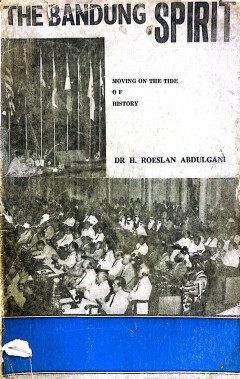
Bandung spirit: Moving on the tide of history
This book, written by Dr. H. Roeslan Abdulgani—one of Indonesia’s key political figures and an important actor in the 1955 Asian-African Conference—provides a historical and philosophical reflection on the “Bandung Spirit.” Published in 1964, the work examines the political context of postcolonial Asia and Africa, the rise of solidarity among newly independent nations, and the signifi…
- Edisi
- -
- ISBN/ISSN
- -
- Deskripsi Fisik
- v, 142 pages ; 24 cm
- Judul Seri
- -
- No. Panggil
- 959.8 ABD t

South Asia: A Short history of the subcontinent
South Asia: A Short History of the Subcontinent provides a concise yet comprehensive overview of the historical development of the Indian subcontinent. Covering major regions including India, Pakistan, Bangladesh, Sri Lanka, and Nepal, the book traces political, cultural, and social transformations from ancient civilizations to the twentieth century. Meyer highlights the interaction of diverse …
- Edisi
- -
- ISBN/ISSN
- 0-8226-0034-X
- Deskripsi Fisik
- vi, 265 pages : illustrations ; 20,5 cm
- Judul Seri
- -
- No. Panggil
- 954 MEY s

Richer by Asia
Richer by Asia presents Edmond Taylor’s insightful reflections on the political, cultural, and social transformations shaping Asia in the mid-twentieth century. Written for the Time Reading Program, the book analyzes major historical events, shifting power dynamics, and the rise of new Asian identities after World War II. Through vivid reportage and historical interpretation, Taylor illustrat…
- Edisi
- -
- ISBN/ISSN
- -
- Deskripsi Fisik
- xxiv, 446 pages : illustrations ; 20,5 cm
- Judul Seri
- -
- No. Panggil
- 950.04 TAY r
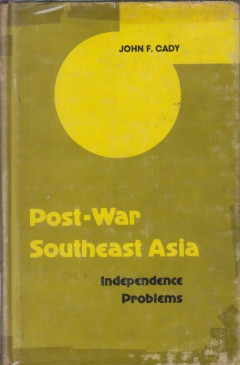
The History of post-war Southeast Asia
The History of Post-War Southeast Asia offers a comprehensive analysis of the political, social, and economic developments that shaped Southeast Asia after World War II. John F. Cady examines the region's transition from colonial rule to independence, the rise of nationalist movements, Cold War influences, and the formation of modern state identities. The book provides detailed country-by-count…
- Edisi
- -
- ISBN/ISSN
- 8214-0175-0
- Deskripsi Fisik
- xxii, 720 pages : illustrations ; 22,5 cm
- Judul Seri
- -
- No. Panggil
- 959.05 CAD h

Milestones on my journey (1953–1957): The Memoirs of Ali Sastroamidjojo, In…
This book presents the autobiographical account of Ali Sastroamidjojo, one of Indonesia’s most influential political leaders and a key architect of the 1955 Asian-African Conference. Covering the years 1953 to 1957, the memoir highlights his experiences as Prime Minister of Indonesia, his political struggles, diplomatic missions, and his role in shaping Indonesia’s foreign policy during a f…
- Edisi
- -
- ISBN/ISSN
- 978-602-99065-0-9
- Deskripsi Fisik
- xii, 150 pages : illustrations ; 20 cm
- Judul Seri
- -
- No. Panggil
- 923.2598 SAS m
 Karya Umum
  Filsafat
  Agama
Agama  Ilmu-ilmu Sosial
  Bahasa
  Ilmu-ilmu Murni
  Ilmu-ilmu Terapan
  Kesenian, Hiburan, dan Olahraga
  Kesusastraan
  Geografi dan Sejarah